

Reported by Ariajegbe Sylvia Esezobor
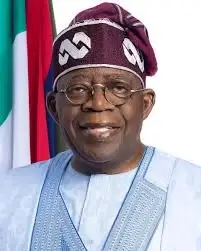
President Bola Ahmed Tinubu has said the Economic and Financial Crimes Commission has justified the confidence reposed in it, citing the agency's conviction record, asset recoveries and institutional reforms as evidence that his administration's anti-corruption drive is producing measurable results, in a speech delivered on Friday, October 2, 2026, at the commissioning of the EFCC's new Zonal Directorate in Awka, Anambra State.
Represented by the Speaker of the House of Representatives, Tajudeen Abbas, the President said supporting the EFCC was not particularly difficult because the agency had consistently demonstrated that the confidence placed in it was well founded. "Without mincing words, the evidential proof of the EFCC's success speaks loudly in convictions secured, assets and properties recovered," Tinubu said. He linked the commission's work to the Renewed Hope Agenda, noting that when his administration assumed office three years ago, it highlighted nine major focal areas, two of which were reforming the economy for sustained and inclusive growth and promoting good governance. He said both objectives would remain a mirage without the requisite institutional support, including a virile justice and accountability framework, and that the anti-graft agency complemented this agenda through its focus on accountability, transparency and the appropriate deployment of resources.
The EFCC Chairman, Ola Olukoyede, used the occasion to present a detailed scorecard of the commission's performance over the 34 months since he assumed office in October 2023. He disclosed that the commission received 49,673 petitions, investigated 39,615 cases, filed 14,476 cases in court and secured 10,872 convictions between October 2023 and July 2026, giving a conviction-to-filing ratio of 75.1 per cent. In the first half of 2026 alone, the commission recorded 1,370 convictions from 1,889 filings. On recoveries, Olukoyede said the commission recorded N1,233,612,040,411.11, $684,478,457.32, £373,905.78 and €9,343,803.66, in addition to recoveries in other currencies. He also disclosed that the commission secured forfeiture orders covering 10,053 tangible assets, including properties, vehicles, electronics, land, schools, factories, hotels, oil rigs, barges, machinery and aircraft, and that the disposal of assets under final forfeiture orders generated approximately N12.07 billion for the Federal Government.
The figures released by Olukoyede provide the most comprehensive public accounting of the EFCC's activities under his leadership and offer context for the President's remarks. The composition of the naira recoveries is particularly instructive: about N397.26 billion, representing 33 per cent, was recovered directly for the Federal Government, while N836.34 billion, or 67 per cent, was recovered on behalf of ministries, departments and agencies, state revenue services, companies, individuals and foreign victims. Of the total recovered, N661.32 billion in naira and $492.37 million had been released to beneficiaries, with N325.35 billion going to individuals and corporate bodies and N335.97 billion to government agencies and revenue authorities. The data also showed that the commission's caseload is increasingly shaped by cybercrime and fraud rather than only high-profile corruption cases involving public officials. The commission recorded 46,288 offences across nine major categories between 2024 and 2026, with advance-fee fraud and cybercrime accounting for nearly two-thirds, and recorded offences increased by 24.1 per cent between 2024 and 2025.
Olukoyede said the newly commissioned Awka Directorate would combine law enforcement with preventive measures aimed at stopping economic and financial crimes before they occur. "This new Directorate will not only enforce the law professionally and courageously, but it will also be high on corruption prevention," he said. The directorate, which will cover Anambra and Imo states, is intended to bring the commission closer to the economic activities it is meant to protect, including the industrial hubs of Onitsha and Nnewi, the oil and gas sectors in Ohaji-Egbema, and the growing tourism industry in Owerri. Olukoyede said the establishment of the Awka office was beyond geographical expansion and was about taking the commission's mandate closer to the people. He urged Nigerians to use the commission's whistleblowing channels responsibly, warning that whistleblowing must be based on facts and must not become an instrument for settling personal scores.
The commissioning drew support from governors and federal lawmakers. Governor Chukwuma Soludo of Anambra State said his administration would continue to partner with the EFCC to combat economic and financial crimes, with collaboration covering taxation, revenue generation and the training of local government staff and civil servants. Governor Hope Uzodimma of Imo State, who chairs the APC Governors' Forum, welcomed the decentralisation of EFCC operations to the South-East, saying the Awka Directorate would ease the burden on residents who previously travelled to Abuja or Lagos for invitations, questioning and other official engagements with the commission. The Chairman of the House of Representatives Committee on Economic and Financial Crimes, Rep. Ginger Onwusibe, assured Nigerians of the EFCC leadership's commitment to bringing perpetrators of financial crimes to justice.
The President's commendation comes amid continuing debate over the effectiveness and impartiality of Nigeria's anti-corruption efforts. Critics have questioned whether the EFCC's operations are politically neutral, and opposition figures have accused the agency of targeting government opponents while shielding allies. The commission has consistently rejected such claims, and the figures presented by Olukoyede, including the conviction of more than 40 of its own personnel for corruption and financial malpractice, are intended to demonstrate that the agency applies its mandate without fear or favour. The establishment of the Awka Directorate, the sixth zonal office commissioned under Olukoyede's leadership, forms part of a broader decentralisation strategy that the commission says will bring its services closer to Nigerians and strengthen its capacity to combat financial crimes across the country.
For Nigerians, the significance of the EFCC's record extends beyond the statistics. The recoveries represent resources that might otherwise have been lost to fraud, diversion and money laundering, and the convictions represent accountability for those who have exploited public trust for private gain. Whether the agency's performance will translate into a sustained reduction in corruption, or whether it remains a matter of enforcement without systemic change, is a question that will be answered by the conduct of public officials and the strength of the institutions designed to hold them accountable. As Tinubu put it, corruption must be checked to ensure that public wealth serves all Nigerians and not a privileged few. The edifice commissioned in Awka, he said, is a testament to the determination to ensure that the wheel of anti-corruption not only grinds surely but also touches every section of society.
📩 Stone Reporters News | 🌍 stonereportersnews.com
✉️ info@stonereportersnews.com | 📘 Facebook: Stone Reporters News | 🐦 X (Twitter): @StoneReportNew | 📸 Instagram: @stonereportersnews
Add comment
Comments