

Reported by Ariajegbe Sylvia Esezobor
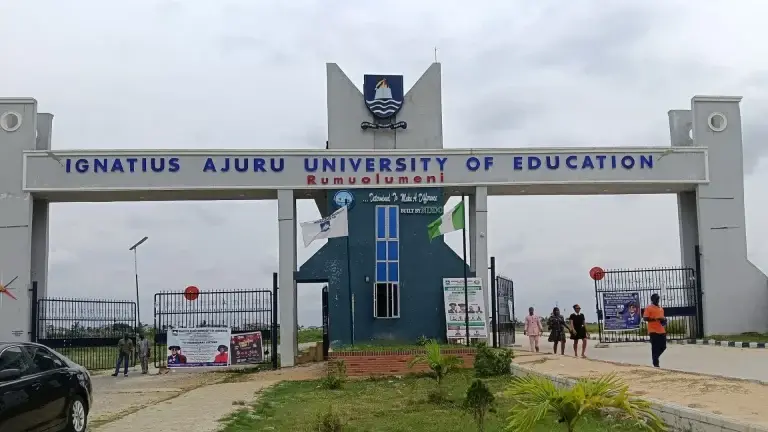
The management of Ignatius Ajuru University of Education, Port Harcourt, Rivers State, has expelled a final-year student of the Department of English and Literary Studies, Miss Onyewuenyi Chiamaka Nora, over what the institution described as damaging content she shared on social media. The decision was taken by the university's Senate during a meeting held on Wednesday at the Postgraduate Hall, according to a statement issued by the institution's Public Relations Officer, Dr Ngozi Okiridu.
The student, who had completed her final examination, was sanctioned after a video of her interview with a content creator went viral across social media platforms. In the video, Nora allegedly claimed that a lecturer in her department was handling her final-year research project and had demanded N150,000 for the work. She also reportedly claimed that her project topic was "Citizenship" and that her supervisor wrote the project for her. The university disputed the claims, stating that there was no project topic titled "Citizenship" in the Department of English and Literary Studies and that the allegations were misleading and damaging to the institution and its academic staff.
According to the statement, the university attempted to persuade the student to retract her comments, but she declined to do so. The university said the student reportedly admitted that her claims were untrue and were made solely to generate content for social media. "The Senate has expelled Miss Onyewuenyi Chiamaka Nora with Matriculation Number U/2022/19900, a final-year student of the Department of English and Literary Studies, over damaging content creation," the statement read. "The expulsion is to serve as a deterrent to others who may want to do the same." The university said it would not tolerate actions capable of damaging its reputation, adding that the decision was intended to serve as a warning to other students.
The expulsion has drawn attention to the growing tension between students' use of social media and the disciplinary authority of universities. Across Nigeria, institutions have increasingly invoked internal disciplinary procedures to sanction students over posts that they consider defamatory, inciting, or damaging to their reputations. In Rivers State alone, the issue has surfaced repeatedly in recent years. In November 2020, the management of Ignatius Ajuru University of Education suspended two students, Chibuzor Remmy and Sunday Idongesit Okpokpo, for one academic session over nonviolent social media activity. The students had posted comments critical of the university's handling of examination and banking problems. Human rights groups at the time called for the reversal of the suspensions, describing them as an infringement on freedom of expression.
In August 2026, the university suspended two more students over what it described as inciting social media posts. And in October 2026, Madonna University in Elele, Rivers State, expelled a final-year nursing student and suspended fourteen others over a viral TikTok video showing them dancing in a hospital waiting area. Amnesty International condemned the sanctions, describing them as excessive and calling on the university to reverse its decision. The recurrence of these cases has fuelled a broader debate about whether Nigerian universities are using disciplinary powers to suppress legitimate criticism or to enforce reasonable standards of conduct.
The expulsion of Nora Onyewuenyi Chiamaka comes amid a wider national conversation about academic integrity and the relationship between students and their supervisors. Allegations of lecturers demanding money from students for project supervision or writing are not uncommon in Nigerian tertiary institutions, though they are rarely formally investigated. The university's decision to expel the student rather than investigate the allegations she made has prompted questions about whether the institution prioritised its reputation over a thorough examination of the claims. The university has not disclosed whether any inquiry was conducted into the allegation that a lecturer demanded N150,000 to handle the student's project.
The coincidence of the expulsion with the university's announcement of its seventh-place ranking in the 2026 Ranking of Universities for staff Google Scholar Profile Submission added a layer of institutional context to the decision. During the same Senate meeting, Vice-Chancellor Professor Okechuku Onuchuku announced that the university had achieved seventh position nationally in staff Google Scholar Profile Submission, commending academic staff whose research papers and publications contributed to the institution's visibility. The university urged staff to sustain their research and publication efforts to further enhance its academic reputation. The simultaneous focus on academic visibility and disciplinary enforcement reflected an institution seeking to project strength on both fronts.
The political context of the expulsion is significant. The 2027 general elections are less than four months away, with the governorship and state assembly elections scheduled for February 6. Education and freedom of expression have emerged as key issues in the national conversation, and the conduct of institutions in handling student dissent and disciplinary matters will be closely watched. Rivers State, as a key South-South battleground, will be one of the states where the intersection of education policy, student rights and political accountability will be tested.
For the expelled student, the decision represents the loss of a degree she had completed her examinations to earn. For the university, it is a demonstration of its determination to protect its reputation and enforce disciplinary standards. For the broader academic community, the case raises fundamental questions about the balance between institutional reputation and the rights of students to speak about their experiences. As the university put it, the expulsion is intended to serve as a deterrent. Whether it will be viewed as a proportionate response to damaging content or as an excessive exercise of institutional power will depend on how the case unfolds in the coming weeks, and whether the allegations the student made are ever subjected to the independent scrutiny they may warrant.
📩 Stone Reporters News | 🌍 stonereportersnews.com
✉️ info@stonereportersnews.com | 📘 Facebook: Stone Reporters News | 🐦 X (Twitter): @StoneReportNew | 📸 Instagram: @stonereportersnews
Add comment
Comments