

Reported by Ariajegbe Sylvia Esezobor
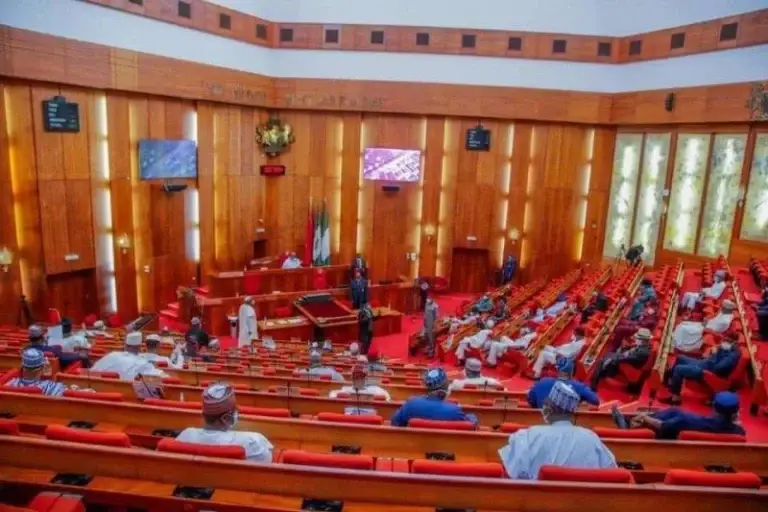
The Senate on Tuesday urged the Federal Government to urgently release funds from the Ecological Fund to tackle deadly gully erosion and landslides in Cross River South, following multiple deaths, destruction of homes and the displacement of residents in Calabar and neighbouring communities.
The resolution followed a motion of urgent national importance sponsored by Senator Asuquo Ekpenyong, representing Cross River South, during plenary. The lawmakers expressed concern that recurring erosion and landslides had become a major humanitarian and environmental emergency, threatening lives, homes and livelihoods. Affected locations identified by the chamber include Atakpa, Edim Otop, Ikot Effangha Mkpa, Nyaghasang, Ikot Anwatim, Nasarawa/Bacoco, Akai Effa, Bayside and Summit Hills, while residents of Anansa face continuing landslide activity resulting in property damage and displacement.
The Senate was particularly concerned about a landslide at Ikot Anwatim in July 2026 that killed five people, including four siblings from the same family and an adult, destroyed two houses and injured two other residents. In a separate incident, an eight-year-old girl was reported killed in a landslide at Edim Otop. "Further delay risks additional deaths, deeper displacement and greater destruction, and this emergency demands the immediate mobilisation of federal resources, including the Ecological Fund," Ekpenyong said. He said parents had been forced to bury their children while survivors faced the loss of homes and livelihoods, with unstable slopes threatening additional communities.
The chamber attributed the crisis partly to the area's terrain and environmental conditions, including heavy rainfall, loose sandy soils, high groundwater levels in low-lying areas and an undulating landscape between the Calabar and Great Kwa river systems. It also identified poorly designed drainage systems, blocked drains, rapid urbanisation, indiscriminate waste disposal, unregulated sand mining, vegetation removal and vandalism of drainage infrastructure as factors aggravating erosion and surface runoff. The lawmakers warned that isolated interventions without a coordinated watershed management plan could shift the danger to neighbouring communities instead of providing a lasting solution.
Consequently, the Senate urged the Federal Government to approve, allocate and release adequate funds from the Ecological Fund for emergency stabilisation and comprehensive erosion control, with priority given to communities where lives have been lost and residents remain at immediate risk. It called on the Federal Ministry of Environment, working with the Cross River State Government and relevant agencies, to immediately assess the most dangerous sites and begin emergency protective works. The National Emergency Management Agency was asked to collaborate with the Cross River State Emergency Management Agency and affected local government councils to provide temporary shelter, food, medical care and psychosocial support for bereaved and displaced families. The agencies were also urged to facilitate the safe evacuation and temporary relocation of residents in imminent danger, while establishing effective early-warning systems and monitoring unstable locations.
The Senate further called on the Federal Ministries of Environment and Works to prioritise funding for erosion control projects in Cross River State. It stressed that major interventions should be backed by proper geotechnical and hydrological assessments, sound engineering designs, effective supervision and environmental safeguards to prevent further damage. Senate President Godswill Akpabio mandated the Senate Committee on Environment to visit affected communities, assess existing interventions, engage relevant agencies on funding and implementation, and report back with recommendations for further legislative action.
The motion comes amid growing concern over the escalating ecological crisis in Calabar, where the failure of the Channel 2 underground drainage system along Anansa Road has triggered extensive environmental destruction, infrastructure damage and loss of life. In September 2026, the Federal Government commenced urgent technical intervention to address the crisis, with the Ecological Project Office coordinating a response in partnership with the Cross River State Ministry of Environment. The intervention was prompted by the threat to critical national assets, including the Nigerian Navy Ship Victory installation and an NNPC jetty supporting the country's energy infrastructure. The Permanent Secretary of the Ecological Project Office, Dr Aishetu Mohammed, said the first phase would involve a joint technical assessment to determine the causes of the crisis and identify sustainable remedial measures, with the National Hydrographic Agency and other technical institutions participating. She also disclosed that advanced analytical tools, including artificial intelligence, could be deployed to better understand the ecological processes driving the erosion.
The crisis has also drawn attention to the plight of affected communities. In October 2026, the village head of Akai Effa community, HRH Henrietta Effa-Akpere, raised the alarm over worsening gully erosion, saying the disaster had destroyed fish farms, poultry farms and other investments worth over N100 million. She appealed to the Federal Government, Governor Bassey Otu and the member representing Calabar South/Akpabuyo/Bakassi Federal Constituency, Rt. Hon. Joseph Bassey, for urgent intervention. In August 2026, the Pan-Ejagham Union called on the state government and federal agencies to intervene in the worsening erosion at the MCC/Tank Road axis, where the residence of one of its members was partially collapsed, displacing his family.
The political context of the Senate's intervention is significant. The 2027 general elections are less than four months away, with the presidential and National Assembly elections scheduled for January 16, and the governorship and state assembly elections for February 6. President Bola Ahmed Tinubu is seeking a second term on the All Progressives Congress platform, while former Vice President Atiku Abubakar of the African Democratic Congress, former Anambra Governor Peter Obi of the Nigeria Democratic Congress and Oyo State Governor Seyi Makinde of the Allied Peoples Movement are among the major challengers. Cross River State, as a key South-South state, will be one of the battlegrounds in the presidential contest, and the government's handling of the ecological crisis will be part of the broader assessment of its record. Governor Bassey Otu, who assumed office in May 2023, has consistently sought federal intervention for the erosion crisis, and the Senate's motion adds legislative pressure to the executive response.
For the people of Cross River South, the Senate's resolution represents a measure of hope that the federal government will mobilise the resources needed to address a crisis that has claimed lives, destroyed homes and displaced families. For the Senate, the motion is an opportunity to demonstrate that it is responsive to the humanitarian and environmental emergencies facing communities across the country. For the Federal Government, the call for emergency funding is a test of whether the Ecological Fund can be deployed swiftly and transparently to address the crisis. The coming weeks will determine whether the funds are released and whether the interventions begin in time to prevent further loss of life as the rainy season continues.
📩 Stone Reporters News | 🌍 stonereportersnews.com
✉️ info@stonereportersnews.com | 📘 Facebook: Stone Reporters News | 🐦 X (Twitter): @StoneReportNew | 📸 Instagram: @stonereportersnews
Add comment
Comments