

Reported by Ariajegbe Sylvia Esezobor
African football is set for a major financial boost after the Confederation of African Football (CAF) announced an increase in annual funding for its 54 member associations to as much as $700,000 each, in a move aimed at strengthening football development, improving administration and helping national federations become more financially sustainable.
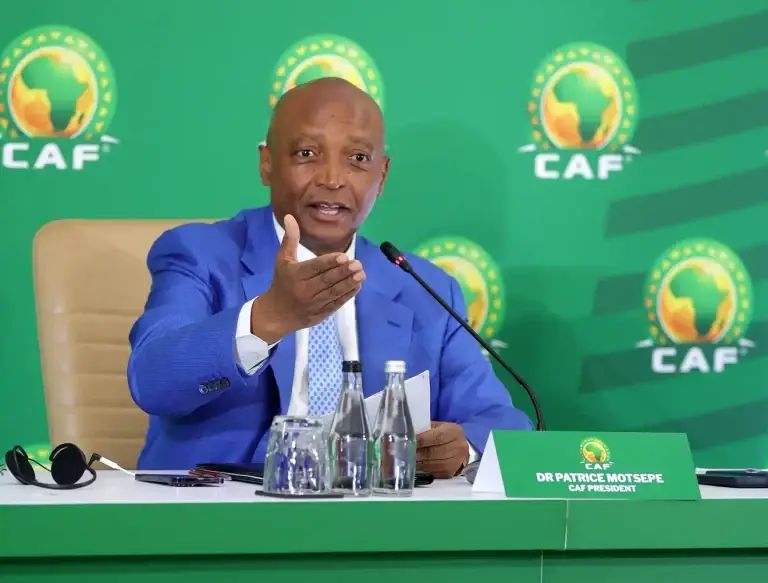
CAF President Patrice Motsepe announced the increase on Wednesday, October 14, 2026, describing it as part of the organisation’s continuing investment in African football. Under the revised arrangement, the maximum annual support available to each member association will rise from $525,000 to $700,000, representing an increase of approximately 33 per cent.
The decision will affect football governing bodies across the continent, including the Nigeria Football Federation, the Ghana Football Association, the Football Association of Zambia and their counterparts in other African countries. However, the announcement does not mean that every federation will automatically receive the maximum amount without meeting any applicable requirements.
CAF said the additional financial support was intended to help member associations strengthen their football development structures, improve administration and governance, invest in youth and women’s football, and establish sustainable programmes for players, coaches, referees and other stakeholders.
The latest increase represents another stage in CAF’s expanding financial assistance programme under Motsepe’s leadership. When the South African businessman became CAF president in March 2021, annual support for each member association stood at $200,000. That amount was subsequently doubled to $400,000 before rising to $525,000 and now reaching as much as $700,000.
Compared with the 2021 allocation, the latest figure represents an increase of 250 per cent. The change reflects CAF’s stated ambition to give national federations greater resources to develop the game beyond major international tournaments and improve the structures that support football at domestic level.
The financial adjustment was announced against the background of CAF’s recent strategy discussions with leaders of its member associations in Cape Verde. The conference brought together football administrators to consider ways of making the continent’s football system more competitive internationally and more sustainable financially.
The organisation has repeatedly emphasised that African football needs stronger institutions capable of developing players, improving competitions and managing their finances responsibly. Increasing funding is intended to help associations address some of those challenges, although the eventual impact will depend on how the resources are managed and deployed.
CAF has also increased financial support for its zonal unions, which coordinate football activities and development across geographical groupings of member associations. Their annual allocation will rise by 20 per cent, from $750,000 to $900,000.
The African Clubs Association will also receive additional assistance. Its annual allocation is set to increase from $400,000 to $500,000, providing another financial boost within the continental football structure.
Taken together, the adjustments demonstrate that CAF’s funding policy extends beyond national federations to regional football organisations and clubs. These bodies play different roles in developing competitions, supporting players and improving the administrative systems needed to sustain the sport.
For national associations, additional funding could create opportunities to improve coaching programmes, expand youth competitions, strengthen referee development and support women’s football. It could also help federations invest in administrative systems, professional staffing and long-term planning rather than relying entirely on income generated by occasional tournaments or sponsorship agreements.
Nevertheless, the announcement does not establish that every association will spend the additional money in the same way. National federations operate under different financial conditions, with varying levels of infrastructure, commercial income, domestic competition strength and government support. Each will need to determine how best to use available resources within CAF’s applicable funding arrangements.
The increase also raises questions about financial accountability. More money can support meaningful development, but its effectiveness depends on transparent budgeting, proper record-keeping and clear evidence of results. Federations will need to demonstrate that increased support contributes to football programmes and institutional improvements rather than simply expanding administrative expenditure.
This issue is particularly important in countries where football attracts substantial public interest but national competitions and development systems face persistent financial constraints. Stronger youth structures, regular domestic competitions and better training opportunities require sustained investment, competent management and long-term commitment.
African football has considerable sporting potential, but national teams and clubs develop within very different environments. Some associations benefit from stronger commercial markets and established domestic leagues, while others have limited resources for training facilities, youth competitions and professional administration. Additional CAF support could help narrow some of these gaps, although it cannot resolve every structural problem on its own.
The funding announcement also comes as CAF continues to pursue its wider ambition of making African football more competitive on the global stage. Achieving that objective requires more than financial allocations. It also depends on effective leadership, quality coaching, reliable competition schedules, improved facilities, player development and public confidence in football institutions.
The continental governing body has identified stronger sponsorship agreements, broadcasting partnerships and other commercial opportunities as important elements of its development strategy. Greater commercial revenue could help sustain future increases in funding and reduce the pressure on CAF to depend on a limited number of income sources.
During recent strategy discussions, CAF leaders also considered the future organisation of the Africa Cup of Nations. Motsepe said the organisation was reviewing the decision to move the tournament to a four-year cycle, following concerns surrounding its impact and scheduling. Any changes to the competition calendar could have implications for national associations, broadcasters, sponsors and clubs, although the funding increase is a separate policy measure.
For supporters, the significance of the latest announcement will ultimately be measured by what happens on the pitch and within local football communities. Financial assistance can create opportunities, but better facilities, stronger competitions and improved pathways for young players require careful planning and consistent implementation.
The increase from $525,000 to $700,000 gives member associations access to a larger pool of annual support. For all 54 associations, the maximum allocation would amount to $37.8 million collectively if each received the full amount. That figure represents the combined maximum, not a confirmation that every association will receive an identical payment.
CAF has presented the move as part of its commitment to developing football throughout Africa and helping its member associations become more self-sustaining. The challenge now is ensuring that the increased resources translate into measurable improvements across national football systems.
As the new funding arrangement takes effect, attention will turn to how federations allocate the additional support, what development projects they prioritise and whether the investment produces lasting benefits. For African football, the opportunity is substantial, but the real test will be whether increased funding delivers stronger institutions, broader participation and better opportunities for the next generation of players.
📩 Stone Reporters News | 🌍 stonereportersnews.com
✉️ info@stonereportersnews.com | 📘 Facebook: Stone Reporters News | 🐦 X (Twitter): @StoneReportNew | 📸 Instagram: @stonereportersnews
Add comment
Comments