

The Presidency has defended President Bola Tinubu's decision to pursue local government financial autonomy through the courts, arguing that stronger local councils are essential to improving public services, expanding economic opportunities and delivering development directly to grassroots communities across Nigeria.
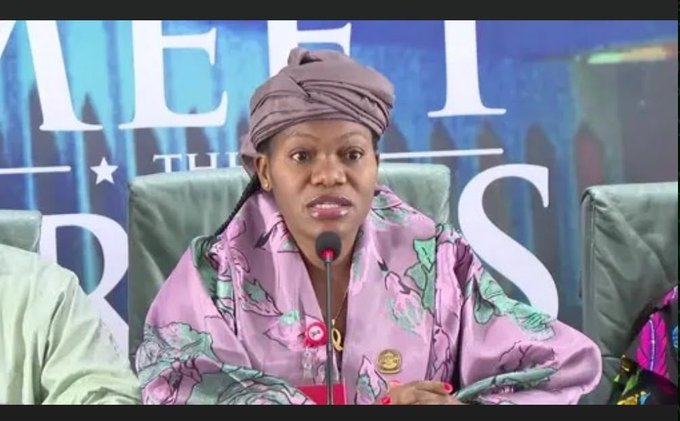
Dr Abiodun Essiet, Senior Special Assistant to the President on Community Engagement for the North-Central zone, made the remarks during a briefing with journalists at the State House in Abuja on Tuesday, October 27, 2026. Speaking alongside other presidential community engagement aides, she said Tinubu's legal intervention demonstrated his determination to strengthen Nigeria's 774 local government councils and ensure that ordinary citizens benefited from government programmes.
“You see him taking government to court because of local government autonomy. There’s no president that has done that because he believes the masses need to benefit,” Essiet said.
The presidential aide argued that meaningful national development would remain difficult if local councils lacked the financial independence and administrative capacity to discharge their constitutional responsibilities.
According to her, local governments are the tier of administration closest to communities and are therefore critical to addressing everyday problems involving infrastructure, basic services and economic empowerment.
“When our local government is strengthened, then you’ll see the same level of empowerment and development that you’re seeing at the federal level up to the state level,” she said.
Essiet maintained that the administration's commitment to autonomy was intended to make local councils more effective rather than leave communities dependent on interventions from state and federal authorities.
The Federal Government's legal action resulted in a landmark Supreme Court judgment delivered on July 11, 2024, affirming the financial autonomy of Nigeria's 774 local government areas.
The judgment directed that statutory allocations from the Federation Account should be paid directly to democratically elected local government councils rather than controlled by state governments.
The Supreme Court also ruled against the administration of local governments through unelected caretaker arrangements, reinforcing the constitutional requirement for democratically elected councils.
Following the judgment, the Federal Government established an inter-ministerial committee in August 2024 to coordinate implementation. The committee included representatives of relevant financial and government institutions responsible for developing mechanisms to give effect to the ruling.
However, more than two years after the judgment, the practical implementation of local government financial autonomy remains a subject of national controversy.
Reports have indicated that state governments continue to exercise substantial control over funds intended for local councils, raising questions about whether the Supreme Court's directives have been fully enforced.
An investigation published by The PUNCH in July 2026 found that allocations to local governments had increased substantially since the judgment, but that the higher amounts had not necessarily translated into financial independence or measurable improvements in grassroots services.
The newspaper reported that local government allocations rose from approximately ₦4.496 trillion between July 2024 and June 2025 to ₦5.984 trillion between July 2025 and June 2026.
Despite the increase, the National Union of Local Government Employees expressed concern that direct payments to councils had yet to become a nationwide reality.
The union maintained that genuine financial autonomy required local councils to exercise effective control over their statutory resources.
Former Vice President Atiku Abubakar has also criticised the Tinubu administration over delays in implementing the judgment.
In December 2025, Atiku accused the Federal Government of failing to enforce the Supreme Court's ruling, arguing that the situation undermined grassroots governance and constitutional accountability.
His criticism highlighted the distinction between securing a favourable judicial decision and ensuring that the judgment produces practical changes in the management of local government finances.
The Presidency, however, has continued to present the court action as evidence of Tinubu's commitment to strengthening the third tier of government.
During the State House briefing, Essiet said her office had established a citizens' assembly involving more than 700 representatives across the North-Central geopolitical zone.
She explained that the initiative was designed to gather complaints, identify community priorities and communicate local development needs to the Presidency.
According to the presidential aide, approximately 70 per cent of the concerns reported through the engagement process fell within the responsibilities of local government authorities.
“I must tell you, 70 per cent of the things they reported are responsibilities of local government,” she said.
Essiet argued that the findings demonstrated why local councils needed stronger institutions, adequate resources and greater accountability.
She also raised concerns about the performance of some local government employees, suggesting that weak administrative structures had contributed to poor service delivery in communities.
The presidential aide called for improved cooperation among federal, state and local authorities to ensure that public resources produced tangible benefits for residents.
Her comments formed part of a broader briefing by presidential community engagement aides representing Nigeria's six geopolitical zones.
The aides highlighted infrastructure projects, community engagement initiatives and government efforts to extend economic opportunities beyond major cities.
They argued that effective local governments could support agricultural development, small businesses, local infrastructure and social services while improving the relationship between government and citizens.
The debate over local government autonomy remains particularly important because many rural communities depend on councils for services that directly affect their daily lives.
Road maintenance, markets, sanitation, community development and aspects of primary service delivery are among the responsibilities associated with local administration under Nigeria's constitutional and statutory framework.
Supporters of financial autonomy argue that councils with direct access to their allocations would be better positioned to plan projects, respond to local needs and account for public expenditure.
However, financial independence alone does not guarantee improved governance. Effective implementation would also require transparent budgeting, functioning democratic institutions, independent oversight and mechanisms to prevent the misuse of public funds.
The continuing dispute therefore places responsibility on both federal and state authorities to ensure compliance with the Supreme Court judgment and establish workable financial arrangements for local councils.
For the Tinubu administration, the challenge is to demonstrate that its legal victory can produce measurable improvements in grassroots governance.
For state governments and local council officials, the issue centres on respecting constitutional responsibilities while ensuring that public resources are managed transparently.
Essiet's remarks reaffirm the Presidency's position that strengthening local governments is central to national development.
Nevertheless, the ultimate measure of the policy will be whether Nigeria's 774 councils gain meaningful control over their finances and translate that independence into improved services and economic opportunities for their communities.
📩 Stone Reporters News | 🌍 stonereportersnews.com
✉️ info@stonereportersnews.com | 📘 Facebook: Stone Reporters News | 🐦 X (Twitter): @StoneReportNew | 📸 Instagram: @stonereportersnews
Add comment
Comments