

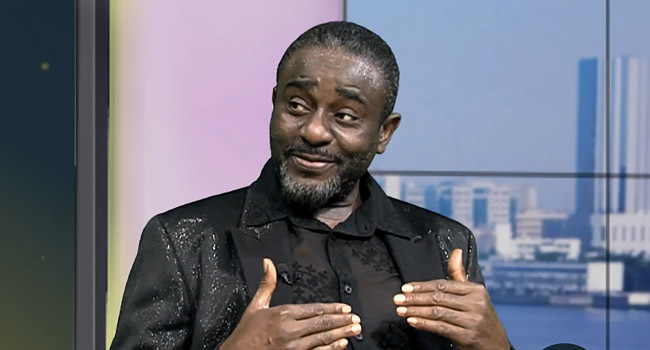
The Federal High Court in Abuja has dismissed a ₦10 billion fundamental rights lawsuit filed by Nollywood actor Emeka Ike against Lere Olayinka, an aide to the Minister of the Federal Capital Territory, Nyesom Wike, and the Independent National Electoral Commission (INEC). The court ruled that the action was improperly constituted and that the actor had failed to establish his allegations of unlawful disclosure of personal information.
Justice Salim Ibrahim delivered the judgment on Wednesday, October 28, 2026, in Abuja, upholding preliminary objections filed by the respondents and dismissing the substantive claims for lack of proof. The case arose from a social media publication concerning Ike's voter registration details during his attempt to contest a House of Representatives seat in the 2027 general elections.
The suit, marked FHC/ABJ/CS/1272/2026, was instituted through Ike's lawyer, L. T. Adeh, against Olayinka and INEC as the first and second respondents respectively.
Ike alleged that Olayinka violated his constitutional right to privacy by publishing details of his voter registration on X, formerly Twitter, without his consent.
The controversy began in May 2026, when Olayinka allegedly shared information relating to the actor's transfer of voter registration from Imo State to the Federal Capital Territory.
At the time, Ike was pursuing the ticket of the Nigeria Democratic Congress (NDC) to represent the Abuja Municipal Area Council and Bwari Federal Constituency in the House of Representatives.
He subsequently lost the party's primary election.
The actor maintained that the publication of his personal information without authorisation amounted to an infringement of his fundamental rights and exposed him to embarrassment and potential misuse of his data.
In his originating application, Ike relied on Section 37 of the 1999 Constitution, which guarantees the privacy of citizens, alongside Article 12 of the Universal Declaration of Human Rights and provisions of the Nigeria Data Protection Act 2023.
He asked the court to declare that the publication constituted an unlawful interference with his privacy and the protection of his personal information.
Ike also sought a declaration that INEC owed him and other registered voters a statutory duty to protect personal data against unauthorised access and disclosure.
He requested ₦10 billion in general and aggravated damages against Olayinka and INEC, to be paid jointly and severally.
In addition to the financial claim, the actor asked the court to order Olayinka to remove the disputed publication from his social media account and issue an unreserved written apology.
He further argued that INEC's June 2, 2026, public statement concerning the circulation of his voter information amounted to an acknowledgment of responsibility.
However, both respondents rejected the allegations and urged the court to dismiss the action.
INEC, in a counter-affidavit deposed to by Anthonia Makwe, an assistant director and data protection officer in its Legal Drafting and Clearance Department, maintained that the information at the centre of the dispute was neither classified nor confidential.
The commission argued that its constitutional and statutory responsibilities included compiling, maintaining, displaying and publishing voter registration information in accordance with applicable electoral laws.
It maintained that the law permitted the disclosure of certain voter information without requiring individual consent in every circumstance.
INEC also denied that the information allegedly published by Olayinka originated from an unauthorised breach of its secured database.
According to the commission, there had been no external breach of its Continuous Voter Registration system, no hacking incident and no unauthorised external access to its information technology infrastructure.
INEC consequently denied violating any statutory obligation to protect the actor's personal information.
Olayinka, in his separate response, argued that the material he published contained only Ike's name and passport photograph, which he maintained were already available to the public.
He denied obtaining the information through unlawful means and disputed the suggestion that he owed the actor a duty of confidentiality in the circumstances.
The minister's aide also argued that Ike's status as a public figure and aspiring political candidate was relevant to the dispute.
According to Olayinka, the actor had already made his identity and photograph public through his entertainment career and political activities.
He maintained that the publication was intended to draw attention to electoral requirements following Ike's transfer of voter registration to Abuja.
Olayinka also made allegations about Ike's conduct at an INEC office, but those claims formed part of his defence and were not independently established in the reports of the proceedings.
He further challenged the legal basis of the ₦10 billion compensation demand, maintaining that the actor had not demonstrated a violation capable of justifying damages.
After considering the parties' submissions, Justice Ibrahim upheld the respondents' preliminary objections, finding that the suit was incompetent and improperly constituted.
The judge also dismissed the substantive action on the ground that Ike had not provided sufficient proof to sustain his claims.
The ruling means that the actor did not obtain the declarations, financial compensation, removal order or apology he requested.
The decision does not, however, mean that all voter registration information is automatically exempt from privacy and data protection requirements.
Rather, the judgment concerns the particular claims, evidence and legal arguments presented in Ike's case.
The dispute highlights the relationship between electoral transparency and the protection of personal information, particularly when individuals seeking public office become involved in controversies over voter registration records.
INEC is responsible for maintaining Nigeria's register of voters and making information available in accordance with the Constitution and electoral legislation.
At the same time, the Nigeria Data Protection Act 2023 establishes obligations concerning the lawful handling and protection of personal data.
Questions about the application of those obligations may depend on the nature of the information, how it was obtained, the legal authority for its disclosure and the circumstances surrounding its publication.
The Federal High Court's decision resolves Ike's claims at this stage, although the available reports do not establish whether he intends to challenge the judgment on appeal.
Reacting to the ruling, Ike expressed disappointment and questioned the protection available to individuals who believe their privacy rights have been violated.
His reaction reflected continuing disagreement with the outcome, despite the court's finding that his claims had not been sufficiently established.
The judgment brings the proceedings before Justice Ibrahim to a close, with Olayinka and INEC successfully defending the ₦10 billion action.
For Ike, the ruling represents a legal setback arising from a dispute that began during his unsuccessful attempt to secure a House of Representatives nomination ahead of the 2027 elections.
The case also underscores the importance of establishing both the legal basis and supporting evidence when seeking judicial remedies for alleged breaches of privacy and personal data protection.
📩 Stone Reporters News | 🌍 stonereportersnews.com
✉️ info@stonereportersnews.com | 📘 Facebook: Stone Reporters News | 🐦 X (Twitter): @StoneReportNew | 📸 Instagram: @stonereportersnews
Add comment
Comments