

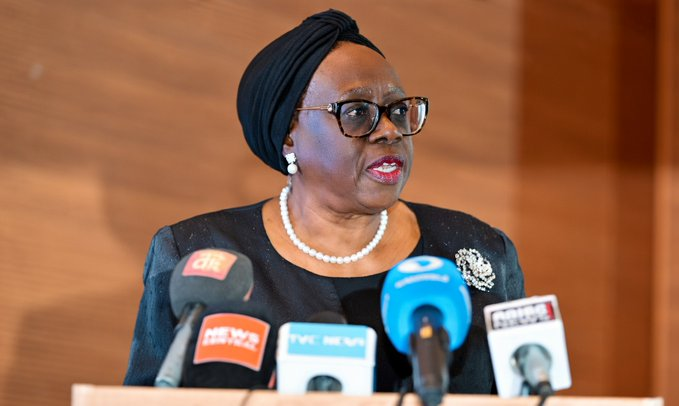
The Chief Justice of Nigeria (CJN), Justice Kudirat Kekere-Ekun, has warned judges against allowing political pressure, public sentiment or the urgency of election-related disputes to influence judicial decisions ahead of the 2027 general elections. She stressed that the judiciary must remain independent, impartial and guided by the Constitution and applicable laws, regardless of the political interests involved.
Kekere-Ekun delivered the warning on Monday, October 26, 2026, during the opening session of the 2026 Roundtable for Heads of Courts, organised by the National Judicial Institute (NJI) in Abuja. Addressing senior judicial officers, she expressed concern over practices capable of undermining judicial integrity, particularly forum shopping, concealment of related proceedings and attempts to obtain conflicting court orders.
The Chief Justice emphasised that the approaching electoral season would place considerable pressure on courts as political parties, candidates and other interested parties seek judicial intervention in election-related disputes.
She said the judiciary must be prepared to discharge its constitutional responsibilities with impartiality, courage and fidelity to the law.
“Political sensitivity, public sentiment or the urgency with which a matter is presented must never displace the careful application of the Constitution, the Electoral Act and the applicable rules of court,” she declared.
Her remarks highlighted the responsibility of judicial officers to ensure that politically sensitive cases are determined according to established legal principles rather than external influence or public expectations.
Kekere-Ekun identified forum shopping as a particularly damaging practice, warning that litigants who approach different courts in search of favourable decisions risk undermining the consistency and credibility of the judicial system.
Forum shopping generally involves attempts to secure a perceived advantage by choosing a particular court or pursuing proceedings in different jurisdictions, rather than following the appropriate legal process.
The Chief Justice also expressed concern about parties concealing related proceedings from judges or seeking contradictory orders from courts exercising similar jurisdiction.
She warned that such practices could create confusion, encourage abuse of judicial procedures and expose the courts to avoidable public controversy.
According to her, judges must carefully examine applications brought before them and ensure that litigants disclose all relevant facts, including the existence of related proceedings.
She particularly cautioned against the misuse of urgent applications and ex parte orders, which are sometimes sought without the opposing party being heard at the initial stage.
The Chief Justice explained that the urgency attached to an application must not become an excuse for bypassing procedural safeguards or granting an improper advantage to any party.
She urged heads of courts to ensure that judicial officers exercise appropriate scrutiny before making orders in politically sensitive matters.
Kekere-Ekun maintained that the integrity of judicial proceedings must remain protected from competing political interests and pressure from any quarter.
She further stressed that courts must not permit litigants to manipulate judicial procedures in pursuit of favourable outcomes.
The warning comes as Nigeria prepares for the 2027 general elections, when disputes involving political parties, candidate nominations, electoral procedures and election results could place additional demands on the judiciary.
The courts have an important constitutional role in resolving such disputes, making their independence and public credibility essential to the electoral process.
Beyond election-related litigation, the Chief Justice addressed broader challenges affecting the administration of justice, particularly delays in determining cases.
She observed that prolonged proceedings impose financial and emotional burdens on litigants, weaken confidence in judicial institutions and diminish the practical value of legal remedies.
While acknowledging that inadequate funding, infrastructure and judicial manpower contribute to delays, she said some problems could be addressed through improved court administration.
Kekere-Ekun identified inefficient case management, repeated adjournments, poor scheduling and inadequate monitoring of pending cases as administrative weaknesses requiring attention.
She directed heads of courts to maintain a clear understanding of their caseloads, including the number of pending matters, how long cases have remained unresolved and the reasons for delays.
According to her, such information should guide realistic strategies for reducing backlogs, allocating hearing dates more effectively and ensuring that concluded matters are promptly removed from active court records.
However, she cautioned that judicial efficiency must not be assessed solely by the number of cases concluded.
The Chief Justice stressed that the fundamental requirement remains the fair, competent and timely determination of disputes, with the constitutional right to a fair hearing fully protected.
She also addressed the appointment of judicial officers, calling for transparent and merit-based selection processes.
Kekere-Ekun urged heads of courts to resist pressure from external interests and ensure that appointments reflect competence, character and suitability for judicial responsibilities.
She maintained that public confidence in the judiciary depends partly on the assurance that individuals entrusted with judicial authority have emerged through credible selection procedures.
The Chief Justice further directed judicial leaders to strengthen professional standards within their courts and promote a culture of accountability and impartiality.
On courtroom administration, she expressed concern about late sittings and inadequate communication when scheduled proceedings are cancelled.
She described punctuality as a professional responsibility and urged court administrators to establish reliable arrangements for informing lawyers and litigants about changes to hearing schedules.
Kekere-Ekun noted that it was unacceptable for individuals to travel considerable distances and incur expenses only to discover that a court would not sit.
She also emphasised the importance of dignity and respect in judicial proceedings, reminding judges that courtroom authority should be exercised with fairness and composure.
The Chief Justice maintained that lawyers and litigants should receive courteous treatment regardless of their social standing, financial circumstances or educational background.
Her remarks reinforced the broader principle that the administration of justice must remain accessible, professional and accountable to the public.
The roundtable also provided an opportunity for judicial leaders to consider administrative reforms and the challenges facing courts across the country.
Justice Babatunde Adejumo, a retired President of the National Industrial Court and Administrator of the National Judicial Institute, described the judiciary as a guardian of the rule of law whose conduct remains under constant public scrutiny.
He said the annual gathering was designed to encourage discussions among heads of courts on institutional challenges and practical measures for improving judicial administration.
The Chief Justice's warning is significant as the country approaches another electoral cycle in which judicial decisions could determine the outcome of politically sensitive disputes.
Although the judiciary is expected to resolve disagreements arising from the electoral process, its authority depends on the consistent application of the law and the perception that decisions are reached independently.
Kekere-Ekun's intervention therefore places responsibility on judges, court administrators and litigants to protect judicial proceedings from manipulation, improper pressure and procedural abuse.
As preparations for the 2027 elections continue, the Chief Justice has made clear that neither political influence nor public expectations should override constitutional requirements.
Her central message is that the credibility of Nigeria's electoral justice system must rest on impartial adjudication, respect for due process and the consistent application of the law.
📩 Stone Reporters News | 🌍 stonereportersnews.com
✉️ info@stonereportersnews.com | 📘 Facebook: Stone Reporters News | 🐦 X (Twitter): @StoneReportNew | 📸 Instagram: @stonereportersnews
Add comment
Comments