

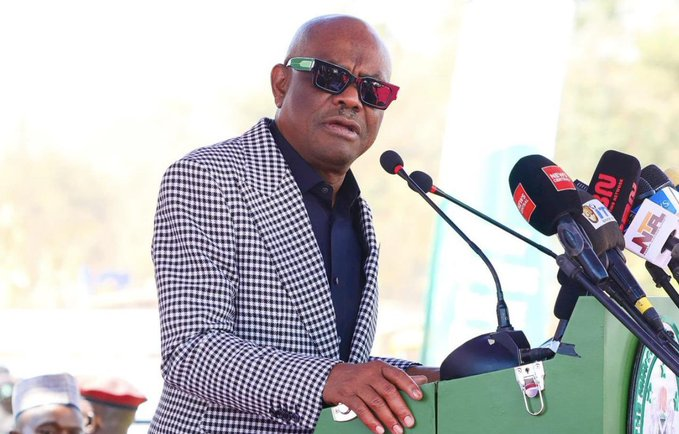
Minister of the Federal Capital Territory, Nyesom Wike, has questioned the sincerity of former Anambra State Governor Peter Obi's visits to internally displaced persons camps, accusing politicians of using public displays of compassion to advance their presidential ambitions. His remarks have renewed political debate about humanitarian engagement, leadership records and the treatment of Nigerians displaced by insecurity.
Wike made the comments on Thursday, October 15, 2026, at the inaugural Idoma Hall of Fame induction ceremony in Abuja, organised in collaboration with Ochetoha K'Idoma as part of the Idoma Centenary Plus celebration. Speaking on political leadership, equity and fairness, the minister criticised politicians he accused of presenting themselves as compassionate only when seeking higher office.
“Politicians can tell lies. Yes. A man who did not celebrate his birthday when he was a governor now wants to be president and wants to celebrate his birthday in IDP camps? And you say, ‘Oh, he is very humble.’ Which humility is that?” Wike asked.
Although the remarks referred to Obi's activities, the minister framed his criticism within a broader warning about what he described as political opportunism ahead of the 2027 general elections.
He urged Nigerians to examine the previous records and conduct of political figures rather than relying exclusively on public appearances, symbolic gestures or promises made during campaigns.
Wike also criticised politicians he described as political gamblers, arguing that appeals based on ethnicity, marginalisation and personal presentation should not replace assessments of leadership and accountability.
The comments followed Obi's recent visits to displacement camps, where the former governor has drawn attention to the conditions facing families forced from their homes by violence and insecurity.
On September 30, Obi announced that he had visited 12 internally displaced persons camps across Nigeria in recent weeks.
He shared photographs of his interaction with displaced children during a visit to the Ramin Kura camp in Sokoto State, describing the location as his twelfth such visit.
During the engagement, Obi expressed concern about overcrowding, inadequate sanitation, limited healthcare facilities and the educational difficulties facing children living in temporary settlements.
He reported that as many as ten displaced persons were sharing a room in parts of the camp, which he said accommodated more than 1,000 people.
The former governor also highlighted the absence of adequate toilets, a primary healthcare centre and basic educational facilities for children.
His account was presented as evidence of the hardship experienced by Nigerians whose communities have been affected by armed violence.
Obi argued that displaced families should be able to return safely to their communities, resume farming and trading, and provide education for their children.
He also called on President Bola Tinubu and other public officials to spend their holidays within Nigeria to gain firsthand understanding of the difficulties facing vulnerable citizens.
The former governor has maintained that his visits are intended to highlight humanitarian conditions and encourage practical government intervention.
His engagements with displaced persons did not begin with the latest presidential campaign period.
In July 2023, Obi marked his 62nd birthday by visiting Bungha Pilot School in Mangu Local Government Area of Plateau State, which was accommodating displaced residents.
He described the visit as an opportunity to engage with people affected by violence and draw attention to their needs.
In January 2025, he visited the Durumi displacement camp in Abuja, where he expressed concern that temporary settlements were becoming prolonged living arrangements.
During that visit, he pledged support for healthcare workers providing services to displaced residents and discussed arrangements for additional medical assistance.
These earlier activities provide context for assessing Wike's criticism, although they do not independently establish Obi's personal motivations.
Wike has previously challenged the former governor over similar issues.
In October 2025, the FCT minister criticised Obi's birthday visits to displacement camps while responding to comments about the condition of public schools in Abuja.
At the time, Wike argued that humanitarian appearances were insufficient evidence of the ability to govern Nigeria.
He also challenged Obi to compare his record as Anambra governor with infrastructure and educational improvements undertaken by the FCT administration.
The latest remarks therefore continue an established disagreement between the two politicians over public service, political credibility and the standards by which leadership should be assessed.
Wike, a former Rivers State governor, has remained an influential political figure since his appointment as FCT minister under President Tinubu.
Obi, who contested the 2023 presidential election as the Labour Party candidate, has continued participating in national political debates ahead of the next election.
Their competing statements reflect wider disagreements over how political leaders should demonstrate commitment to addressing poverty, insecurity and public welfare.
However, determining whether a humanitarian visit is sincere cannot be established solely from the timing of an appearance or the political position of the individual involved.
Similarly, the public visibility of charitable activities does not automatically establish their effectiveness or the extent of assistance provided.
Those questions require consideration of measurable outcomes, sustained engagement and the policies proposed to address the underlying causes of displacement.
Nigeria continues to experience internal displacement arising from armed conflict, communal violence and other security challenges across several regions.
Affected families frequently face difficulties accessing accommodation, education, healthcare and reliable sources of income.
Children living in displacement camps may experience prolonged interruptions to schooling, while adults can lose access to farmland, businesses and established community networks.
Humanitarian organisations and public authorities have repeatedly emphasised the importance of both immediate assistance and durable solutions.
These include improving security, supporting voluntary and safe returns, providing essential services and creating conditions for displaced people to rebuild their livelihoods.
The political disagreement between Wike and Obi has brought renewed attention to these concerns, although neither politician's criticism or response resolves the practical difficulties facing displaced families.
The minister's remarks have not established that Obi's visits were staged, nor do the visits themselves demonstrate how his proposed policies would perform in government.
For voters, the competing accounts present different claims about leadership conduct that can be examined alongside the politicians' records and stated programmes.
As political activities intensify ahead of 2027, public attention may remain focused on how candidates and officeholders respond to humanitarian challenges.
For displaced Nigerians, the immediate issues remain access to safety, adequate shelter, healthcare, education and opportunities to return to normal life.
Wike's latest criticism adds to the political debate, while the circumstances facing families in displacement camps continue to require sustained attention from public institutions.
📩 Stone Reporters News | 🌍 stonereportersnews.com
✉️ info@stonereportersnews.com | 📘 Facebook: Stone Reporters News | 🐦 X (Twitter): @StoneReportNew | 📸 Instagram: @stonereportersnews
Add comment
Comments