

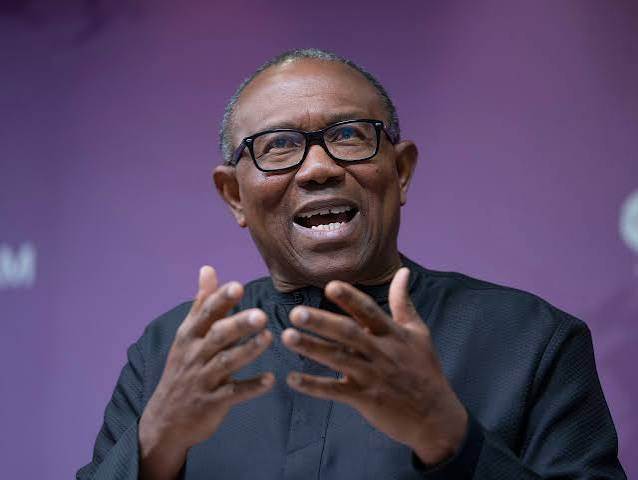
Former Edo State Governor and serving Senator Adams Oshiomhole has challenged Peter Obi to explain how his administration accumulated substantial dollar-denominated savings while receiving federal allocations in naira, escalating a political disagreement over Anambra State's financial records. Oshiomhole also questioned Obi's repeated assertion that he governed without borrowing, accusing the former Anambra governor of misleading Nigerians about his administration's financial achievements and his relationship with the Debt Management Office.
The controversy intensified on Friday, October 9, 2026, following reports of Oshiomhole's remarks during an interview on the Naija Unfiltered podcast broadcast by SYMFONI. The senator, who represents Edo North under the All Progressives Congress, directed his criticism at Obi, Anambra governor between 2006 and 2014 and a presidential contender. His comments followed renewed disagreements involving Governor Chukwuma Soludo's administration in Awka over external loan obligations attributed to Obi's tenure.
Oshiomhole questioned the source of the foreign currency holdings Obi said he left behind. He argued that governors received allocations from the Federal Government in naira and demanded an explanation of how Anambra accumulated investments denominated in United States dollars.
The senator also disputed Obi's account of an event involving former Debt Management Office Director-General Abraham Nwankwo. Obi had previously said Nwankwo recognised him for not approaching the office to obtain borrowing approval during his governorship. Oshiomhole rejected that account and accused Obi of dishonesty.
The criticism addressed two distinct aspects of Obi's financial record: the existence and origin of the reported savings, and whether external financing arrangements entered into during his administration constituted state borrowing. Both matters have become subjects of political disagreement and public examination of historical financial documents.
Obi has consistently maintained that he left Anambra with substantial investments when he handed over to Willie Obiano on March 17, 2014. His account includes approximately ₦75 billion in savings and investments, with a foreign currency component he has placed above $150 million.
The former governor has identified investments associated with Access Bank, Diamond Bank and Fidelity Bank in explaining the dollar-denominated holdings. The figures have featured prominently in discussions about his financial management record, although the precise composition and subsequent treatment of the investments remain relevant to establishing their value.
Oshiomhole's question about naira allocations does not, by itself, establish that dollar investments could not have existed. State governments can hold foreign currency assets through lawful financial arrangements. Determining the origin of particular investments requires examination of the relevant bank records, transactions and government accounts.
The borrowing controversy became more prominent in September after the Anambra State Government published information concerning eight external financing facilities associated with programmes initiated during Obi's administration.
On September 16, the state's Commissioner for Information and Value Reformation, Dr Law Mefor, said the facilities had a combined contracted value of approximately $123.77 million. According to the government, $92.35 million remained outstanding as of June 30, 2026, equivalent to approximately ₦127.37 billion at the exchange rate it applied.
Mefor maintained that the obligations related to development projects covering education, healthcare, erosion control and other public services. The government said repayments continued through deductions from Anambra's federal allocations, creating financial responsibilities for successive administrations.
Obi rejected the government's interpretation, arguing that it incorrectly combined approved financing amounts with actual borrowing and outstanding liabilities. He insisted that the financial position at the time of his departure should be distinguished from obligations recorded many years later.
In a September 25 statement, Obi said he had neither approached a financial institution to obtain a loan nor issued bonds on behalf of Anambra during his governorship. He acknowledged, however, that multilateral development financing involved repayment responsibilities under applicable arrangements.
The former governor explained that the disputed facilities were largely associated with World Bank and International Fund for Agricultural Development programmes negotiated through the Federal Government, with participating states accessing financing under subsidiary arrangements.
He argued that the total value approved for multiyear projects should not automatically be described as debt already incurred and outstanding when he left office.
Obi cited Debt Management Office figures showing Anambra's external debt at approximately $18 million when he assumed office and about $30 million when he departed in March 2014. He said the balance subsequently reached approximately $45.15 million by December 31, 2014.
Those figures formed the basis of his challenge to the state government's claim that his administration left behind facilities valued at more than $123 million.
The distinction is important because an approved financing commitment, an amount actually disbursed and an outstanding debt balance represent different accounting measures. Establishing responsibility requires examining when agreements became effective, when funds were drawn and what obligations existed at the relevant handover date.
The Anambra Government subsequently issued another statement on September 26, rejecting Obi's explanation. It argued that state participation in multilateral financing programmes required consent and signed agreements, making the resulting obligations legally relevant even where the Federal Government facilitated negotiations.
The administration maintained that the facilities were genuine loans rather than grants and that repayments continued to affect state finances.
An independent examination published by PREMIUM TIMES on September 28 found that Debt Management Office records showed Anambra's external debt increased during Obi's tenure, although the recorded debt stock was considerably lower than the combined value of facilities cited by the government.
That finding provides important context without resolving every aspect of the disagreement. The evidence distinguishes historical debt balances from the total value of financing agreements, while leaving questions about individual disbursements and repayment schedules.
Another notable contribution came from Abia State Governor Alex Otti, a former banking executive. Otti has said he advised Obi to convert substantial state investments into dollars because of concerns about naira depreciation. His account provides a possible explanation for the foreign currency holdings Oshiomhole questioned.
The available handover documentation also records foreign currency investments valued at approximately ₦25.6 billion in March 2014, equivalent to about $156 million at the time. However, confirming every underlying transaction and the funds available at handover requires comprehensive banking evidence.
Obi's account of Abraham Nwankwo's farewell ceremony remains a separate factual claim. Oshiomhole has challenged it, but the available reporting does not establish an authenticated record of the former DMO director-general's alleged remarks that conclusively resolves the disagreement.
The controversy reflects increasing scrutiny of historical government performance ahead of Nigeria's 2027 elections. Oshiomhole and Obi represent different political platforms, and their disagreement concerns financial accountability, administrative credibility and the interpretation of public records.
For Nigerians, the dispute extends beyond the reputations of individual politicians. It concerns how governments report savings, investments, liabilities and development financing, and whether those records provide an accurate picture of public resources.
The central unresolved questions are the precise composition of Anambra's dollar investments, the disbursements made under the eight external facilities and the debt obligations outstanding when Obi left office.
Oshiomhole's allegations have intensified the controversy, but they do not independently establish that Obi fabricated his savings or borrowing claims. Equally, Obi's explanations do not eliminate the external debt recorded during his administration.
A definitive reconciliation would require the relevant bank statements, signed financing agreements, disbursement schedules and independently verified debt balances. Until those records are fully reconciled, the competing political accounts remain subject to further examination.
📩 Stone Reporters News | 🌍 stonereportersnews.com ✉️ info@stonereportersnews.com | 📘 Facebook: Stone Reporters News | 🐦 X (Twitter): @StoneReportNew | 📸 Instagram: @stonereportersnews
Add comment
Comments