

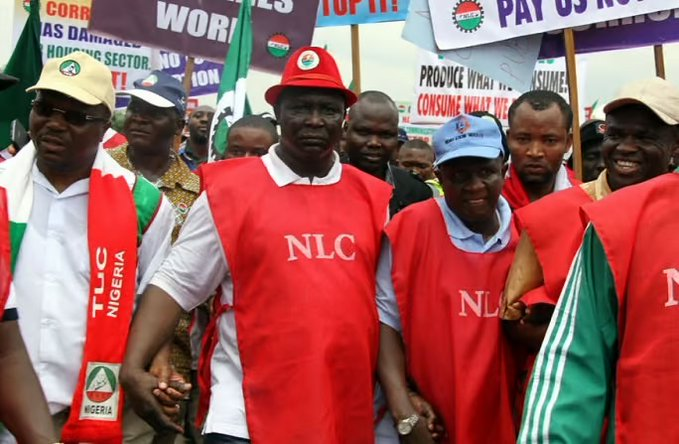
The Nigeria Labour Congress (NLC) has renewed its warning that Nigerian workers are facing severe economic hardship despite the increase in the national minimum wage to ₦70,000, insisting that its two-week ultimatum to the Federal Government over rising petrol prices and fresh wage negotiations remains in force.
NLC President Joe Ajaero reaffirmed the labour movement's position on Monday, October 19, 2026, in Abuja, where he criticised the impact of rising living costs on workers' purchasing power and expressed concern about the implementation of the 2024 minimum wage agreement. His remarks came as the October 23 deadline approached, with organised labour demanding urgent government action to reduce petrol prices and begin negotiations on a new wage structure.
Ajaero maintained that the current minimum wage had become inadequate because of the rising costs of food, transportation, housing, healthcare and other essential goods and services. He argued that the financial relief workers expected from the wage increase had been significantly weakened by economic conditions, leaving many households struggling to meet their basic needs.
The NLC president stressed that the labour movement's demands were not limited to an increase in the amount paid to workers. He identified the cost of living, particularly the price of petrol, as a major factor affecting the value of salaries and the ability of workers to maintain reasonable living standards.
The Federal Government approved the current ₦70,000 national minimum wage in July 2024, replacing the previous ₦30,000 benchmark. President Bola Ahmed Tinubu signed the National Minimum Wage Act into law on July 29, 2024, following negotiations between the government, organised labour and other stakeholders.
However, the NLC has repeatedly argued that the increase has failed to deliver lasting financial relief because of changes in the prices of essential commodities and services.
In an earlier statement, Ajaero said the purchasing power of the minimum wage had been substantially eroded before many workers could fully benefit from its implementation.
“The ₦70,000 minimum wage was already destroyed by inflation before it was implemented,” the labour leader said in comments reported earlier this month.
The Congress consequently called for renewed negotiations to establish a wage benchmark that better reflects prevailing economic realities.
On October 8, the NLC announced a two-week ultimatum following a joint meeting of its National Executive Council and Central Working Committee at Labour House in Abuja. The ultimatum took effect on Friday, October 9, giving the Federal Government until October 23 to address the union's principal demands.
In the communiqué issued after the meeting, the Congress demanded that the government take steps to reduce the nationwide price of Premium Motor Spirit, commonly known as petrol, to the level prevailing when the current minimum wage was signed into law in 2024.
The labour movement argued that increases in petrol prices had contributed to higher transportation costs, which in turn affected food distribution, commuting expenses and the prices of other goods and services.
According to the NLC, reducing petrol prices would provide immediate relief to workers and other Nigerians whose household expenditure has increased considerably.
The Congress also demanded that the Federal Government commence negotiations on a new national minimum wage before the end of October, maintaining that the existing arrangement no longer adequately reflects workers' economic circumstances.
Beyond petrol prices and wage negotiations, the labour organisation called for the implementation of outstanding agreements involving public-sector workers.
These include the terms of settlement reached with the Joint Health Sector Unions and Assembly of Healthcare Professionals on February 5, 2026, as well as unresolved demands of the Joint Public Sector Negotiating Council.
The NLC further requested agreed tax relief measures and the immediate payment of wage awards to cushion workers against the rising cost of living.
In its October 8 communiqué, the Congress warned that failure to address its demands within the stipulated period would compel it to consider further measures through its relevant decision-making bodies.
The union also directed its affiliates and allied organisations to remain prepared for possible action, although no new nationwide strike date had been announced in the latest remarks.
Ajaero's renewed warning on Monday therefore reinforced the labour movement's position that the ultimatum had not been withdrawn or suspended.
The development comes as the Federal Government seeks to balance workers' demands with its financial obligations and broader economic policies.
Speaking on Monday at a retreat organised by the National Salaries, Incomes and Wages Commission in Abuja, the Secretary to the Government of the Federation, George Akume, called for wage decisions that take account of both prevailing economic conditions and the government's financial capacity.
Akume, represented by the Permanent Secretary of the General Services Office, Dr Abubakar Kana, emphasised the need to protect workers' welfare while ensuring that salary commitments remain financially sustainable.
The government's position highlights a central issue in the dispute: organised labour is seeking immediate improvements in workers' purchasing power, while federal authorities have emphasised the fiscal implications of increasing public expenditure on salaries.
The Tinubu administration has also outlined measures intended to moderate petrol costs, including discussions around domestic refining, fuel distribution and targeted price interventions.
Finance Minister Taiwo Oyedele previously announced proposals involving a temporary petrol discount and a possible ceiling on the ex-gantry or landing cost of petrol. The government has presented such measures as alternatives to restoring a broad petrol subsidy.
However, the NLC's continued ultimatum indicates that the labour movement is still seeking further commitments on petrol prices, wage negotiations and outstanding agreements.
The dispute is taking place against the background of the wider debate over whether nominal wage increases have kept pace with the cost of living in Nigeria.
Although the national minimum wage rose from ₦30,000 to ₦70,000 in 2024, the amount represents a statutory monthly wage floor rather than a guarantee that workers can meet all household expenses.
The actual purchasing power of that wage depends on the prices of goods and services, the size of a household and the expenses workers must cover from their earnings.
For the NLC, the immediate concern is that continued increases in living costs have weakened the financial benefits of the 2024 wage agreement, making another round of negotiations necessary.
With the ultimatum approaching its deadline, attention is now focused on whether the Federal Government and organised labour will reach an understanding on petrol prices, wage reviews and the implementation of outstanding commitments.
As of Monday, October 19, the NLC had maintained its demands, while no final agreement resolving the ultimatum had been publicly confirmed.
📩 Stone Reporters News | 🌍 stonereportersnews.com
✉️ info@stonereportersnews.com | 📘 Facebook: Stone Reporters News | 🐦 X (Twitter): @StoneReportNew | 📸 Instagram: @stonereportersnews
Add comment
Comments