

Reported by: Ijeoma G | Edited by: Oravbiere Osayomore Promise.
Iran and Israel have suspended airstrikes and missile attacks after less than 24 hours of direct military exchanges that punctured the fragile two-month ceasefire brokered by the United States. The pause, announced late Monday, came immediately after US President Donald Trump told both sides to “stop shooting” and said peace negotiations were “subject to ignorance or stupidity getting in its way”.
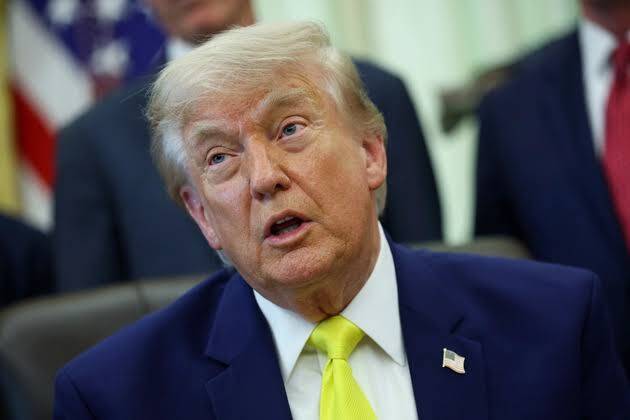
“Both sides, Israel and Iran, are looking to do an immediate CEASEFIRE!” Trump wrote on Truth Social. “Final negotiations on ‘Peace’ are proceeding, subject to ignorance or stupidity getting in its way.” The White House later confirmed that Trump had called Israeli Prime Minister Benjamin Netanyahu to press for an end to the strikes, and an Israeli official said Israel halted its attacks at the request of the US president.
The exchanges began late Sunday when Iran launched ballistic missiles at Israeli territory. Tehran said the strikes were retaliation for an Israeli attack on Hezbollah strongholds in the southern suburbs of Beirut, Lebanon. The Israel Defense Forces responded in the early hours of Monday morning, targeting what it said were military sites in western and central Iran. A second wave of air strikes struck a petrochemical complex in the south‑western Iranian city of Mahshahr, where, according to an Israeli military official, chemicals used for ballistic missiles were produced.
Casualties were limited. Iran’s Emergency Organisation chief said the Israeli strikes injured 14 people in Mahshahr and one in Tehran. On the Lebanese front, separate Israeli air strikes hit the city of Tyre on Monday, killing five people and wounding eight, according to Lebanon’s health ministry. The Red Cross reported that four of its rescuers were among the injured.
Despite the suspension, neither side has expressed genuine trust. In a televised address late Monday, Netanyahu announced that Israel would hold fire “at the moment”. “The fire on this front has been halted, because after the terrorist regime in Tehran was struck, it stopped attacking us,” he said. However, he warned that the struggle against Iran and Hezbollah was “not finished”. If the regime makes the mistake of attacking again, “we will respond with force”. Iran’s armed forces also said it had stopped its operations, only after delivering a “painful response” to Israel. Tehran promised “more severe and crushing measures” if Israel carries out more strikes, including in Lebanon, where Israeli forces are fighting the Iran‑backed Hezbollah.
The sharp exchange shattered what had been an uneasy truce in place since April, when the US and Iran agreed to a ceasefire that ended weeks of open warfare triggered by a joint US-Israeli attack that killed Supreme Leader Ayatollah Ali Khamenei and other senior officials. Since that ceasefire, Trump has been trying to negotiate a more durable regional peace deal. The US president has repeatedly warned Israel not to torpedo those talks. Asked how he had persuaded Netanyahu to halt the strikes, Trump told the BBC: “All I did is say, ‘We have to use sense’. We’re very close to signing a very powerful deal.”
Trump also claimed, in comments to Axios, that he had told Netanyahu he might be left to fight alone if he went back to war with Iran. “I said, ‘Bibi, you better be careful, or you will be on your own very soon’.” Netanyahu, in his address, said he had responded that “Israel has a full right to self‑defence, and we are exercising it as required”.
The pause, however, is far from a permanent peace. A principal obstacle is Lebanon, where Israel is still fighting Hezbollah. Netanyahu and his defence minister have made clear they will not stop operations in Lebanon. “Any Iranian attempt to link Lebanon and Iran and attack Israel will be met with great force, as happened yesterday,” Israeli Defence Minister Israel Katz warned. Iran, for its part, has repeatedly tried to link any definitive ceasefire to Israel ending its offensive in Lebanon, a condition Israel flatly rejects. On Monday, Hezbollah said it had fired a rocket barrage at a group of Israeli army vehicles and soldiers in southern Lebanon.
Flights and schools have reopened in Israel after the immediate threat subsided, though the Israeli Ministry of Education kept schools in some northern communities near the Lebanese border closed or restricted to protected spaces. Iran, which had cancelled all flights, later reopened its airspace. Iraq also ended a 72‑hour closure of its airspace.
For now, the guns are silent on the Iran‑Israel front. But the underlying crisis remains unresolved. Netanyahu still insists Israel must degrade Hezbollah, and Iran still insists it will not accept Israeli strikes on its allies without retaliation. The “ceasefire within a ceasefire”, as analysts have called it, is little more than a temporary pause in a much larger war. Both sides have said clearly that if the other side fires first, the pause will end.
📩 Stone Reporters News | 🌍 stonereportersnews.com ✉️ info@stonereportersnews.com | 📘 Facebook: Stone Reporters News | 🐦 X (Twitter): @StoneReportNew | 📸 Instagram: @stonereportersnews
Add comment
Comments