

Reported by: Ijeoma G | Edited by: Oravbiere Osayomore Promise.
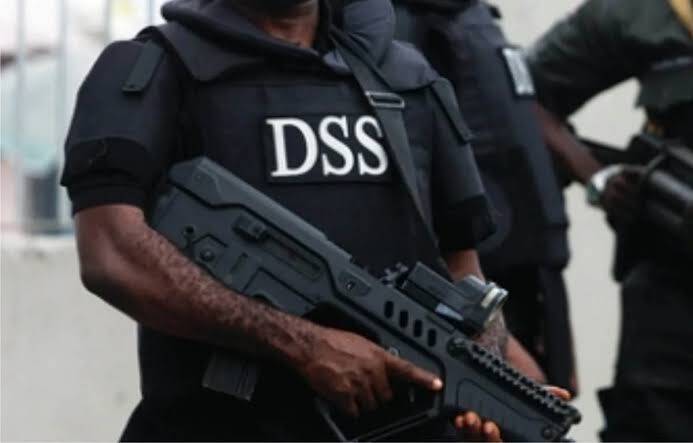
The Department of State Services has arraigned a man, Paul Jibrin Oweleke, before the Federal High Court in Lagos for allegedly using his social media platform to call for a military coup to remove President Bola Tinubu from office. The defendant pleaded not guilty to the two‑count charge, and the court ordered his remand pending a bail hearing set for June 16.
Prosecution counsel Michael Bajela told the court that Oweleke, on or about May 23, 2025, knowingly transmitted messages and broadcasts through his social media handle, “Oweleke TV”, urging the military to overthrow the Tinubu administration and replicate the political situation in Burkina Faso. Bajela said the messages were “subversive and intended to incite members of the public, cause disaffection and undermine law and order in the country”. In the second count, the prosecutor alleged that Oweleke used the same platform to bully, threaten or harass President Tinubu, placing the President and the office of the President in fear of death, violence or bodily harm.
The charges were brought under Sections 24(1)(b) and 24(2)(a) of the Cybercrimes (Prohibition, Prevention, etc.) Act, 2015, as amended in 2024, and are punishable under Sections 24(2)(c)(i) of the Act. Section 24(1)(b) criminalises the knowing transmission of any communication that is grossly offensive or of an indecent, obscene or menacing character. Section 24(2)(a) prohibits the knowing transmission of any communication that bullies, threatens or harasses another person, where such communication places that person in fear of death, violence or bodily harm.
The court, presided over by Justice Akintoye Aluko, heard the matter on Monday, June 8, 2026. When the defendant took his plea, Oweleke entered a plea of not guilty. Bajela then requested the court to fix a trial date and remand Oweleke in the custody of the Nigerian Correctional Service pending the conclusion of the case. However, defence counsel informed the court that a bail application had already been filed and served on the prosecution. Bajela acknowledged receipt of the application, but said it had been served “shortly before proceedings commenced” and requested time to study it and file an appropriate response.
Justice Aluko, after hearing both parties, adjourned the matter until June 16, 2026, for hearing of the bail application. He ordered that the defendant be remanded in a correctional facility pending the determination of the application. The DSS had originally listed the case for arraignment, and court orders were served on the defendant through the prison authorities.
Legal experts say the case highlights the increasing use of Nigeria’s cybercrime legislation to counter expressions the state deems subversive, especially those that challenge the legitimacy or survival of the federal government. While some argue that Section 24 of the Cybercrimes Act was drafted primarily to address online harassment and abusive communications, prosecutors have successfully used it in cases that touch on incitement and threats against public officials. The provision allows for prosecution even when the contested speech does not directly incite violence, as long as it is considered “menacing” or likely to cause a breach of the peace. This breadth has drawn criticism from free‑speech advocates, particularly as Nigeria heads toward the 2027 election cycle and political rhetoric across all platforms intensifies.
Oweleke’s case is not the first time the security services have invoked the Cybercrimes Act against speech perceived as threatening state stability. In January 2026, the DSS tendered social media posts as evidence in the ongoing prosecution of activist Omoyele Sowore, who is facing similar charges for calling President Tinubu a “criminal.” In that trial, a prosecution witness played a video in which Sowore allegedly said “anybody who commits a crime is a criminal,” and argued the comment was directed at the president.
The Burkina Faso reference in Oweleke’s case is also deliberate. In 2022, Captain Ibrahim Traoré seized power in Ouagadougou, the second military takeover in that country in less than a year, and has remained in power since. The reference to Burkina Faso signals that the prosecution is treating Oweleke’s social media broadcasts not as idle political commentary but as a genuine attempt to model Nigeria’s political instability on a real foreign example of unconstitutional regime change.
The adjournment to June 16 means Oweleke will remain in state custody for at least another week. If convicted, he faces imprisonment under the Cybercrimes Act, though the exact sentencing range depends on how the court interprets the severity of the charges. The prosecution has not indicated whether it will seek a custodial sentence or pursue a fine. As Nigeria enters a politically charged season, the Oweleke case offers the first test of how courts will balance the state’s interest in preventing subversive speech against the right to dissent in a digital age.
📩 Stone Reporters News | 🌍 stonereportersnews.com ✉️ info@stonereportersnews.com | 📘 Facebook: Stone Reporters News | 🐦 X (Twitter): @StoneReportNew | 📸 Instagram: @stonereportersnews
Add comment
Comments