

Reported by: Oahimire Omone Precious | Edited by: Oravbiere Osayomore Promise.
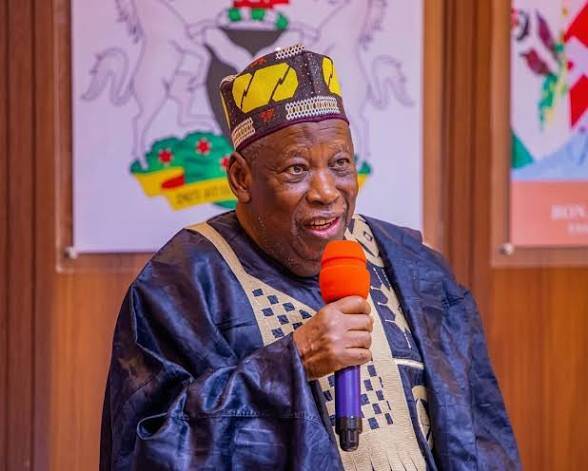
A former National Chairman of the All Progressives Congress, Dr. Abdullahi Umar Ganduje, has issued a strong warning to the Federal Government against negotiating with terrorists and bandits, insisting that dialogue is not the solution to Nigeria's worsening security crisis. Ganduje, who spoke on Tuesday, July 21, 2026, argued that peace deals often end up enriching and empowering criminal groups, giving them the resources and confidence to sustain their operations while encouraging others to embrace violence for similar rewards. His comments come amid a sharp rise in bandit attacks, mass abductions, and extortion across the North-West and North-Central regions, where communities have been subjected to relentless violence and forced to pay illegal levies.
Ganduje maintained that the priority should be dismantling bandit networks and protecting lives and property, rather than adopting measures that could be seen as rewarding criminality. He warned that engaging in dialogue with terrorists could create a dangerous precedent, where criminality becomes a lucrative enterprise that attracts more participants. According to him, the government must adopt a more decisive approach, focusing on military operations, intelligence gathering, and community-based security initiatives to defeat the insurgents and restore peace to affected regions.
The former APC chairman's remarks come as several state governments have explored or implemented amnesty and negotiation programmes with bandit groups in an effort to reduce violence. In Katsina State, Governor Dikko Umaru Radda has been advocating for a comprehensive approach that combines military action, dialogue, and community engagement to address the banditry crisis. Radda had previously offered reintegration deals to repentant bandits, but the approach has drawn criticism from those who argue that negotiations with armed groups have failed to produce lasting peace. In Zamfara State, Governor Dauda Lawal has reaffirmed his opposition to negotiating with bandits, insisting that seeking peace deals with criminal groups remains unacceptable and that previous attempts at negotiation had failed to produce lasting peace.
Security analysts have also warned that negotiating with bandits without a comprehensive strategy could lead to the emergence of new criminal groups seeking material gains. The fragmented nature of bandit groups, with volatile leadership structures, has further complicated any negotiation attempts. The call for a more decisive military approach is echoed by several state governors who have rejected negotiations with bandits, insisting that the government must adopt a more decisive approach, focusing on military operations, intelligence gathering, and community-based security initiatives to defeat the insurgents and restore peace to affected regions.
The Federal Government, however, has maintained a mixed stance on the issue. While President Bola Tinubu has directed security agencies to intensify operations against terrorists, bandits, and kidnappers, the government has also explored non-kinetic approaches, including dialogue and reintegration programmes for repentant militants. The National Security Adviser, Nuhu Ribadu, had earlier indicated that the government was open to dialogue with bandits who are willing to lay down their arms, but insisted that those who refused to surrender would face the full force of the law.
Ganduje's warning adds to the growing chorus of voices calling for a more decisive approach to the banditry crisis. His argument that negotiations only empower criminals resonates with many Nigerians who have grown weary of the violence and the apparent inability of security agencies to protect lives and property. The question now is whether the government will heed his call and adopt a more aggressive strategy, or whether it will continue to explore dialogue as a means of resolving the conflict. As the violence continues unabated, the debate over the best approach to tackling banditry is likely to intensify in the coming months.
The former APC chairman's statement has reignited the debate over the government's approach to tackling banditry and terrorism. While some have argued that negotiation and amnesty are necessary to reduce violence and bring an end to the conflict, others have insisted that such measures only empower criminals and encourage more violence. The Federal Government now faces the challenge of balancing the need to protect lives and property with the imperative of addressing the root causes of insecurity. As the debate continues, the people of Nigeria's conflict-affected regions are left to bear the brunt of a crisis that shows no signs of abating.
📩 Stone Reporters News | 🌍 stonereportersnews.com
✉️ info@stonereportersnews.com | 📘 Facebook: Stone Reporters News | 🐦 X (Twitter): @StoneReportNew | 📸 Instagram: @stonereportersnews
Add comment
Comments