

Reported by: Ijeoma G | Edited by: Oravbiere Osayomore Promise.
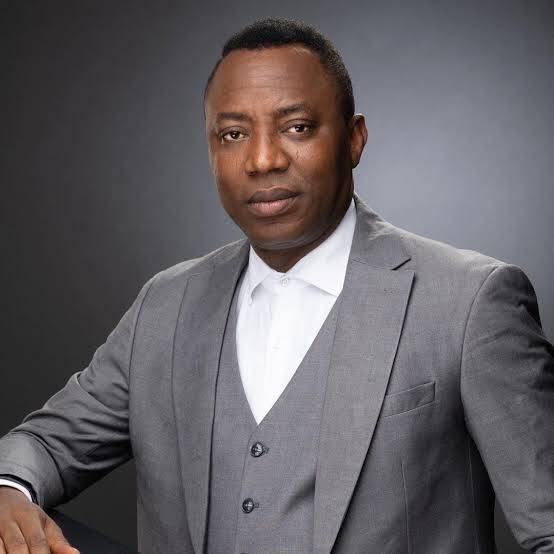
International human rights organisations and civil society groups have called on President Bola Ahmed Tinubu’s administration to withdraw the criminal charges against activist and journalist Omoyele Sowore, warning that continued prosecution could undermine freedom of expression and democratic participation in Nigeria.
The groups accused the government of using the criminal justice system to intimidate critics and silence opposition voices, arguing that criminal laws should not be deployed against individuals for expressing opinions about public officials or government policies.
Sowore, the publisher of Sahara Reporters and former presidential candidate, is facing charges brought against him by the Federal Government over statements made on his social media platforms concerning President Tinubu. The case has attracted widespread attention because of the issues it raises around online speech, political criticism, and the limits of government response to dissent.
The controversy began after Sowore made a social media post in which he criticised the president using language that authorities considered offensive and unlawful. The Federal Government subsequently initiated legal proceedings against him, arguing that the comments violated provisions of Nigeria’s cybercrime laws.
Sowore has rejected the allegations, maintaining that his statements fall within the boundaries of political expression and public commentary. His supporters have described the prosecution as an attempt to punish criticism and discourage citizens from holding leaders accountable.
Human rights organisations, including Amnesty International and the Socio-Economic Rights and Accountability Project, have urged the government to discontinue the case. They argued that democratic governments must protect the right of citizens to criticise leaders, even when such criticism is harsh or unpopular.
The groups said the use of criminal proceedings against journalists, activists, and public commentators could create an environment where citizens become afraid to speak openly about issues affecting the country.
They also raised concerns about what they described as the increasing use of legal actions to restrict civic space, warning that such measures could weaken democratic institutions and public accountability.
However, government officials have maintained that the case is not an attack on free speech but a legal matter involving alleged violations of existing laws. Authorities have argued that while citizens have the right to express their views, freedom of expression does not remove the responsibility to comply with the law.
The legal battle has placed Nigeria’s approach to digital communication and criticism of public officials under renewed scrutiny. Lawyers and rights advocates have continued to debate whether criminal prosecution is an appropriate response to controversial political statements made online.
Sowore, who has remained one of Nigeria’s most outspoken government critics, has faced several legal challenges over the years due to his activism. His supporters say the latest case reflects a broader struggle between state authority and citizens demanding greater accountability from leaders.
The Federal Government has continued with the prosecution, while Sowore and his legal team are expected to challenge the allegations through the judicial process.
The case is being closely watched by civil society groups, journalists, and legal practitioners because its outcome could influence future disputes involving online speech, political criticism, and the relationship between government power and citizens’ constitutional rights.
As proceedings continue, observers say the matter represents a significant test of Nigeria’s commitment to balancing public order with the protection of freedom of expression in a democratic society.
📩 Stone Reporters News | 🌍 stonereportersnews.com
✉️ info@stonereportersnews.com | 📘 Facebook: Stone Reporters News | 🐦 X (Twitter): @StoneReportNew | 📸 Instagram: @stonereportersnews
Add comment
Comments