

Reported by: Oahimire Omone Precious | Edited by: Oravbiere Osayomore Promise.
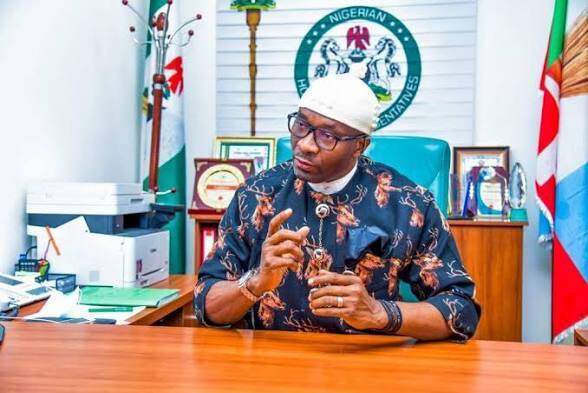
The Deputy Speaker of the House of Representatives, Benjamin Kalu, has defended a controversial budgetary provision that sparked public outrage after reports emerged that N1 billion was allocated in the 2026 budget for the procurement of musical instruments for churches in the Bende Federal Constituency of Abia State. In a statement issued on Wednesday, July 22, 2026, by his Chief Press Secretary, Levinus Nwabughiogu, Kalu's office described the reports as a misrepresentation of the actual purpose of the allocation, insisting that the intervention is part of a broader youth reorientation and social support programme to be implemented through faith-based organisations. The Deputy Speaker's office claimed that the proposed allocation is not N1 billion but N780 million after Value Added Tax and other statutory deductions.
The controversy erupted after a document analysed by SaharaReporters revealed several contentious line items embedded under ministries and agencies traditionally detached from religious affairs, including code ERGP20273981, which detailed N1 billion allocated through the Industrial Arbitration Panel under the Federal Ministry of Labour and Employment for the provision and distribution of musical and cultural equipment to churches in Bende Local Government Area. According to the budget breakdown, the government allocated N1.91 billion for projects tied to seven churches, while N6.14 billion was earmarked for 52 mosque projects across the country, bringing the total for religious projects to approximately N8.05 billion. The allocation was uncovered and made public on Sunday by Tracka, a public accountability organisation under BudgIT.
Kalu's office said that the programme is designed to support over 130 churches across Bende Federal Constituency, with each church expected to receive between N5 million and N6 million during the first phase of implementation. Bende Federal Constituency comprises 13 federal wards and more than 200 churches, with the initial phase targeting about 10 churches in each ward. According to the statement, the intervention is intended to strengthen churches' capacity to engage young people through programmes focused on character development, moral instruction and community outreach. The funds would be used to procure evangelical equipment, including musical instruments and public address systems, to support campaigns against drug abuse, sexual offences and violent crimes. "The funds are intended to support the purchase of evangelical instruments and public address systems to promote campaigns against vices like the spread of narcotics, sexual offences, and violent crimes while instilling discipline, values, peace, and character development among young people in the communities," Nwabughiogu stated.
Defending the initiative, the Deputy Speaker's office argued that government investment should not be limited to physical infrastructure but should also extend to initiatives aimed at rebuilding societal values. "Nation-building must go beyond roads and physical infrastructure. Government must also invest in building the character and value system of the people who use the infrastructure using various value delivery platforms," Nwabughiogu stated. Kalu noted that the 2026 budget containing the provision was yet to be implemented, adding that selected churches would be notified after the procurement process was concluded. He also said his office had identified a technical error in the procurement description and initiated a corrigendum through the budget office and the house committee on appropriations before implementation. The deputy speaker urged the media and public to disregard sensational reports and to support efforts aimed at building infrastructure and character in the country.
The clarification comes amid widespread public criticism over the allocation, with many Nigerians questioning the prioritisation of public funds for religious purposes at a time when the country is grappling with economic hardship, insecurity, and crumbling infrastructure. Financial analyst Kalu Aja heavily criticised the allocation, questioning the wisdom of spending N780 million on church instruments when many Nigerians are struggling to afford basic necessities. However, Kalu's office maintained that the intervention is part of a broader non-kinetic approach to promoting peace, unity and social development, arguing that faith-based organisations have a role in sustaining societal values. The Deputy Speaker's office also noted that traditional institutions have benefited from similar interventions through the provision of town halls and community engagement centres, stressing that faith-based organisations also have a role in sustaining societal values. The statement further noted that while faith-based organisations in other parts of the country have long been involved in youth development initiatives, the programme seeks to strengthen similar efforts in the South-East using church platforms.
The controversy has also drawn attention to the broader pattern of religious project allocations in the 2026 budget, with the Northern Christian Association expressing concern over the disparity in allocations for church and mosque projects. The association had earlier questioned the Federal Government's decision to allocate approximately N8.05 billion for religious projects, with N1.91 billion for seven church-related projects and N6.14 billion for 52 mosque-related projects, describing the imbalance as a violation of the constitutional principle of equality. As the debate continues, Kalu's defence of the allocation has done little to quell public anger, with many Nigerians calling for greater transparency and accountability in the use of public funds. The Deputy Speaker's office has, however, insisted that the programme is a legitimate investment in youth development and social reorientation, and that it remains open to scrutiny regarding the appropriation and expenditure of constituency projects.
📩 Stone Reporters News | 🌍 stonereportersnews.com
✉️ info@stonereportersnews.com | 📘 Facebook: Stone Reporters News | 🐦 X (Twitter): @StoneReportNew | 📸 Instagram: @stonereportersnews
Add comment
Comments