

Reported by: Puis Althea | Edited by: Oravbiere Osayomore Promise.
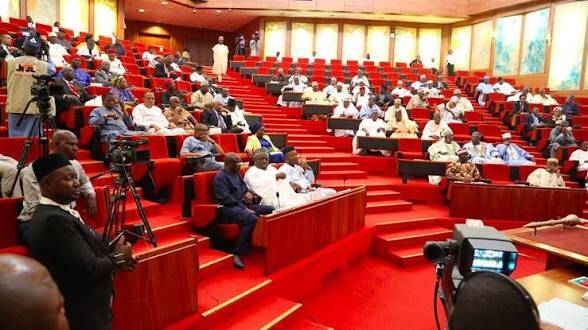
The National Assembly has passed the National Inland Waterways Authority (Repeal and Re-enactment) Bill, 2026, a landmark reform that brings Nigeria's inland waterways law into conformity with the Constitution and a recent Supreme Court judgment that nullified key sections of the existing NIWA Act. The bill, which originated from the House of Representatives, repealed and replaced the National Inland Waterways Authority Act following the Supreme Court's decision in the legal dispute between the Attorneys-General of Lagos State and the Federal Government. The apex court had, in its ruling, declared Sections 12 and 13 of the NIWA Act unconstitutional to the extent that they empowered the Federal Government to exercise control over lands adjoining waterways for purposes unrelated to navigation and maritime activities.
In a related development, the Senate also concurred with the High Court of the Federal Capital Territory (Number of Judges) Amendment Bill, 2026, which seeks to raise the number of FCT High Court judges from 75 to 100. Senate Leader Opeyemi Bamidele, who led the debate on the legislation, explained that the expansion was necessary to clear the court's mounting backlog and to align judicial appointments with the federal character principle as provided in the Constitution. Additionally, the Senate approved the National Tobacco Control (Amendment) Bill, 2026, designed to update the 2015 Act by extending regulation to emerging nicotine products, including non-combustible tobacco products and nicotine pouches, while preserving restrictions on access by minors and use in public places.
On the waterways bill, Bamidele explained that the repeal and re-enactment followed the Supreme Court's ruling in the suit between the Attorneys-General of Lagos State and the Federation, which restricted the Federal Government's regulatory powers over inland waterways to areas within its constitutional competence. He noted that key provisions of the existing NIWA Act had become inconsistent with the Constitution, hence the need for a fresh law. The new bill, he added, clearly defines the authority's jurisdiction, removes provisions invalidated by the Supreme Court, eliminates conflict areas with states, encourages private sector investment in inland water transport, and strengthens navigation safety, environmental protection and sustainable development. Senate President Godswill Akpabio described the legislation as a major milestone that would provide a clear framework for the administration of inland waterways while opening up new economic opportunities for states and private investors.
The three bills were read a second time before the Senate dissolved into the Committee of the Whole, considered each clause, and passed all measures for concurrence without amendment. The bills will now be transmitted to President Bola Tinubu for assent. The National Assembly also ratified the National Security Summit scheduled for September 2026, themed "Strengthening Nigeria's National Security Architecture: Innovation, Collaboration and Resilience in a Changing World," which will bring together top government officials, security chiefs, governors, members of the diplomatic corps, traditional and religious leaders, academics, civil society organisations, the media and the private sector.
Following the passage of the bills, both chambers of the National Assembly adjourned for their annual legislative recess. Lawmakers are scheduled to resume plenary on September 15, 2026.
📩 Stone Reporters News | 🌍 stonereportersnews.com
✉️ info@stonereportersnews.com | 📘 Facebook: Stone Reporters News | 🐦 X (Twitter): @StoneReportNew | 📸 Instagram: @stonereportersnews
Add comment
Comments