

Reported by: Althiea .P | Edited by: Bornet .k
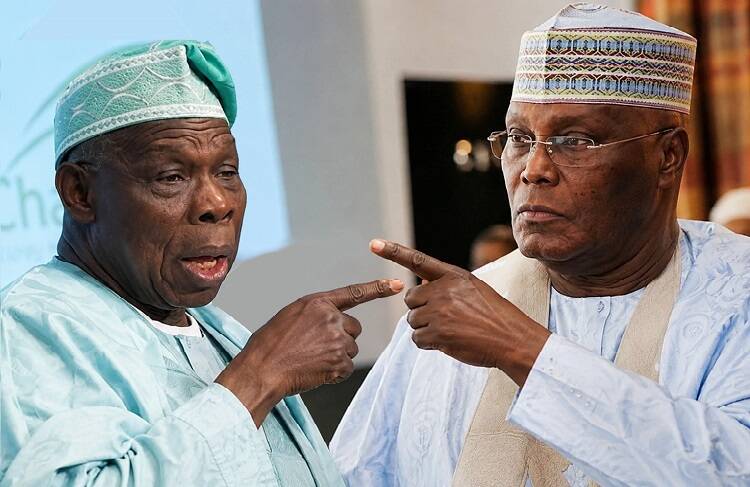
The political rivalry between former President Olusegun Obasanjo and former Vice President Atiku Abubakar has intensified following a fresh exchange of accusations over an alleged bribery claim involving the late former Speaker of the House of Representatives, Ghali Umar Na’Abba.
The dispute began after Obasanjo, in a letter responding to former Ogun State Governor Olusegun Osoba’s reflections on the 2003 general elections, alleged that Atiku attempted to orchestrate an impeachment move against him while they were in office between 1999 and 2007. The letter was published following Osoba’s article in The Legal Observer on July 20, 2026.
In his response, Obasanjo claimed that Atiku invited then Speaker Ghali Na’Abba to the Presidential Villa during a period when he was away and allegedly gave him N5 million to begin moves aimed at removing him from office. Obasanjo said the matter was reported to him by his Chief of Staff, whom he described as a professional intelligence officer.
The former president said the alleged impeachment effort was connected to disagreements that had developed between him and his deputy, particularly over political ambitions and succession issues during their second term. He accused Atiku of working against his administration despite being the person he selected as his running mate in the 1999 presidential election.
Atiku Abubakar, however, strongly rejected the allegation, describing it as baseless and politically motivated. Through his Senior Special Assistant on Public Communication, Phrank Shaibu, the former vice president accused Obasanjo of reviving the claim at a time when Nigeria’s political environment is already focused on preparations for the 2027 general elections.
Atiku questioned why the allegation was not made publicly while Na’Abba was alive and able to respond. He argued that the late speaker, who died in 2024, could no longer defend his reputation or provide his own account of the events being discussed.
The former vice president said serious allegations involving a deceased public figure should not be introduced into political debates when the person accused of receiving the alleged payment cannot answer the claims. He also challenged Obasanjo to provide evidence supporting the accusation.
Atiku further suggested that the timing of the allegation was linked to political calculations ahead of the next presidential election. He alleged that the claims were aimed at damaging his public image and creating political advantage for individuals connected to Obasanjo.
The latest disagreement has reopened memories of the strained relationship between the two leaders during their administration. Obasanjo and Atiku came into power together in 1999 under the platform of the Peoples Democratic Party (PDP), winning the election that marked the beginning of Nigeria’s Fourth Republic.
However, their relationship became increasingly difficult during their second term, especially over political disagreements surrounding Obasanjo’s reported attempt to secure a third term in office through constitutional changes. Atiku opposed the move, which contributed to a major political split between the two leaders.
The impeachment controversy also comes from a period when the National Assembly and the executive arm of government were engaged in several political disputes. During that era, lawmakers and political actors were divided over issues of governance, succession and control of political structures.
Ghali Umar Na’Abba, who served as Speaker of the House of Representatives from 1999 to 2003, was one of the central figures in Nigeria’s legislative politics during the early years of the Fourth Republic. His death in 2024 has now placed his name at the centre of a renewed political debate.
The exchange between Obasanjo and Atiku comes as Nigeria’s political landscape begins to experience increased realignment ahead of the 2027 elections. Atiku, who contested the presidency under the PDP in 2019 and 2023, has since moved to the African Democratic Congress (ADC) platform.
Obasanjo, despite leaving office in 2007, remains an influential figure in Nigerian politics and continues to comment on national issues, leadership and governance. His statements often attract significant political attention because of his experience as both a former military leader and elected president.
Political analysts say the renewed disagreement reflects how unresolved conflicts from previous administrations continue to influence Nigeria’s political discussions. They note that accusations involving former leaders often resurface during election cycles as political actors attempt to shape public opinion.
The controversy has also generated debate over accountability, political loyalty and the responsibility of former leaders when discussing events from their time in office. While supporters of Obasanjo argue that he has the right to share his experiences, Atiku’s allies insist that allegations must be supported by evidence.
Neither side has indicated that the dispute will be resolved soon, and the exchange is expected to remain part of broader political conversations as parties and politicians prepare for the next electoral contest.
The latest clash between the two former allies highlights the continuing influence of Nigeria’s political history on present-day alliances, rivalries and campaigns as the country moves closer to another major election cycle.
📩 Stone Reporters News | 🌍 stonereportersnews.com
✉️ info@stonereportersnews.com | 📘 Facebook: Stone Reporters News | 🐦 X (Twitter): @StoneReportNew | 📸 Instagram: @stonereportersnews
Add comment
Comments