

Reported by: Ijeoma G | Edited by: Oravbiere Osayomore Promise.
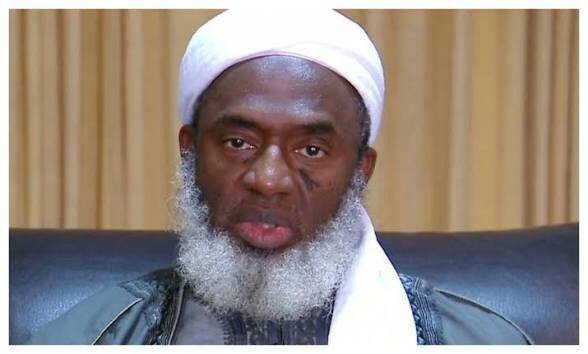
Sheikh Ahmad Gumi, a prominent Nigerian Islamic scholar, has launched a blistering attack on Burkina Faso's military leader, Captain Ibrahim Traoré, over his recent declaration that Sharia law would never be introduced in the West African nation. In a strongly worded Facebook post shared on Saturday, July 25, 2026, Gumi described the 38-year-old junta leader as "too naïve" and "too young" to grasp the complex security, religious and geopolitical realities confronting his country. The cleric argued that Traoré's hardline position against Sharia-related education had inadvertently handed extremist groups a potent recruitment tool.
"Captain Ibrahim Traoré, with his anti-Shariah stance, at the age of 38, with nothing but military training on his resume, is too naïve to understand even the complicity of the society he is ruling under the gun, let alone the dynamics of contemporary geopolitics," Gumi wrote. He further warned that "he has given the extremists the weapon they need to conscript more foot soldiers against his secular regime." Gumi maintained that effective leadership requires not only military training but also a deep understanding of the social and political dynamics of the society being governed. According to the cleric, policies perceived as opposing Sharia could become a rallying point for extremist groups seeking to recruit new members, warning that Traoré's approach could create opportunities for extremist groups to exploit public sentiment and attract more supporters.
The fiery exchange was ignited by Traoré's recent security policy, in which he reportedly ordered the repatriation of hundreds of Burkinabè students studying Sharia and Islamic jurisprudence in Saudi Arabia and other Arab countries. During a nationwide broadcast, the military leader questioned the national value of sponsoring students for religious studies while the country grapples with insecurity, poverty and a crippling shortage of technical manpower. He argued that Burkina Faso requires engineers, scientists, doctors, agriculturists and skilled professionals – not graduates returning solely with religious qualifications. Traoré also reaffirmed that Burkina Faso would remain a secular republic, insisting that no religion would supersede the country's Constitution and that Sharia law would not be adopted as the nation's legal framework. At the same time, he maintained that every citizen retains the constitutional right to practise his or her religion freely.
Security analysts say the policy forms part of the junta's broader counterterrorism strategy aimed at tightening oversight of foreign religious education amid a prolonged jihadist insurgency that has devastated large parts of the country. The Burkinabè leader views the foreign-backed promotion of Sharia as an entry point for radicalisation, arguing instead for a state where civic duty, technical skill and religious freedom operate within a strictly secular republic. However, Gumi warned that the approach could prove counterproductive, alleging that policies perceived as hostile to Islamic institutions may deepen resentment and create fertile ground for extremist propaganda and recruitment. The remarks escalate an already heated debate over the intersection of national security, religious freedom and constitutional governance across West Africa, where governments continue to battle violent insurgencies while seeking to prevent radicalisation without alienating religious communities. As Burkina Faso intensifies its security campaign under military rule, Traoré's policies are expected to remain under intense scrutiny from religious leaders, security experts and human rights advocates, with the debate increasingly shifting from the battlefield to the courtroom of public opinion.
📩 Stone Reporters News | 🌍 stonereportersnews.com
✉️ info@stonereportersnews.com | 📘 Facebook: Stone Reporters News | 🐦 X (Twitter): @StoneReportNew | 📸 Instagram: @stonereportersnews
Add comment
Comments