

Reported by: Oahimire Omone Precious | Edited by: Oravbiere Osayomore Promise.
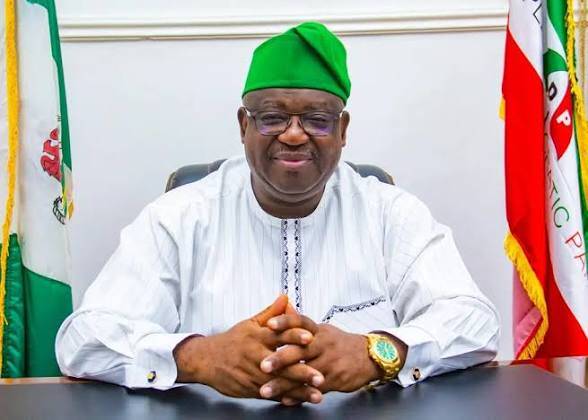
Plateau State Governor Caleb Manasseh Mutfwang has urged technology experts to develop practical, home-grown digital solutions to address Nigeria's pressing challenges, particularly poverty and food insecurity. Speaking at the Rise 2026 Conference of the Nigeria Computer Society in Jos on Tuesday, July 28, 2026, the governor declared that "the only tool we can leverage is the digital space" to lift citizens out of poverty. He cited his administration's success in boosting monthly internally generated revenue from N800 million to over N4 billion through technology deployment. He lamented that Plateau potato farmers achieve only 7 tonnes per hectare compared to the global average of 40 tonnes, and local dairy cows produce just 2.5 litres of milk per day against a global benchmark of 20 litres. He also announced a rebranding initiative, urging stakeholders to now refer to the popular Irish potato grown in the state as "Plateau Potatoes".
However, the governor's tech-driven vision rings hollow when measured against the grim realities on the ground in Plateau State. While Mutfwang speaks of digital transformation and potato rebranding, his state remains one of Nigeria's most impoverished, with poverty rates ranging from 61.53 percent to 81.2 percent across various local government areas. Nearly 35 million Nigerians are projected to face acute food insecurity between June and August 2026, and Plateau State is at the epicentre of this crisis. Over 200,000 people have been displaced in the state in recent years, many forced into overcrowded camps with little access to food, healthcare, or education. At least 46,983 registered voters have been displaced by violent attacks across 343 communities, and youth groups have raised the alarm that no fewer than 50 people were killed within one week in July 2026 alone. Internally displaced persons have described their condition as "very pathetic", despite the state government's announcement of 100 housing units for displaced persons in Bokkos.
The governor's agricultural ambitions, while commendable on paper, have failed to translate into meaningful relief for struggling farmers. Mutfwang inaugurated the Potato Value Chain Project, a Tissue Culture Centre, and farming equipment in Mangu on July 10, 2026, yet fresh attacks continue to keep Plateau and Benue farmers off their fields, with the consequences likely to be felt in food markets across Nigeria. More than 50 hectares of cultivated irrigation farmland have been invaded and grazed upon by cattle, and violence in Plateau State, long linked to farmer-herder clashes, is increasingly being driven by a growing battle for control of mineral resources, farmlands and key food supply routes. The governor's promise that "no socio-economic forces would deter the state from expanding its role as the food basket of the nation" rings hollow when farmers cannot even access their fields without fear of being killed.
The irony of Mutfwang lecturing Nigerians on technology and food security is not lost on his political opponents. Sunday Garba Biggs, a governorship candidate on the platform of the PDP Turaki faction, has blasted the governor for failing to provide the kind of leadership the people expected. "The people of Plateau State were joyful when they elected him as governor," Biggs said. "Yes, he is my kinsman, but what is his performance in office? The reality on the ground shows that the people are not happy with his performance". Biggs lamented that despite Mangu being the LGA that produced the governor, the council has not benefited from the present administration, as there is no meaningful development and a visible impact in the council. Another critic argued that "Plateau cannot survive on declarations alone" and warned that "if Governor Mutfwang truly wants history to remember him differently, then he must move beyond declarations and build institutions capable of protecting lives long after political headlines disappear".
Meanwhile, elderly widows in Jos are spending their final years crushing stones at a local dump to survive, earning about N1,000 per 25-kilogram sack. Commercial tricycle operators have staged massive protests over government frustration, and pig farmers are counting losses running into billions of naira following a swine fever outbreak that has killed more than 1,000 pigs. The state's economic hardship has driven communities to turn to backyard mining as poverty deepens. These are not problems that can be solved by rebranding potatoes or delivering speeches at technology conferences.
Mutfwang's claim that technology has boosted IGR from N800 million to over N4 billion raises more questions than answers. If the state is generating four times more revenue, where is the money going? Why are IDP camps still overcrowded and under-resourced? Why are farmers still unable to access their fields? Why are widows crushing stones to survive? The governor's IGR figures, even if accurate, represent a failure of governance if the increased revenue is not translating into tangible improvements in the lives of ordinary citizens.
The governor's potato rebranding initiative—urging stakeholders to now refer to Irish potatoes as "Plateau Potatoes"—is a perfect metaphor for his administration: style over substance. While other states are grappling with the hard work of security sector reform, agricultural extension services, and economic diversification, Mutfwang is busy changing the names of crops. The global average of potato production may be 40 tonnes per hectare, but no amount of rebranding will bridge that gap without security, investment, and competent governance.
The governor's call for technology experts to "move beyond talk and deliver actionable solutions" is a case of the pot calling the kettle black. Mutfwang himself has been heavy on talk and light on delivery. His administration has been in office for over three years, yet the state's security situation has deteriorated, food insecurity has worsened, and poverty has deepened. The governor who cannot secure his own state, cannot feed his own people, and cannot provide basic services to his citizens has no moral authority to lecture anyone on how to tackle poverty and food insecurity.
Perhaps the governor should take his own advice and stop treating conferences as "talk shops". Instead of rebranding potatoes and delivering speeches, he might consider securing the lives and livelihoods of the people who elected him. Until Plateau State's farmers can return to their fields without fear, until its displaced citizens can return to their homes, and until its widows no longer have to crush stones to survive, Mutfwang's technology-driven vision for poverty reduction will remain nothing more than a cruel joke on the people of Plateau State.
📩 Stone Reporters News | 🌍 stonereportersnews.com
✉️ info@stonereportersnews.com | 📘 Facebook: Stone Reporters News | 🐦 X (Twitter): @StoneReportNew | 📸 Instagram: @stonereportersnews
Add comment
Comments