

Reported by: Ijeoma G | Edited by: Oravbiere Osayomore Promise.
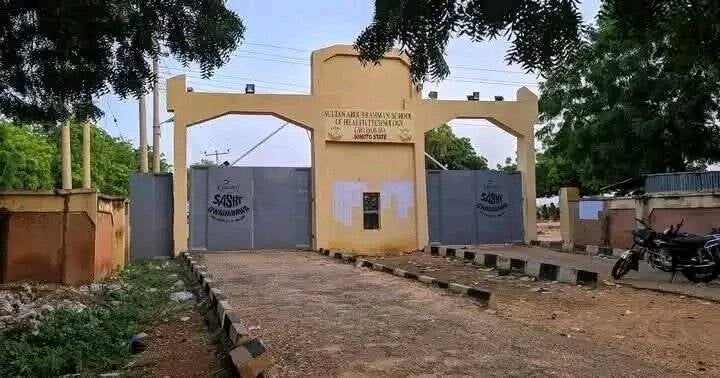
The Sokoto State Government has ordered the immediate closure of all public primary and secondary schools outside the state capital, a sweeping directive that has suspended academic activities across 20 of the state's 23 local government areas following a series of deadly bandit attacks that claimed at least 11 lives. The closure, which took effect on Monday, July 27, 2026, exempts only schools in Sokoto North and Sokoto South Local Government Areas, as well as selected schools in Wamakko, Dange Shuni and Kware LGAs. The decision was announced by Commissioner for Basic and Secondary Education, Prof. Ahmed Ladan Ala, who said it followed a Federal Government directive aimed at protecting students and staff amid rising insecurity. The All Nigeria Conference of Principals of Secondary Schools (ANCOPSS) had earlier directed all principals in the affected areas to close down schools until further notice.
The closures come as schools were preparing to conclude the third term, with end-of-term examinations scheduled to begin next week. The directive has effectively paralysed educational activities for hundreds of thousands of students across the state, dealing a major blow to a region already struggling with one of the highest out-of-school rates in Nigeria. The suspension of academic activities in 20 out of 23 local government areas means that only the heavily fortified urban enclaves of Sokoto North, Sokoto South, and Wamakko are deemed secure enough to continue educational operations.
The mass closure was triggered by a wave of violence that has swept across the state in recent days. The deadliest attack occurred on Monday in Maikujera village, Rabah Local Government Area, where seven people lost their lives, including two operatives of the Sokoto Community Guard Corps (SCGC). According to security sources, the attackers stormed the village on more than 30 motorcycles at about 2:30 p.m., opening fire on residents and abducting an unspecified number of people. An SCGC operative confirmed that the guards were overwhelmed by the sheer number of attackers. "We rushed to protect the residents, but the attackers were too many. They arrived on more than 30 motorcycles and overwhelmed our men," the operative said. He further alleged that community guards were operating under difficult conditions due to inadequate logistics, including a lack of armoured vehicles and insufficient ammunition.
The attack on Maikujera came less than 24 hours after suspected bandits, reportedly dressed in military uniforms, attacked Unguwan Lalle community in Sabon Birni LGA, killing four residents and leaving several others injured. Residents said about 200 heavily armed bandits wearing military uniforms invaded the village around 8 p.m. on Sunday and operated for nearly six hours. "We thought they were soldiers because of their uniforms. They surrounded the village, opened fire and carted away our belongings and livestock," one resident recounted. Residents also claimed the attackers struck less than an hour after troops who had responded to an earlier security incident withdrew from the community.
Security sources said the gunmen were believed to have entered the Rabah LGA area from Bakura in neighbouring Zamfara State. The bandits allegedly attempted to rustle livestock and began shooting when residents resisted. Although a military base is located near the Maikujera community, security personnel reportedly arrived after the attackers had already escaped into the Bakura forest. In the Sabon Birni attack, the victims were identified as Bilyaminu Wakkala and Danbaki Tulunawa, while the identities of the other two victims were linked to nearby Kongurus village.
The spokesperson of the Sokoto State Police Command, DSP Ahmad Rufa'i, confirmed the killing of a farmer in the area but said details of the Unguwan Lalle attack were still being verified. The police have not yet confirmed the total number of abducted persons from the attacks.
The mass closure of schools has drawn sharp criticism from political figures and education advocates. The governorship candidate of the African Democratic Congress (ADC) in Sokoto State, Hon. Manir Muhammad Dan'iya, condemned the shutdown, describing it as evidence that the government has failed to tackle insecurity. "While closing schools may be necessary to protect lives, it clearly shows how far insecurity has spread and the government's inability to provide a safe environment for teaching and learning," Dan'iya said in a statement. He stressed that no society can achieve lasting progress if children are unable to attend school because of fear and violence. The ADC candidate recalled that improving security was one of the major promises made by the All Progressives Congress (APC) before assuming office, but lamented that many communities in Sokoto were still battling attacks, kidnappings, killings and displacement. "The first responsibility of any government is to protect lives and property. When children cannot safely go to school, serious questions must be asked about the effectiveness of the current security measures," he stated.
The Gwadabawa LGA, specifically mentioned in the user's query, has been identified as one of the worst affected areas by banditry in Sokoto State. Residents have previously named Gwadabawa, along with Isa, Sabon Birni, Illela, Tangaza, and Goronyo, as local government areas bearing the brunt of the insecurity. The closure of schools in Gwadabawa and other rural LGAs represents the latest chapter in a crisis that has forced the shutdown of at least 188 public schools across Northern Nigeria, according to a Daily Trust investigation published in October 2025. The investigation found that Sokoto had six schools already shut due to insecurity, a figure that has now grown exponentially with this week's mass closure.
The timing of the closures is particularly devastating, coming as students were preparing for their end-of-term examinations. The indefinite suspension of academic activities threatens to compound the already dire educational crisis in Northern Nigeria, where the region already battles some of the highest out-of-school demographic figures globally. When schools shutter due to extreme violence, the structural fallout extends far beyond delayed examinations, as displaced, uneducated youths become highly susceptible to radicalisation and recruitment by criminal groups.
The Federal Government's directive to close schools, while intended to protect lives, raises urgent questions about the state's ability to secure educational institutions and the communities that depend on them. For the thousands of children now locked out of classrooms across 20 local government areas, the closure represents more than a disruption to their education—it is a sign that fear has reshaped daily life and that the promise of a safe future remains tragically out of reach.
📩 Stone Reporters News | 🌍 stonereportersnews.com
✉️ info@stonereportersnews.com | 📘 Facebook: Stone Reporters News | 🐦 X (Twitter): @StoneReportNew | 📸 Instagram: @stonereportersnews
Add comment
Comments