

Reported by: Oahimire Omone Precious | Edited by: Oravbiere Osayomore Promise.
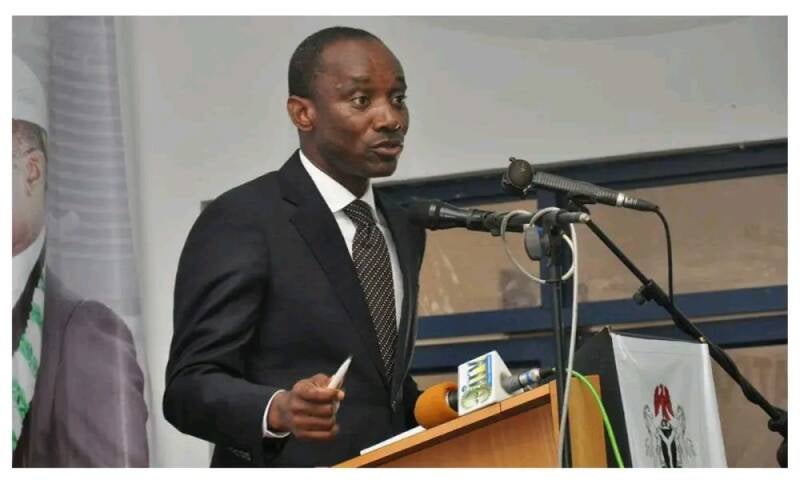
The Director of the Abuja School of Social and Political Thoughts, Sam Amadi, has sharply questioned the Nigerian state's failure to establish an official, authoritative record concerning the deaths of prominent public figures, most notably former military Head of State General Sani Abacha and former Attorney General of the Federation Chief Bola Ige. Speaking during an interview on Arise Television on Tuesday, July 28, 2026, Amadi argued that the historical lack of official autopsies, comprehensive forensic disclosures, and verified state documentation leaves profound gaps in the national consciousness, preventing the country from achieving meaningful closure over some of its most critical political events.
Amadi's remarks came in direct response to renewed public debate and competing claims regarding how General Sani Abacha died in June 1998 while serving as the nation's military ruler. The enduring controversy resurfaced following conflicting accounts presented by former high-ranking security officials who occupied key positions during that era. Dennis Amachree, a former senior official with the Department of State Services, claimed in a recently published book and subsequent media commentary that the late military head of state passed away during a private encounter with a female pharmacist. Amachree maintained that his account was derived from operational intelligence and firsthand information available to security personnel serving within the presidential villa at the time.
However, this version of events was firmly challenged by Major Hamzat Al-Mustapha, the retired Chief Security Officer to General Abacha. Al-Mustapha publicly refuted Amachree's account, describing it as inaccurate and speculative. He asserted that he possesses Closed-Circuit Television security footage documenting the precise events leading up to Abacha's final hours, insisting that the actual circumstances of the late dictator's death would eventually be demonstrated through verifiable video evidence rather than subjective personal memoirs.
Weighing in on the contrasting narratives, Amadi highlighted that the intense public fascination with these conflicting statements directly stems from the Nigerian state's failure to establish an official, transparent record at the time of the incident. He pointed out that Abacha's sudden demise occurred during an exceptionally fragile and sensitive transition period in Nigeria's political history, which was closely followed by the equally sudden death of Chief Moshood Abiola, the presumed winner of the annulled June 12, 1993 presidential election. Amadi stressed that when a government fails to conduct thorough, publicly disclosed investigations into the deaths of its leaders under unusual or controversial circumstances, it creates a dangerous informational vacuum that is inevitably filled by rumours, conspiracy theories, and unverified individual accounts.
"I think the interest is because there is no official closure and no clear statement, the former president who died under mysterious circumstances and afterwards the presumed winner of the June 12 died also while several events knocked off as well till today," Amadi said. He posed the fundamental question: "Why don't we have official autography till today? Why don't we have official closure to high level personalities that are dead?".
Evaluating Amachree's claims, Amadi observed that because the former secret police officer played a direct role within the national security apparatus, his statements carry weight and sound credible to many citizens seeking definitive answers. Nevertheless, Amadi argued that individual memoirs and personal testimonies should never serve as a substitute for official governmental reports, comprehensive medical autopsies, and formal institutional findings. He lamented that Nigerian society has historically treated the deaths of prominent figures as a taboo subject, particularly when the circumstances involve sensitive personal details, sudden illness, or physical accidents. This persistent societal and institutional reluctance to conduct rigorous factual inquiries, he noted, severely undermines the nation's collective historical memory and institutional integrity.
Amadi further extended his critique to the broader pattern of historical record-keeping in Nigeria, drawing a direct parallel with the unresolved December 2001 assassination of Chief Bola Ige, who was serving as the sitting Minister of Justice and Attorney General of the Federation when he was killed at his residence in Ibadan. "Look at Bola Ige, he died and we don't have proper narratives of how he died. People are writing all kinds of things because there is no official autopsy," Amadi noted. He described the situation as a national tragedy that reflects Nigeria's systemic problem with investigating and documenting facts.
The deaths of both Abacha and Ige have remained subjects of intense public debate for decades. Abacha died on June 8, 1998, at the Aso Rock Presidential Villa in Abuja and was buried on the same day according to Muslim tradition, without an autopsy. This fueled speculation that foul play was involved and that he may have been poisoned. The government officially identified the cause of death as a sudden heart attack. Bola Ige, a Senior Advocate of Nigeria and prominent politician, was assassinated on December 23, 2001, in his bedroom in Ibadan. Despite numerous investigations, the circumstances surrounding his murder remain unresolved, with many accusing the Obasanjo administration of showing little interest in bringing his killers to justice.
Amadi's intervention comes at a time when Nigeria's historical record-keeping is under increasing scrutiny. His call for official autopsies and transparent investigations touches on a broader national concern about the country's inability to confront its past and establish a factual historical record. "There is a Nigerian thing of how people die and making taboo of how they died, either through accident or had intimacy with a woman and died, we taboo everything and at the end of the day we don't have history to work," Amadi said. The culture of secrecy around such deaths, he argued, perpetuates myths and taboos, preventing the country from building a factual historical record.
As the debate over the circumstances surrounding Abacha's death continues to generate fresh headlines, Amadi's demand for official closure raises fundamental questions about accountability, transparency, and the Nigerian state's responsibility to its citizens. For a nation still grappling with the legacies of its authoritarian past and the unresolved assassinations of its prominent figures, the call for official autopsies is not merely a matter of historical curiosity—it is a demand for truth and justice that remains unanswered nearly three decades after Abacha's death and a quarter-century after Ige's assassination.
📩 Stone Reporters News | 🌍 stonereportersnews.com
✉️ info@stonereportersnews.com | 📘 Facebook: Stone Reporters News | 🐦 X (Twitter): @StoneReportNew | 📸 Instagram: @stonereportersnews
Add comment
Comments