

Reported by: Oahimire Omone Precious | Edited by: Oravbiere Osayomore Promise.
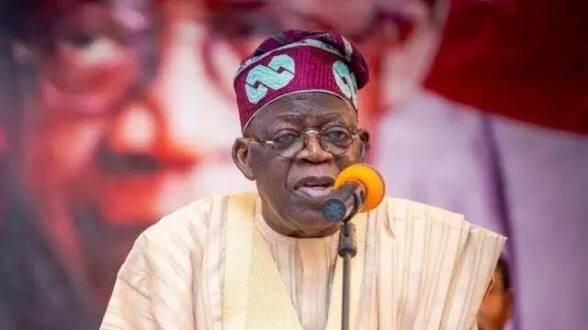
President Bola Tinubu has declared that the absence of prolonged strikes by the Academic Staff Union of Universities (ASUU) since he assumed office is a direct answer to his prayers, a statement that underscores his administration's push to present industrial peace in tertiary institutions as a cornerstone of its education reform agenda. Tinubu made the remarks on Tuesday, July 28, 2026, while receiving the Catholic Bishops' Conference of Nigeria at the Aso Rock Presidential Villa in Abuja. Addressing the clergymen, the President acknowledged the economic hardship Nigerians have endured under his watch but insisted that stability was taking hold and prosperity was now visible on the horizon.
"I inherited the assets and liabilities of my predecessor, and I've been running with it. But this government has stabilised and there is prosperity on the horizon. The quality of life is improving," Tinubu told the bishops. He cited the absence of ASUU strikes as one of the measurable improvements in the lives of Nigerian families, emphasising that students can now complete their degree programmes within the stipulated timeframe. "None of your children in university today, and I would say they are all your children because you are Reverend Fathers, can say a four-year course is not four years," he said. "ASUU is not on strike. They are not bringing agony to your homes. Is that not an answer to our prayers? To me, that's an answer".
The President's remarks come against the backdrop of a long and painful history of industrial actions that have repeatedly crippled Nigeria's public university system. Between 1999 and 2022, ASUU called strikes totalling more than five years of lost academic time, with the most recent being a nine-month shutdown in 2022—the longest in the union's history. That prolonged action left hundreds of thousands of students stranded at home, disrupted academic calendars and deepened the crisis in a sector already struggling with inadequate funding and infrastructure. Tinubu argued that no prolonged ASUU strike has been recorded since he assumed office in May 2023, a period that also coincides with the administration's launch of the Nigerian Education Loan Fund.
The President's meeting with the Catholic bishops also touched on broader political and security issues. Tinubu warned political opponents seeking to unseat him in the 2027 elections that he would not yield ground without a fight, declaring that "all is fair in politics". He dismissed concerns about the electoral process, defending the Independent National Electoral Commission (INEC) against accusations of bias. On national security, the President described Nigeria's challenges as a generational issue that could not be escaped, saying: "The security situation is what it is. We don't have another country but here". He also discussed the return of mission schools to their original proprietors, a long-running point of contention between the Catholic Church and several state governments, noting that the power to act lay with state governors rather than the Federal Government.
The Catholic Bishops' Conference of Nigeria, founded in 1956, is one of the most influential religious bodies in the country, with significant reach in education, healthcare and social services. The meeting, which lasted barely an hour, was seen as a strategic engagement by the President to secure the support of religious leaders ahead of the 2027 elections. Archbishop Matthew Man-Oso Ndagoso led the delegation of bishops to the Presidential Villa. The bishops' visit also followed the Appeal Court's restoration of the African Democratic Congress (ADC), Accord Party and three other political parties to INEC's register—a development that could reshape the political landscape ahead of the elections.
Since taking office in May 2023, the Tinubu administration has positioned the absence of major ASUU strikes as a key achievement. In January 2026, the Federal Government and ASUU signed a landmark agreement that effectively ended the 16-year deadlock over the renegotiation of the 2009 agreement. The agreement reflects President Tinubu's commitment to quality education and an uninterrupted academic calendar in Nigerian universities. Education Minister Tunji Alausa had earlier declared that the President had directed that "never again in this country will ASUU, or tertiary institution trade unions, go on strike".
However, critics have pointed out that while no full-scale, prolonged strikes have occurred under Tinubu, ASUU has issued several ultimatums and embarked on brief warning actions over disputes relating to funding and allowances. In May 2026, the union threatened industrial action over the delayed implementation of the 2025 agreement signed with the Federal Government, warning that the "fragile industrial peace" on campuses could collapse if welfare concerns were not addressed. ASUU has also accused the government of rejecting the University Transparency and Accountability Solution (UTAS) as the payment option for university lecturers. These unresolved issues suggest that while the current period of relative calm is a notable departure from the past, the underlying tensions that have historically fuelled ASUU strikes remain largely unaddressed.
As the 2027 elections approach, Tinubu's framing of the end to ASUU strikes as an answer to prayers serves both a political and a developmental purpose. It allows the administration to claim a concrete achievement in a sector that has long been a source of national embarrassment, while also signalling to voters that the government is delivering on its promises. For the millions of Nigerian students and their families who have endured the trauma of repeated academic disruptions, the current period of stability is undoubtedly a welcome relief. Whether it proves to be a lasting transformation or merely a pause in a recurring cycle of crisis will depend on whether the government can sustain the dialogue and address the structural issues that have driven ASUU to the picket lines for decades. For now, President Tinubu has made his position clear: the silence of the strike sirens is, for him, nothing short of divine intervention.
📩 Stone Reporters News | 🌍 stonereportersnews.com
✉️ info@stonereportersnews.com | 📘 Facebook: Stone Reporters News | 🐦 X (Twitter): @StoneReportNew | 📸 Instagram: @stonereportersnews
Add comment
Comments