

Reported by: Ijeoma G | Edited by: Oravbiere Osayomore Promise.
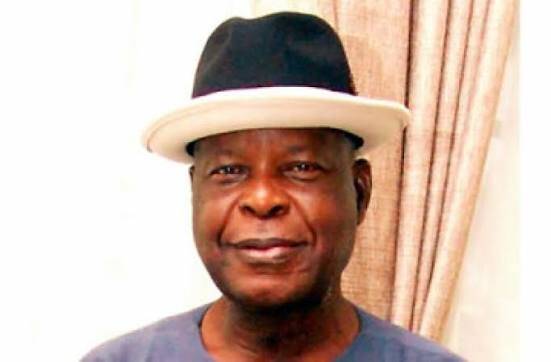
A former Inspector-General of Police, Mike Okiro, has delivered a blistering indictment of the Federal Government, accusing it of deliberately failing to equip the Nigeria Police Force and thereby contributing directly to the country's worsening insecurity. Okiro, who served as IGP from 2007 to 2009 under the late President Umaru Musa Yar'Adua, made the remarks on Tuesday, July 28, 2026, while speaking at the First Daily National Dialogue on Security held in Abuja.
Okiro did not mince words in his assessment of the government's role in the security crisis. "The government, I would say, is contributing to insecurity itself," he declared. "The police is the lead agency for internal security. But the government deliberately, I say deliberately, without any fear of contradiction, disarmed the police. The result is insecurity". He argued that although the police remain the country's primary agency for internal security, successive governments' failures to properly equip and resource the force have significantly eroded its effectiveness.
The former police chief lamented that officers have been left to confront increasingly sophisticated criminal groups without the tools needed to perform their constitutional duties. "We have passed the stage of a policeman walking on the street with a baton. No more batons," Okiro said. He called on the government to provide security agencies with the necessary equipment, including communication gadgets, armoured vehicles and other operational tools.
Beyond equipment, Okiro highlighted a severe manpower deficit that has crippled the police force. He recalled that while serving as Chairman of the Police Service Commission in 2013, the commission discovered that no recruitment exercise had been conducted for five years despite the steady depletion of the force's personnel through retirements and deaths. "We found that for five years there was no recruitment into the police. The police lost 59,730 personnel to retirements, deaths and other causes without replacement," he said. He noted the irony that while thousands of vacancies remained unfilled, "you have young men and women, graduates and degree holders, who are citizens of Nigeria without jobs".
The former IGP also criticised the poor coordination and intelligence-sharing among security agencies, arguing that bureaucratic bottlenecks continue to hinder timely responses to threats. He recounted that during his tenure, he wrote a memo to the National Security Adviser urging agencies to work together more seamlessly. "If the DSS director in Mubi gets information, he should discuss it immediately with the Divisional Police Officer instead of sending reports through Abuja before action is taken," Okiro said. "Two or three days would have gone by. Will the criminals wait? They won't".
Okiro's comments align with earlier statements he has made on the subject. In July 2026, he had argued that the growing clamour for state police is a reflection of the perceived failure of Nigeria's federal policing system, which he described as ill-equipped and ill-trained. He has consistently maintained that state police is not the solution to Nigeria's security woes, but rather that the federal police force must be properly funded and equipped. His latest remarks reinforce that position, placing the blame squarely on the federal government's neglect of the primary internal security agency.
Also speaking at the dialogue, former Chief of Defence Staff, General Lucky Irabor (retd.), echoed Okiro's concerns, raising alarm over Nigeria's defence spending pattern. Irabor disclosed that more than three-quarters of the country's defence budget is consumed by personnel costs alone, leaving an extremely narrow margin for procurement, maintenance and modernisation. He noted that Nigeria's total military expenditure remains below one percent of its Gross Domestic Product, a figure that requires urgent attention for a country facing a security emergency. Irabor further revealed that although the Nigerian Army had an approved equipment budget of ₦20.56 billion for 2025, only 7.1 percent, amounting to ₦1.46 billion, had been released.
The First Daily National Dialogue on Security provided a platform for these senior security experts to voice their frustrations with the state of the nation's security architecture. Their testimonies painted a picture of a system starved of resources, hamstrung by bureaucratic inertia, and increasingly unable to protect the lives and property of Nigerian citizens. The event comes amid a backdrop of escalating violence across the country, including deadly bandit attacks, mass kidnappings, and the resurgence of terrorism in parts of the North-East and North-West.
Okiro's accusation that the government "deliberately disarmed the police" is particularly striking, as it suggests a level of intent that goes beyond mere negligence. While he did not elaborate on the motives behind this alleged deliberate disarming, his words imply that the government has knowingly weakened the primary agency responsible for internal security. This assertion, coming from a former IGP, carries significant weight and is likely to fuel further debate about the government's commitment to addressing the security crisis.
The response from the Federal Government to these allegations was not immediately available as of the time of this report. However, the government has previously defended its record on security, pointing to increased budgetary allocations for defence and ongoing military operations across the country. Critics, however, have argued that these allocations have not translated into tangible improvements on the ground, with security forces often lacking basic equipment and struggling to contain the spread of violence.
As insecurity continues to ravage communities across Nigeria, the words of Okiro and Irabor serve as a stark reminder of the systemic failures that have allowed criminality to flourish. For the former IGP, the solution is clear: the government must properly equip and resource the police force, fill the thousands of vacancies that have accumulated over years of neglect, and ensure that security agencies can effectively coordinate their efforts. Until these fundamental issues are addressed, Okiro warned, the insecurity that has become a defining feature of Nigerian life will only continue to worsen.
📩 Stone Reporters News | 🌍 stonereportersnews.com
✉️ info@stonereportersnews.com | 📘 Facebook: Stone Reporters News | 🐦 X (Twitter): @StoneReportNew | 📸 Instagram: @stonereportersnews
Add comment
Comments