

Reported by: Ijeoma G | Edited by: Oravbiere Osayomore Promise.
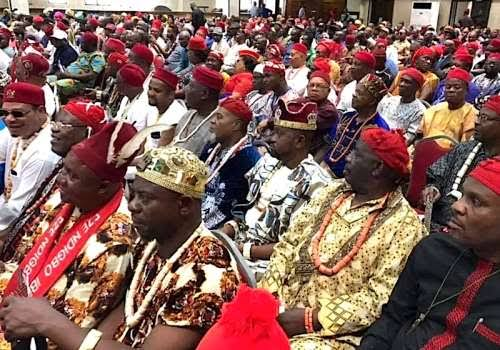
The South East Council of Traditional Rulers has formally abolished the controversial Eze Ndigbo title for Igbo leaders residing outside the South-East, replacing it with the designation 'Onyendu Ndigbo' in a decisive move aimed at ending years of disputes over the legitimacy of diaspora traditional leadership. The decision, which was reinforced on Saturday, July 25, 2026, during a ceremony in Owerri, Imo State, marks a significant shift in how Igbo cultural leadership is recognised beyond the homeland and comes amid growing tensions between traditional institutions and self-styled monarchs in various parts of Nigeria and abroad.
The new policy was implemented through the Committee on the Regularisation of Igbo Diaspora Traditional Title and Leadership (CRIDTTL), which developed a framework to standardise diaspora leadership. According to the committee, the leader of Igbo communities outside the homeland will now be known and called Onyendu or any other title approved in consultation with the Council of Ndieze and Ime-Obi. The Eze Igbo or Eze Ndigbo title currently held by diaspora leaders has been officially proscribed.
The controversy surrounding the Eze Ndigbo title has simmered for years, with critics arguing that the practice of crowning Igbo kings outside the South-East creates parallel traditional institutions and often leads to conflicts with recognised monarchs in host communities. In recent years, many self-styled Eze have emerged in cities across Nigeria and abroad, often through association elections rather than the traditional and statutory process that governs chieftaincy at home. Some have even threatened legal action against the council for what they described as defamation.
Chairman of the Imo State and South East Councils of Traditional Rulers, Eze E. C. Okeke, who presided over the induction ceremony, did not mince words in his assessment of the situation. He described the proliferation of self-appointed monarchs as "absolute madness, an abomination to the royal stool in Igboland" and warned that the council would no longer tolerate the practice. "Can this happen in Yorubaland or the North?" he asked rhetorically. "That is why we have collectively, as a traditional institution, condemned this and said enough is enough. We want to reclaim our dignity". He further warned that the council would follow legal procedures to pursue those still parading themselves as Eze outside their communities.
Okeke drew a sharp contrast between the Igbo situation and traditional institutions in other regions. "In the West, you have Obas. In the North you have Emirs. You don't see people just declaring themselves Oba of London or Emir of Houston. The stool is tied to land, to people, to process". He laid out the proper procedure for becoming a traditional ruler, emphasising that legitimacy is procedural and codified. According to him, a community must first elect an Eze-elect, who is then presented to the Local Government Area. The LGA processes the documents, which are sent to the state Ministry of Local Government and Chieftaincy Affairs, and finally, the governor issues a certificate of recognition and the staff of office after screening. "It is not something you register with the Corporate Affairs Commission," Okeke said. "And those who think it can be bought with money should have a rethink".
The induction ceremony saw the recognition of the second batch of 19 diaspora Igbo leaders as Onyendu Ndigbo, following the first batch of 32 leaders inducted in May 2026 from Lagos, Oyo, Ogun, Ekiti, Ghana and other locations. Among those inducted in the second batch were Emmanuel Chukwuma (Ivory Coast), Chris Umeh (Japan), Uche Egenti (Abuja), alongside other representatives from Abuja and neighbouring communities. The inductees were described as cultural ambassadors rather than traditional rulers, and they were charged to promote Igbo culture and unity while maintaining zero tolerance for corruption and abuse of office.
The committee's Secretary, Ubochi Ubochi, described the initiative as a major step towards creating a credible and globally respected leadership structure for Igbo communities in the diaspora. He said the title of Onyendu Ndigbo confers responsibility rather than royalty, and the recognised leaders would serve as representatives of the South-East Council of Traditional Rulers and custodians of Igbo culture in their various domains. Ubochi added that for the newly inducted Onyendu Ndigbo, the title represents not mere ceremony but a binding responsibility, heralding what many are calling a new chapter of legitimacy, unity and cultural pride for Ndigbo worldwide.
The new policy has received the backing of Ohanaeze Ndigbo Worldwide, led by its President-General, Senator John Azuta-Mbata, who was represented at the ceremony by the organisation's Vice President-General, John Duru, and former Imo State Secretary to the State Government, Callistus Ekenze. The Federal Ministry of Foreign Affairs was also acknowledged for its role in promoting the welfare of Igbo communities abroad.
The introduction of the Onyendu Ndigbo designation follows recent actions by some state governments, including Lagos, which had moved against unauthorised traditional titles amid concerns over the proliferation of self-styled monarchs and possible conflicts with recognised traditional institutions. The council also warned that any Onyendu leader who fails integrity standards will lose the title and certificate.
For the South East Council of Traditional Rulers, the decision is not merely about semantics but about reclaiming the dignity of the Ezeship institution. Under Nigerian law, a traditional ruler must have an autonomous community to govern, and the stool is territorial. The council argues that diaspora associations, however well-meaning, do not constitute autonomous communities under the law. With the induction ceremonies and the creation of a formal registry of recognised diaspora leaders, the council is drawing a clear line between culturally recognised leaders and self-appointed ones. For the thousands of Igbo people living outside their ancestral homeland, the new title of Onyendu Ndigbo offers a path to legitimate cultural leadership—one that respects both Igbo tradition and the laws of the host communities where they reside.
📩 Stone Reporters News | 🌍 stonereportersnews.com
✉️ info@stonereportersnews.com | 📘 Facebook: Stone Reporters News | 🐦 X (Twitter): @StoneReportNew | 📸 Instagram: @stonereportersnews
Add comment
Comments