

Reported by: Oahimire Omone Precious | Edited by: Oravbiere Osayomore Promise.
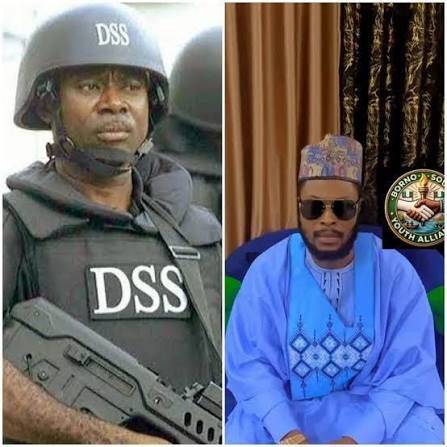
The Federal Government has arraigned the President of the Borno State Youths Association (BOSYA), Samaila Ibrahim Kaigama, before a Federal High Court in Abuja on terrorism-related charges, following his recent arrest by the Department of State Services (DSS). Kaigama was brought before Justice Salim Ibrahim on Wednesday, July 29, 2026, to face a four-count charge marked FHC/ABJ/CR/439/2026, to which he pleaded not guilty. The charges stem from his public allegations regarding the payment of ransom to secure the release of kidnapped victims in Borno State and his alleged involvement in fundraising activities linked to terrorist groups.
Kaigama's legal troubles began shortly after he appeared on Channels Television for an interview in which he alleged that ₦5 billion was paid to Boko Haram to secure the release of 360 abducted women and children from Ngoshe community in Gwoza Local Government Area. During the interview, he also claimed that Senator Ali Ndume, representing Borno South Senatorial District, facilitated or paid about ₦1.9 billion of the purported ransom. The allegations, which went viral, sparked widespread reactions and prompted questions about how the hostages regained their freedom. The Borno State Government swiftly denied the claims, insisting that no ransom was paid and that the victims were rescued through an intelligence-led military operation involving troops of Operation Hadin Kai and the DSS.
Following his televised remarks, DSS operatives arrested Kaigama for questioning. According to security sources, investigators were examining the claims made during the broadcast, particularly the allegations that billions of naira were paid to Boko Haram, a practice that is a criminal offence under Nigerian law. The Terrorism (Prevention and Prohibition) Act, 2022, criminalises providing financial support or making payments to terrorist groups, meaning such allegations could directly implicate individuals and public institutions in illegal activities if they are substantiated.
When he was eventually arraigned on Wednesday, the DSS accused Kaigama of four offences. In count one, he was alleged to have, sometime between January and June 2026, in Abuja and Gwoza LGA in Borno State, concealed information about acts of terrorism by ISWAP and Boko Haram, both internationally and nationally proscribed terrorist groups. The prosecution said that even when he knew the information would be of material assistance in apprehending and preventing the commission of acts of terrorism, he failed to disclose the information to any law enforcement or security officer. In count two, he was alleged to have, under the guise of negotiating the release of kidnap victims, directly and willingly solicited, acquired, collected, received and possessed funds from unsuspecting members of the public, with the intention and knowledge that the funds would be used to finance ISWAP and Boko Haram. Count four accused him of dealing in terrorist funds by possessing such funds, facilitating transactions and providing financial services in respect of terrorist funds at the direction of ISWAP and Boko Haram.
Following Kaigama's not-guilty plea, prosecuting lawyer Caliatus Eze applied for the defendant to be remanded in the protective custody of the DSS in the interest of national security and that of the defendant himself. Defence lawyer Hamza Dantanni argued against the application, but Justice Salim Ibrahim overruled him and ordered that Kaigama be remanded in DSS custody. The judge, however, ordered that the defendant be granted unrestricted access to his lawyer and two members of his family—his wife and his uncle—and directed that he be accorded adequate medical attention. The case was adjourned until September 24, 2026, for the commencement of trial.
Kaigama's arrest and arraignment have raised concerns among rights advocates, who view the action as an attempt to silence dissenting voices and suppress information about the payment of ransom to terrorists. SaharaReporters gathered that Kaigama was arrested in Abuja under circumstances that have stirred concerns over the suppression of free speech. A report by Closing Spaces described DSS operatives as having stormed his home, chained his legs, and ransacked his house in search of evidence, describing the arrest as an apparent attempt to silence him for speaking out about alleged government dealings with terrorists.
The case against Kaigama highlights the fine line between public interest disclosure and potential criminal liability under Nigeria's counter-terrorism laws. While the government insists that no ransom was paid and that the rescue of the 360 women and children was achieved through intelligence-led operations, Kaigama's allegations have cast a shadow over the official narrative and raised uncomfortable questions about how the victims were actually freed. The trial, which is scheduled to begin in September, is expected to provide a forum for examining these issues and determining whether Kaigama's actions crossed the line into criminal conduct. For now, the Borno youth leader remains in DSS custody, maintaining his innocence and awaiting his day in court.
📩 Stone Reporters News | 🌍 stonereportersnews.com
✉️ info@stonereportersnews.com | 📘 Facebook: Stone Reporters News | 🐦 X (Twitter): @StoneReportNew | 📸 Instagram: @stonereportersnews
Add comment
Comments