

Reported by: Ijeoma G | Edited by: Oravbiere Osayomore Promise.
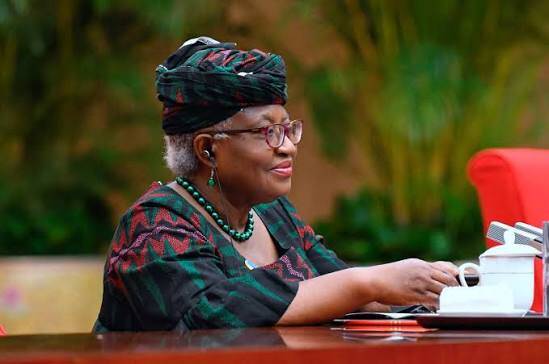
The Director-General of the World Trade Organisation, Dr Ngozi Okonjo-Iweala, has revealed that a deliberate and robust public communication strategy was instrumental in helping Nigeria secure the landmark $30 billion debt relief from the Paris Club during the administration of former President Olusegun Obasanjo. Speaking in Abuja on Wednesday, July 29, 2026, at the public presentation of *The Pain and the Promise*, a new book by communications expert and public affairs analyst Paul Nwabuikwu, the former Finance Minister recounted how she was brought in from the World Bank in 2003 to restore Nigeria's public finances, including negotiating the elimination of the country's estimated $30 billion debt owed to the Paris Club of creditors.
Reflecting on her tenure as Nigeria's Finance Minister from 2003 to 2006, Okonjo-Iweala said the ambitious reform agenda required Nigerians to understand and support difficult economic policies. "I had been brought in from the World Bank to help straighten up and strengthen Nigeria's weak finances, including getting rid of the $30 billion of the country's debt owed to the Paris Club," she told the audience, which included policymakers, diplomats, and members of the media. "To do this work, I knew Nigeria would have to undertake serious economic reforms of the type that would demand understanding and sacrifices from Nigerians".
According to her, one of the key pillars of the reform programme was effective public communication, which informed her decision to recruit Nwabuikwu into the economic team. "One important component in my mind then was that we would need a crack communications person or team to help us reach Nigerians, to explain all of this in simple language. That is where Paul came in," she said. Okonjo-Iweala described Nwabuikwu as "smart, articulate, compassionate, a terrific writer and communicator," adding that his communication strategy played a significant role in the success of the reform agenda.
"I can say without fear of contradiction that we wouldn't have had as much success with the reform programme if we had not had a masterful steering of communications from Paul," she declared. The WTO chief explained that Nwabuikwu understood that reforms in a democracy required more than policy implementation. "Reform is not just about writing new laws and enforcing new policies. It's about persuading people, explaining trade-offs and building enough trust that governments can keep pushing through obstacles," she added.
Before the landmark deal, Nigeria's external debt stock stood at $36 billion, largely carried over from the military years dating back to 1985. In October 2005, when Okonjo-Iweala was the Finance Minister, Nigeria and the Paris Club announced a final agreement for debt relief worth $18 billion after Nigeria paid $12 billion. The deal was completed on April 21, 2006, when Nigeria made its final payment and its books were cleared of any Paris Club debt, bringing Nigeria's external debt profile to just $3 billion while domestic debt stood at about N1 trillion. The relief represented the largest debt cancellation Africa had ever seen and provided Nigeria with significant fiscal breathing room, freeing up resources for investment in infrastructure, education, and healthcare.
Okonjo-Iweala's remarks underscore the often-overlooked role of public engagement in macroeconomic policy. While the debt relief negotiations required technical expertise, diplomatic finesse, and political will, the former minister argued that none of these would have been sufficient without the buy-in of ordinary Nigerians. She noted that the economic reforms, which included fiscal discipline, transparency measures, and institutional strengthening, were complex and could easily have been misunderstood or resisted. The communications strategy, she said, was designed to break down these complexities into accessible narratives that helped citizens understand why the sacrifices were necessary and how they would ultimately benefit from the reforms.
The WTO chief also used the occasion to lament Nigeria's persistent ethnic, religious and regional divisions, which she said continue to slow national development. She warned that the country would struggle to achieve sustainable prosperity unless Nigerians forged a common national consensus that transcended sectional interests. "Until Nigerians can overcome the ethnic, religious and regional divides embedded in our society to forge a social compact that agrees key directions for the nation, directions that remain steady no matter who is in government, I think Nigeria will find it difficult to move forward at the pace required to create enduring prosperity for our people," she said.
She stressed that talent existed across every part of the country and urged Nigerians to prioritise competence over ethnic or regional considerations. "I believe in talent from every corner of Nigeria. There's no place in Nigeria that doesn't have talented people. I don't care what part of the country you come from. I just wanted you to do your job and do it professionally," she said. Her comments come at a time when Nigeria is grappling with multiple challenges, including economic instability, security crises, and deepening social divisions, all of which have been exacerbated by the rising cost of living and persistent infrastructure deficits.
Reviewing the book, Okonjo-Iweala described The Pain and the Promise as a compelling reflection on Nigeria's political, economic and social evolution over the past 35 years. She said the 300-page publication combined public commentary, personal memories and historical reflections to present what she called "a portrait of a generation in the life of the most interesting, if the most chaotic, country in the world". The book, authored by Paul Nwabuikwu, who served as Special Adviser on Communications to Okonjo-Iweala during her tenure as Finance Minister, documents the communications strategies that underpinned some of Nigeria's most significant economic reforms.
Okonjo-Iweala's revelation about the importance of public communication in securing the Paris Club debt relief offers a valuable lesson for current and future policymakers. In an era of widespread misinformation and declining public trust in government, her remarks serve as a reminder that effective communication is not a luxury but a necessity for successful governance. The debt relief deal, which transformed Nigeria's fiscal position and restored investor confidence, was not achieved through technical negotiations alone. It required the active engagement of the Nigerian people, who needed to understand and support the reforms that made the deal possible.
The public presentation of The Pain and the Promise also provided an opportunity for Okonjo-Iweala to reflect on her own legacy. As Nigeria's first female Finance Minister and the first woman to lead the World Trade Organisation, she has been a trailblazer in both national and international economic governance. Her acknowledgment of the role played by her communications team highlights the collaborative nature of policymaking and the importance of building a strong team of professionals to support reform efforts. As Nigeria continues to navigate its complex economic and social challenges, the lessons from the Paris Club debt relief experience remain as relevant as ever.
📩 Stone Reporters News | 🌍 stonereportersnews.com
✉️ info@stonereportersnews.com | 📘 Facebook: Stone Reporters News | 🐦 X (Twitter): @StoneReportNew | 📸 Instagram: @stonereportersnews
Add comment
Comments