

Reported by: Ijeoma G | Edited by: Oravbiere Osayomore Promise.
The Abia State Government has announced a new fee structure that will require presidential candidates to pay N200 million for campaign billboard permits in the state, a policy that has drawn sharp criticism from opposition parties and advertising industry stakeholders who argue the charges are excessive and could stifle political participation. The Abia State Structure for Signage and Advertising Agency (ABSSAA) unveiled the schedule on Wednesday, July 29, 2026, during a stakeholders' forum in Aba themed "Order in Outdoors: Partnership for Safe Campaigns, Sustainable Revenue and A Cleaner Abia". The agency said the one-time payment would cover the entire campaign and election period and would apply uniformly to all political parties without discrimination.
Ndubuisi Nwaogwugwu, Head of Department for Strategy, Innovation and Design at ABSSAA, announced that presidential candidates will pay N200 million, while governorship candidates will pay N150 million, senatorial candidates N100 million, House of Representatives candidates N50 million, and State House of Assembly candidates N20 million. The schedule applies to all political party candidates at all levels and has its basis in ABSSAA and other Abia laws regulating signage and advertising. Nwaogwugwu stated that the permit rates have been approved by the Abia State Government and apply throughout the approved election campaign period. The agency also warned that it would dismantle or revoke any campaign billboard that fails to meet approval standards or poses a threat to public safety and peace.
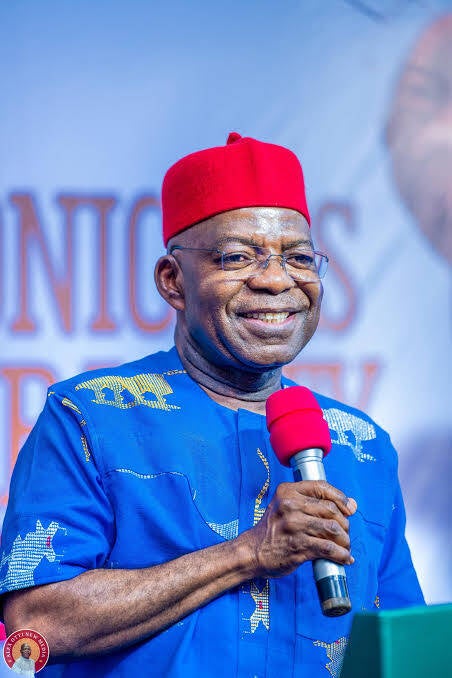
The Abia State Government has defended the policy as a necessary measure to regulate the proliferation of political advertisements, protect lives on roads, preserve the beauty of cities, and protect the integrity of the democratic process. Sir Onyebuchi Ememanka, Director General of the Abia State Bureau of Strategic Communication, described the permit schedule as non-negotiable and stressed that the government would not discriminate against any political party or candidate. "Dr Alex Otti's leadership is determined to provide an enabling environment for political engagement with clear rules, transparent processes and equal access," Ememanka said. He added that provided rules are obeyed, official guidelines followed, and appropriate fees paid, every party's candidate would enjoy the same opportunity to engage the public using outdoor advertising spaces.
However, the policy has met with strong opposition from political parties and industry bodies. Dr Sola Akinsiku, President of the Out-of-Home Advertising Association of Nigeria (OAAN), expressed reservations about the fee schedule, describing the rates as unsustainable. He warned that the charges could negatively affect political advertising, resulting in poor voter literacy, voter apathy, and disenfranchisement, which would hurt the polity further. Represented by OAAN Treasurer Chinweuba Nwagu, Akinsiku called for more robust engagements and a softer approach to avoid killing outdoor advertising in Abia.
The African Democratic Congress (ADC) in Abia State has also rejected the policy. The party's Abia Chairman, Kalu Kalu, argued that the fees contravene the provisions of the Electoral Act on campaign finance limits and fair political competition. Kalu also cited Supreme Court rulings which, according to him, have settled the issue of outdoor permits by handing the responsibility of collecting such fees to local governments. He warned that any law in breach of the Electoral Act that demands a presidential candidate pay N7.2 billion for outdoor advertising across 36 states could not stand. The ADC chairman said that if ABSSAA's law provides for such payments, the party would pay, but if not, the idea should be cancelled.
The policy has also raised concerns about the financial burden on political parties and candidates, particularly smaller parties that may struggle to raise the required funds. Some stakeholders have questioned whether the fees are designed to regulate political advertising or to generate revenue for the state government. The Abia State Government has insisted that the policy is not targeted at any particular party or candidate and is meant to create order in the outdoor advertising space and prevent the visual pollution that often accompanies election seasons. ABSSAA has also clarified that House of Assembly candidates unable to pay the full fee could share campaign billboards with their party's governorship candidate. The stakeholders' forum was attended by representatives of political parties, advertising professionals, and government officials.
The announcement comes as Nigeria prepares for the 2027 general elections, with political activities expected to intensify across the country. Several states have imposed similar fees on political campaigns, with opposition parties raising concerns about the financial burden on candidates. The Abia State Government has maintained that the fees will apply equally to all political parties and are not intended to discriminate against any candidate. As the 2027 elections draw closer, the policy is likely to remain a subject of debate, with stakeholders calling for further engagement to address concerns about the sustainability and fairness of the charges.
📩 Stone Reporters News | 🌍 stonereportersnews.com
✉️ info@stonereportersnews.com | 📘 Facebook: Stone Reporters News | 🐦 X (Twitter): @StoneReportNew | 📸 Instagram: @stonereportersnews
Add comment
Comments