

Reported by: Ijeoma G | Edited by: Oravbiere Osayomore Promise.
The South African government has arrested approximately 80 members of vigilante groups allegedly involved in a wave of xenophobic attacks and other criminal acts targeting migrants across the country, the Consul-General of South Africa to Nigeria, Professor Bobby Moroe, disclosed on Wednesday, July 29, 2026. The arrests, which were carried out across five to six provinces, mark a significant law enforcement response to weeks of anti-migrant violence that has killed at least four people, triggered a mass exodus of foreign nationals, and strained diplomatic relations between Africa's two largest economies.
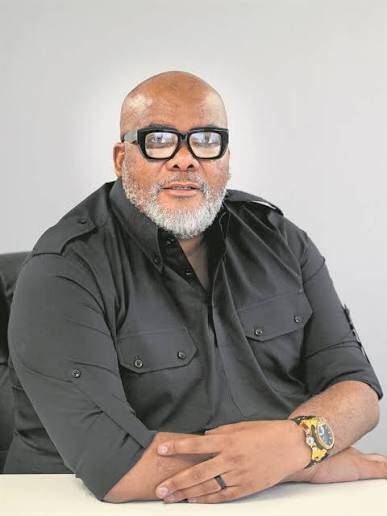
Moroe made the announcement during his keynote address at the Nigeria-South Africa Chamber of Commerce Breakfast Forum held in Lagos on July 29, 2026. The event, themed "The Future of Nigeria-South Africa Relations: Advancing Bilateral Cooperation in a Changing World," brought together diplomats, business leaders, and key stakeholders from both nations. Addressing the audience, the envoy stressed that the South African government neither condones nor supports attacks on migrants, insisting that the country's Constitution guarantees protection for everyone residing within its borders, regardless of their immigration status.
"In South Africa, we have witnessed acts of criminality by vigilante groups calling for illegal migrants to return home and taking the law into their own hands," Moroe said. "But let me be clear on behalf of my government that the South African Constitution protects both regular and irregular migrants. Only competent law enforcement agencies and immigration officers have the legal standing to deal with migration issues."
The arrests came after weeks of anti-migrant protests, with fringe groups and activists accusing undocumented migrants of fuelling crime, worsening unemployment, and placing additional pressure on public services. Demonstrations intensified in 2026, with xenophobic groups demanding that all undocumented foreigners leave the country by June 30. The pressure prompted thousands of migrants to flock to consulates and community halls seeking transport home. According to an AFP tally based on figures from repatriating governments, more than 160,000 foreign nationals have left South Africa over the past two months, representing one of the largest recent migrant exoduses on the continent. The largest numbers of returnees came from Zimbabwe and Malawi. Nigeria has repatriated approximately 1,490 nationals, while Ghana has flown home at least 926.
At least four migrants have been confirmed killed in the violence, though some foreign governments have reported higher death tolls. Nigeria has said two of its nationals were killed in the ongoing attacks, while Ghana reported the death of one of its citizens in a Cape Town township. South African authorities have rejected both allegations, warning of disinformation being spread online. The violence has also prompted diplomatic tensions, with Ghana's President John Mahama calling for an African Union debate to formally address the escalating attacks, while two Ghanaian citizens have petitioned the International Criminal Court to investigate what they describe as "repeated xenophobic attacks"—a move Pretoria has dismissed as "opportunistic".
Moroe dismissed claims circulating in Nigeria that the South African government was orchestrating or sponsoring the violence, describing such allegations as "fake news". "In Nigeria, we have seen direct reprisals and pushbacks as a direct response to what is perceived as an onslaught by the South African government against migrants. I can tell you for free, this is fake news," he declared. He emphasized that the actions of the vigilante groups do not represent the sentiments of the South African people or government, noting that authorities remain committed to protecting the rights of all residents.
"These acts of criminality by groups taking the law into their own hands do not represent the sentiments of South Africans," Moroe stated. "The government condemns all acts of criminality and violations of human rights against any individual, whether a South African national or a foreigner, because the Constitution protects everybody. No individual in South Africa is allowed to take the law into their own hands."
The diplomat confirmed that security agencies are continuing operations to stabilise affected communities and ensure that all perpetrators face justice. "We are working daily to stabilise the environment and bring perpetrators to book. About 80 people involved in these acts of criminality and members of vigilante groups have been arrested in about five to six provinces, and the law is taking its due course," he said.
Despite the diplomatic tensions, Moroe used the occasion to call for stronger bilateral ties between Nigeria and South Africa, noting that both countries have maintained 32 years of uninterrupted diplomatic relations built on mutual solidarity and shared history. He acknowledged Nigeria's critical support during South Africa's anti-apartheid struggle, recalling that Nigeria had funded the country's freedom and carried the struggle in its chest when the world remained silent. "Our struggle was your struggle, our pain was your pain, and indeed, our freedom is your freedom," he said. "How then can a moment of anger erase a lifetime of solidarity? Let us fall in love again with each other's land."
He also stressed that healing and reconciliation cannot live on words alone but must be demonstrated through work, trade, and shared prosperity. Moroe called on both nations to create a conducive socio-economic environment that creates jobs, grows economies, and reduces poverty—a shared responsibility that would protect both citizens and migrants alike.
Earlier, the Chairman of the Nigeria-South Africa Chamber of Commerce, Dr. Ije Jidenma, represented by the Vice-Chairman, Mr. Ajibola Olomola, reaffirmed the chamber's commitment to strengthening economic and commercial ties between the two countries. The forum was attended by business leaders, representatives of South African Airways, MTN Nigeria, the Nigeria Association of Tour Operators, and other private sector stakeholders seeking to deepen collaboration between Africa's two largest economies.
The announcement of the 80 arrests comes amid ongoing diplomatic engagements between Nigeria and South Africa. Nigeria has documented the deaths of 98 of its citizens in South Africa since 2022 alone and has demanded that Pretoria take concrete steps to address the recurring violence. President Bola Tinubu recently declined to personally receive a South African delegation sent by President Cyril Ramaphosa, directing them instead to meet with a junior minister. Nigerian officials have insisted that South Africa must demonstrate concrete commitments and ratify the Memorandum of Understanding on the Early Warning Mechanism signed in October 2025 before further high-level diplomatic engagement can proceed.
While the arrest of 80 suspected vigilantes represents a significant law enforcement response, the underlying tensions that drove the anti-migrant violence remain unresolved. South Africa, the continent's most industrialised economy, continues to grapple with unemployment above 30 per cent, massive failures in the delivery of basic services, and deep structural inequalities—conditions that have made migrants a convenient scapegoat for the country's enduring social and economic challenges. For the thousands of foreign nationals who have left South Africa in recent weeks, the arrests may offer little reassurance. For the families of those who lost their lives, the demand for justice remains urgent. And for the leaders of both nations, the question is whether this moment of crisis can be transformed into an opportunity to build the more just and inclusive Africa that the continent's founding fathers envisioned.
📩 Stone Reporters News | 🌍 stonereportersnews.com
✉️ info@stonereportersnews.com | 📘 Facebook: Stone Reporters News | 🐦 X (Twitter): @StoneReportNew | 📸 Instagram: @stonereportersnews
Add comment
Comments