

Reported by: Oahimire Omone Precious | Edited by: Oravbiere Osayomore Promise.
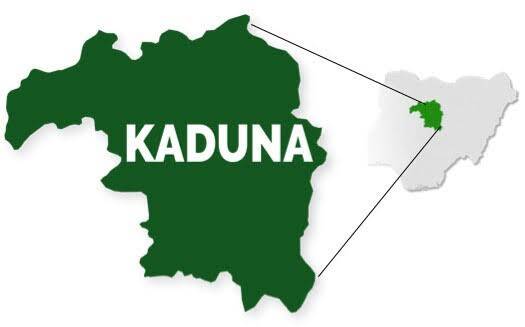
A concerned indigene of Southern Kaduna, Zakka Junior Emmanuel, has written an impassioned open letter to Governor Uba Sani, urging the state government to treat the recent massacre in Naridon village as a state emergency and to take urgent, targeted action on security, education, and equitable governance. The letter, which surfaced on Friday, July 31, 2026, comes just days after gunmen attacked Naridon village in Kamaru Ward, Kauru Local Government Area, killing at least 30 residents, including women and eight children, and burning several homes. The assailants reportedly operated for two to three hours with little or no immediate security response, despite the presence of military and police posts just kilometres away.
Emmanuel, who describes himself as a "bona fide indigene of Kaduna State," began his letter by highlighting the Naridon attack as the latest in a pattern of violence plaguing communities in Kauru, Zangon Kataf, Kajuru, Kachia, and Kagarko local government areas. He noted that in some cases, families have paid ransom only for captives, including newborns, to be killed in captivity. "What makes this especially troubling is that it was not an isolated incident," he wrote, pointing to a recurring cycle of targeted banditry and mass violence that has forced farmers to abandon their fields and schools to operate under fear.
Security Architecture and Response
Emmanuel raised concerns about the effectiveness of the state's security architecture, noting that attacks lasting hours without intervention suggest gaps in real-time intelligence, rapid-response capacity, and permanent presence in high-risk areas. He acknowledged the governor's "Kaduna Peace Model" and community ownership of security but argued that the lived experiences in many Southern Kaduna communities are of "persistent, targeted banditry and mass violence that has not been decisively contained." He called for an intelligence-led, permanent security presence in the most vulnerable communities of Kauru, Zangon Kataf, Kajuru, and Kachia, with clear accountability for response times.
Education: Beyond Painted Buildings
The letter acknowledged the administration's achievements in education, including allocating 25 per cent of the 2026 budget to the sector, constructing classrooms, and reducing the number of out-of-school children. However, Emmanuel stressed that a critical gap persists: the acute shortage of qualified science teachers—particularly in Physics, Chemistry, Biology, and Mathematics. He cited reports that some zonal education offices have only a handful of mathematics teachers, while science laboratories exist or are being built but remain underutilised due to a lack of instructors. He also noted overcrowding in some technical colleges, partly caused by insecurity-related relocations, which undermines learning. He specifically urged the governor to launch a "targeted, time-bound recruitment and deployment of science and core-subject teachers" to Southern Kaduna public schools, paired with the proper equipping and maintenance of existing laboratories and libraries.
Equity in Appointments and Influence
Emmanuel also addressed the issue of political representation, arguing that while the government has made efforts at zonal representation on boards and councils, many in Southern Kaduna still feel that strategic decision-making positions do not adequately reflect the zone's population, contribution, and specific challenges. "Token or peripheral appointments do not substitute for meaningful inclusion in the core of governance," he wrote, urging the governor to ensure that the lived realities of Southern Kaduna shape policy.
Economic and Social Recovery
The letter acknowledged positive developments, including road projects, the establishment of the Federal University of Applied Sciences in Kachia, and the Federal Medical Centre in Kafanchan—interventions the governor helped secure. However, Emmanuel stressed that insecurity has disrupted farming and limited access to markets, even where roads have improved. He called for deliberate local content, skills training, and protection so that opportunities from mining and agricultural projects benefit the people of the zone rather than remaining distant. He also urged the government to provide sustained, well-coordinated support for internally displaced persons to enable their return, housing, and livelihoods.
Specific Demands
Emmanuel made eight specific demands, including treating the Kauru massacre and the pattern of attacks as a state emergency; launching a targeted recruitment of science teachers; ensuring greater balance in appointments; linking infrastructure and economic projects explicitly to community recovery and youth skills; expanding psychosocial support for traumatized children; addressing the "ridiculous" N24,000 capitation grant given to some schools; reinstating the state bursary for students in higher institutions; and making efforts to secure the release of the remaining victims of the Ariko kidnapping that occurred close to 100 days ago.
He noted that some victims of the Ariko attack on Easter Sunday, April 5, 2026, have reportedly died in captivity. "We owe our consciences, their community and the state their safe return – and all those in captivity. Let them not be forgotten," he pleaded.
'Goodwill Is Sustained by Results'
Emmanuel concluded by appealing to the governor to "sit with the discomfort of criticisms," advising him not to see honest criticism as attacks but as opportunities for growth. "Do not see honest criticisms as attacks or mere opposition but as opportunity to hear, see or know what those closest to you may not have the courage to speak about," he wrote. He acknowledged that the people of Southern Kaduna remain thankful for what the governor has been doing and have shown political goodwill toward his administration. "But, as you well know, that goodwill is sustained by results—especially the result of people being able to sleep without fear and raise their children in dignity," he said.
The letter comes amid renewed scrutiny of security in Kaduna State following the Naridon massacre, which President Bola Tinubu condemned as a "barbaric assault on innocent civilians" and ordered security agencies to intensify operations to apprehend those responsible. The Christian Association of Nigeria (CAN) has also called for a permanent security presence in vulnerable communities, noting that the attack was part of a pattern of recurring violence in the area. As the state government continues its response, Emmanuel's letter serves as a stark reminder that for many residents of Southern Kaduna, the promise of peace and development remains unfulfilled—and that decisive action is needed to match the scale of the challenges with the scale of action they demand.
📩 Stone Reporters News | 🌍 stonereportersnews.com
✉️ info@stonereportersnews.com | 📘 Facebook: Stone Reporters News | 🐦 X (Twitter): @StoneReportNew | 📸 Instagram: @stonereportersnews
Add comment
Comments