

Reported by: Ijeoma G | Edited by: Oravbiere Osayomore Promise.
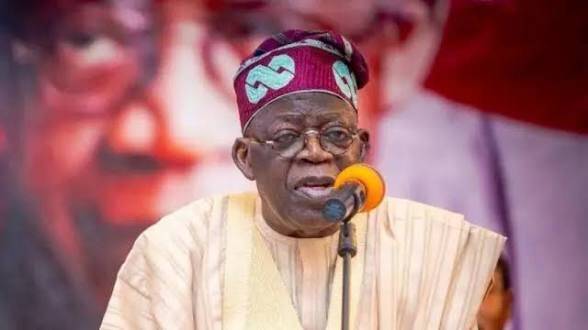
President Bola Tinubu has firmly assured Nigerians that the proposed state police system will be established with robust constitutional safeguards to prevent abuse by governors, while reiterating his administration's uncompromising stance against negotiating with kidnappers or paying ransom to terrorists. The President made the declarations on Thursday, July 30, 2026, while receiving traditional rulers under the auspices of the Oyo State Council of Obas, led by the Olubadan of Ibadanland, Oba Rashidi Adewolu Ladoja, at the State House in Abuja.
Addressing longstanding concerns over the potential misuse of state-controlled security forces, Tinubu emphasized that the new structure would operate with checks and balances, and that traditional rulers would also play a role in ensuring accountability. "There will be state police. That state police will have guardrails from abuses. We'll protect it from abuses, and you traditional rulers too will have roles to play," the President declared. His remarks come amid growing calls for decentralised policing to tackle Nigeria's escalating security crisis, coupled with fears that state governors could exploit such forces for political persecution.
The President's assurance aligns with ongoing legislative efforts to establish state police. Deputy Senate President Barau Jibrin has previously noted that the proposed constitutional framework contains legal safeguards that would empower the President to intervene if governors misuse the security outfit. Senate Leader Opeyemi Bamidele also disclosed that the National Assembly is building safeguards, including provisions for independent funding, to prevent abuse. Tinubu's latest statement reinforces that these safeguards are a central component of the reform.
Beyond the state police debate, Tinubu used the occasion to reaffirm his administration's hardline position on kidnapping and terrorism. Reflecting on the recent rescue of abducted pupils and teachers in Oriire Local Government Area of Oyo State, the President disclosed that the criminals had demanded not only ransom but also the release of their detained accomplices—a request the government rejected outright. "We refused to negotiate. These criminals wanted us to review the release from detention, members of their criminal gangs that were already arrested. That was one of their conditions, aside from the money they're looking for. And I said, 'no deal,' we are not going to negotiate with criminals," Tinubu stated. He commended the armed forces for their excellent performance in the Oriire rescue operation, attributing the success to the professionalism of the military and the support and prayers of Nigerians.
To further strengthen the country's security architecture, Tinubu disclosed that the Federal Government has expanded the Nigerian Army from eight to twelve divisions. This expansion is intended to shorten response time and give security forces the capacity needed to decisively defeat terrorism and banditry. "We've given a geographical and numerical answer to the challenges. From eight divisions, we are now moving to 12 divisions to shorten the response time and give that response the teeth needed for us to defeat terrorism and banditry," he said. The President also announced plans to enhance the capacity of forest guards, expanding their mandate beyond wildlife protection to pursuing criminals hiding in forests. "They are not just to chase antelopes and animals. We are going to have them chase the criminals and deal with them in various forests," Tinubu declared.
On the economic front, Tinubu noted that the country's fiscal position had improved, with state governments receiving significantly higher allocations than before. He urged governors to prioritise investments in road infrastructure that would improve connectivity and enable security agencies to access remote areas easily, rather than constructing flyovers where they were not needed. "The states are now receiving four to five times what they used to get. Nobody is borrowing to pay salaries anymore, and pensioners are receiving their entitlements. They should invest more in roads and infrastructure that improve security and economic activities instead of constructing flyovers where traffic does not justify them," he said.
The President also addressed the regional dimension of Nigeria's security challenges, noting that instability in neighbouring Mali, Burkina Faso, and Niger Republic is compounding the country's problems. He urged Nigerians to remain vigilant and report suspicious persons and activities in their communities, describing intelligence gathering as critical to addressing insecurity.
The Olubadan of Ibadanland, in his remarks, expressed gratitude to the President for the Oriire rescue and commended the achievements of the administration. He advocated true federalism and called for constitutional roles for traditional rulers.
Tinubu's latest assurances on state police safeguards, his no-ransom policy, and the expansion of military and forest guard capacities reflect a comprehensive approach to security reform. However, the true test will be in the implementation of these measures and whether they can translate into tangible improvements in the safety of Nigerians. As the President himself acknowledged, every security incident teaches new methods, challenging the government to continually re-examine its architecture, strategy, and operational deployment.
📩 Stone Reporters News | 🌍 stonereportersnews.com
✉️ info@stonereportersnews.com | 📘 Facebook: Stone Reporters News | 🐦 X (Twitter): @StoneReportNew | 📸 Instagram: @stonereportersnews
Add comment
Comments