

Reported by: Ijeoma G | Edited by: Oravbiere Osayomore Promise.
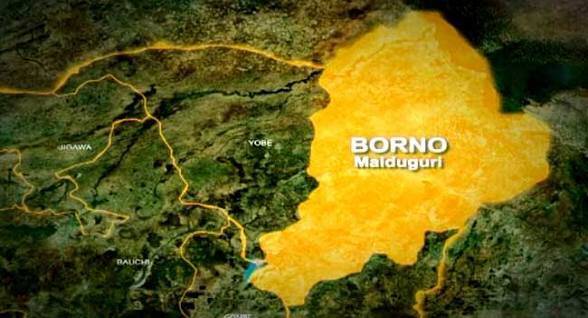
A devastating bomb attack in Borno State has claimed the lives of at least eight Nigerian soldiers, marking another tragic blow to the military's ongoing counter-insurgency operations in the North-East. The troops, who were returning to base after escorting food supplies and other logistics, were killed on Thursday, July 30, 2026, when their convoy struck an Improvised Explosive Device (IED) allegedly planted by the Islamic State West Africa Province (ISWAP) along the Marte–Dikwa axis.
According to military sources, the troops attached to the 24 Task Force Brigade, Dikwa, were returning to their base from Maiduguri when the incident occurred. "The troops were escorting foodstuffs and other logistics to their base in Dikwa town when the attack happened," a military source told SaharaReporters. The lead vehicle in the convoy, a gun truck, triggered the explosive device planted along the route. "All the soldiers in that vehicle died on the spot. About eight of them," the source added. The identities and ranks of the deceased had not been officially confirmed as of Friday, July 31, 2026.
The attack adds to a growing list of deadly roadside bomb incidents targeting military personnel in the North-East, where ISWAP and Boko Haram factions have intensified their use of IEDs to counter the military's superior firepower. Security analysts have noted that the insurgents have shifted tactics in recent months, moving away from direct confrontations to planting explosives along roads used to move food, fuel and troops between Maiduguri, Dikwa, Bama and neighbouring local government areas. This strategy has turned major supply routes into death traps for military convoys, forcing troops to navigate a landscape where every stretch of road could conceal a hidden bomb.
This is not the first time the Marte–Dikwa road has witnessed such tragedy. In June 2026, three soldiers were killed and several others injured after a military vehicle struck an IED along the same route. In April 2025, suspected terrorists ambushed a military convoy in the Dikwa axis, killing at least four soldiers and destroying two military trucks. The recurring attacks on this vital supply corridor highlight the persistent vulnerability of Nigeria's military logistics network, which has become a primary target for insurgent groups seeking to disrupt military operations and demoralise troops.
The latest attack comes as the military continues its operations under Operation HADIN KAI, the ongoing counter-insurgency campaign in the North-East. Despite repeated claims of progress and the degradation of terrorist capabilities, incidents such as this underscore the resilience of ISWAP and Boko Haram, which have adapted their tactics to exploit the military's logistical vulnerabilities. The use of IEDs has become the insurgents' weapon of choice, allowing them to inflict casualties without engaging in direct combat, which often exposes them to the military's superior firepower.
The bombing has also raised questions about the effectiveness of the military's counter-IED measures, including the use of mine-resistant vehicles and electronic countermeasures. While the military has made significant investments in these technologies, the insurgents have demonstrated a capacity to adapt, often using command-detonated explosives or buried devices that are difficult to detect with standard equipment. The Marte–Dikwa road, which traverses a largely rural and sparsely populated area, provides ample opportunities for insurgents to plant IEDs under cover of darkness and remote terrain.
The loss of eight soldiers in a single attack is a significant blow to the morale of the troops and a stark reminder of the human cost of Nigeria's protracted war against terrorism. The soldiers, who were escorting supplies to their colleagues, were performing a routine but essential task. Their deaths highlight the dangers faced by military personnel engaged in logistics operations, which are often overlooked in discussions of counter-insurgency. The families of the deceased are now left to mourn their loved ones, while the military grapples with the challenge of securing its supply routes.
The Nigerian Army has yet to issue an official statement confirming the attack and the number of casualties. The military's public affairs apparatus has often been criticised for its reluctance to promptly and transparently report such incidents, a practice that has fuelled public scepticism and speculation. In the absence of official confirmation, the media has relied on military sources and eyewitness accounts to piece together the details of the attack. The army's silence on this latest incident is likely to further erode public confidence in its ability to protect its personnel and secure the region.
The attack also underscores the broader security challenges facing Nigeria's North-East, where the insurgency has persisted for more than a decade, claiming tens of thousands of lives and displacing millions. Despite repeated military offensives, the insurgents have proven remarkably resilient, exploiting the region's vast and porous borders, as well as the complex web of local grievances that have fuelled the conflict. The use of IEDs is a testament to their adaptability and determination to continue their campaign of violence.
The international community has expressed concern over the escalating violence in the North-East, with the United States and European Union reiterating their support for Nigeria's counter-terrorism efforts. However, the attack on the military convoy serves as a grim reminder that the battle against ISWAP and Boko Haram is far from over. The insurgents have shown that they remain capable of inflicting significant casualties on Nigerian forces, even as the military continues to make progress in other areas.
As the nation mourns the loss of its soldiers, the attack on the Marte–Dikwa road has reignited calls for a comprehensive review of Nigeria's counter-insurgency strategy. Critics have argued that the military's reliance on brute force has proven insufficient to defeat an insurgency that is deeply entrenched in local communities and fuelled by a complex mix of political, economic, and social grievances. They have called for a more holistic approach that addresses the root causes of the conflict, including poverty, unemployment, and lack of access to education and healthcare.
For now, the focus remains on the families of the fallen soldiers, who must come to terms with the loss of their loved ones. The attack on the military convoy is a stark reminder of the sacrifices made by Nigeria's armed forces in the fight against terrorism. It is a tragedy that underscores the urgent need for a more effective and sustainable approach to ending the insurgency in the North-East.
📩 Stone Reporters News | 🌍 stonereportersnews.com
✉️ info@stonereportersnews.com | 📘 Facebook: Stone Reporters News | 🐦 X (Twitter): @StoneReportNew | 📸 Instagram: @stonereportersnews
Add comment
Comments