

Reported by: Oahimire Omone Precious | Edited by: Oravbiere Osayomore Promise.
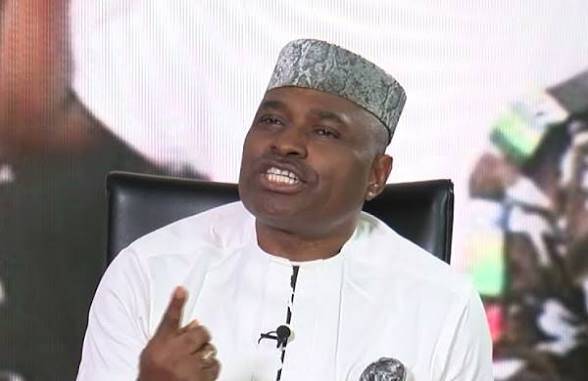
A chieftain of the African Democratic Congress (ADC), Kenneth Okonkwo, has made a startling allegation that the imposition of N200 million and N150 million fees on presidential and governorship campaign billboards in Abia State is a calculated move orchestrated by the ruling All Progressives Congress (APC) to cripple the opposition ahead of the 2027 general elections. Okonkwo made the allegation on Friday, July 31, 2026, during an appearance on Channels Television's 'Sunrise Daily' programme, where he also accused Abia State Governor Alex Otti of allowing himself to be used as a tool for this alleged agenda.
Okonkwo expressed dismay that Governor Otti, who is a member of the Labour Party and was elected on a platform of change and good governance, would endorse what he described as a draconian fee structure. "It’s unfortunate that in Nigeria, the ruling party has made it impossible for the opposition to strive. In Abia State, you are hearing a huge amount for you to put up your billboards for N200 million for a presidential candidate," Okonkwo stated. He further argued that the cost is prohibitive, especially when multiplied across the country. "Now, multiply N200 million by 36 states, including the Federal Capital Territory, FCT, you would see the perfidy. Just an opportunity to advertise and tell Nigerians what you want to do. APC is a scourge that wants to destroy our democracy," he declared.
Okonkwo specifically targeted Governor Otti, expressing surprise that a governor who ran against the APC would now implement a policy that benefits the ruling party. "I’m surprised that Governor Otti will fall for that. As far I’m concerned, that is an APC agenda using Governor Otti to make it impossible for the opposition political parties to campaign, and it’s really unfortunate," the ADC chieftain said. His remarks come amid widespread backlash against the Abia State Structure for Signage and Advertising Agency (ABSSAA), which recently announced a new fee regime for political campaign advertisements. According to the agency, presidential candidates will pay N200 million, governorship candidates N150 million, senatorial candidates N100 million, House of Representatives candidates N50 million, and State House of Assembly candidates N20 million to display campaign materials.
The fee structure has drawn sharp criticism from various political parties and stakeholders, who have described the charges as outrageous, punitive, and a direct assault on political participation. The Peoples Democratic Party (PDP) in Abia State has condemned the fees, describing them as a draconian assault on political participation. Similarly, the All Progressives Congress (APC) in the state has also criticised the fees, with its governorship candidate, Chief Eric Opah, opposing the N150 million charge on governorship candidates. The African Action Congress (AAC) governorship candidate, Doris Ogala, also lambasted the fees, questioning where she would get N150 million for billboards.
Okonkwo's allegation adds a new dimension to the controversy, framing the fee structure not as a revenue-generating measure but as a deliberate strategy by the APC to stifle opposition voices. He argued that the fees are designed to make it financially impossible for opposition candidates to communicate their messages to voters, thereby giving the APC an unfair advantage in the 2027 elections. This is not the first time Okonkwo has made explosive allegations on national television. In June 2026, he was involved in a defamation dispute with Peter Obi, the presidential candidate of the Nigeria Democratic Congress (NDC), over comments made on the same programme.
The Abia State Government has defended the fee structure, describing it as a necessary measure to regulate political advertising, protect public safety, and generate revenue for the state. ABSSAA officials have maintained that the fees will apply equally to all political parties and candidates without discrimination. However, critics argue that the fees are not only exorbitant but also anti-democratic, as they could effectively disenfranchise smaller parties and less wealthy candidates. The controversy has also raised questions about the broader implications of such fees for Nigeria's democracy, particularly as the country prepares for the 2027 general elections.
As the debate continues, Okonkwo's allegation that the APC is behind the fee structure is likely to fuel further political tensions. While the APC has not officially responded to the allegation, the party has publicly opposed the fees, creating a contradictory situation where the ruling party is both accused of orchestrating the policy and officially criticising it. For Governor Alex Otti, the allegations present a significant political challenge, as he must now defend a policy that has been widely condemned and is now being used to question his political integrity. As the 2027 elections approach, the controversy over campaign advertising fees in Abia State is unlikely to fade, serving as a flashpoint in the broader debate over the health of Nigeria's democracy.
📩 Stone Reporters News | 🌍 stonereportersnews.com
✉️ info@stonereportersnews.com | 📘 Facebook: Stone Reporters News | 🐦 X (Twitter): @StoneReportNew | 📸 Instagram: @stonereportersnews
Add comment
Comments