

Reported by: Ijeoma G | Edited by: Oravbiere Osayomore Promise.
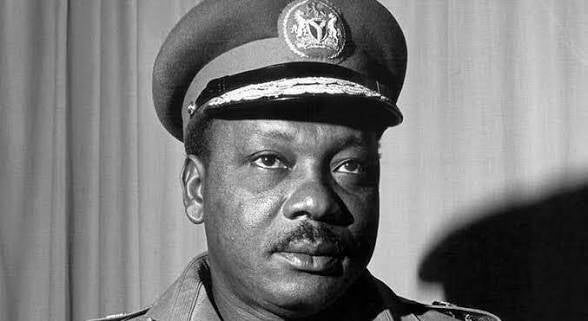
The family of Nigeria's first military Head of State, Major General Johnson Thomas Umunnakwe Aguiyi-Ironsi, has formally called on the Federal Government to issue a formal apology, pay compensation, and initiate a process of reconciliation over his assassination during the July 1966 counter-coup, insisting that he "died for no crime." The demand comes nearly six decades after the military leader was killed, marking a renewed push for justice and historical reckoning from a family that says it has never received a sincere acknowledgment of his sacrifice.
The family's head, Imo Aguiyi-Ironsi, a nephew of the late military leader, made the appeal during an interview on Arise News' 'Prime Time' programme on Thursday, July 30, 2026. He stated unequivocally: "I think the family needs apology. The family needs to be compensated. We need sincere apology. We need sincere reconciliation." His words reflect a deep-seated frustration that, for 58 years, the family has been left to mourn in silence while the nation moved on from one of its most defining and tragic political events.
Imo Aguiyi-Ironsi described his uncle as a visionary and detribalised leader who was wrongly punished for a coup he had no role in. He insisted that the late general was not part of the January 15, 1966 coup that overthrew the First Republic and claimed the lives of Prime Minister Sir Abubakar Tafawa Balewa, Premier of the Northern Region Sir Ahmadu Bello, and Premier of the Western Region Chief Samuel Akintola. "He was a man of vision. He was a detribalized Nigerian. He was a good leader," Imo Aguiyi-Ironsi said, adding that his uncle's only "crime" was being the most senior military officer at the time and accepting the call to serve his fatherland. "He occupied the seat of head of state for only six months, and he was taken away from us. Not because of a sin he committed, because he wasn't part of the January 1966 coup," he stated.
Aguiyi-Ironsi assumed office on January 16, 1966, in the chaotic aftermath of the coup that had decapitated the country's political leadership. He survived the initial mutiny and helped crush the rebellion, but his brief tenure was marked by growing political tensions. His decision to introduce Decree No. 34, which replaced Nigeria's federal structure with a unitary system, and his failure to prosecute the coup plotters, fuelled resentment among northern military officers who viewed the coup as an Igbo-led conspiracy. This resentment culminated on July 29, 1966, when Aguiyi-Ironsi was overthrown and killed alongside his host, Lieutenant Colonel Adekunle Fajuyi, then Military Governor of the Western Region, during a mutiny by northern soldiers that became known as the July counter-coup.
Imo Aguiyi-Ironsi argued that his uncle's death was a direct result of his position, not any personal wrongdoing. "Only because of his position as the most senior military officer, he was told to take charge. And then that cost him his life," he said. He lamented that the family has never received a sincere apology from the Nigerian government for the assassination of their son. "After he was assassinated, people moved on. The family needs to be compensated, given a sincere apology, and reconciliation," he declared. Expressing hope that the appeal would reach those with the power to act, he added: "I hope there are people who are in positions to make this happen that are listening to you tonight."
The demand for compensation and reconciliation is not merely about financial restitution but about acknowledging the historical injustice and the pain that has lingered for nearly six decades. The family maintains that Aguiyi-Ironsi accepted the responsibility of leading Nigeria during one of its most turbulent periods and should be remembered for his commitment to national service rather than the controversies of the era. They argue that while Nigeria has continued to move forward politically and democratically, the family has been left to live with the pain of losing its son without any official effort at reconciliation.
Aguiyi-Ironsi's assassination marked a major turning point in Nigeria's political history, paving the way for a series of military interventions, a devastating civil war, and decades of political instability that continue to shape the country's national identity. The events of 1966 are still raw in the national consciousness, and the family's call for a formal apology and compensation is a reminder that historical wounds, left unaddressed, can fester across generations. The family's demand comes just days after the 60th anniversary of Aguiyi-Ironsi's death was marked with a memorial ceremony in Umuahia, Abia State, where President Bola Tinubu was represented by the Minister of Defence, General Christopher Musa.
The Federal Government has not yet issued an official response to the family's demands. However, the call for reconciliation and compensation is likely to reignite debates about Nigeria's historical memory and the responsibility of the state to acknowledge past injustices. For the Aguiyi-Ironsi family, the demand for a sincere apology is not just about the past but about ensuring that the legacy of a man who gave his life in service to his country is finally honoured with the dignity it deserves. As Imo Aguiyi-Ironsi put it, the family needs to be compensated, given a sincere apology, and reconciliation. The question now is whether the Nigerian state, 58 years after the bullet that silenced the first military Head of State, is finally ready to offer the words that might begin to heal a wound that has never fully closed.
📩 Stone Reporters News | 🌍 stonereportersnews.com
✉️ info@stonereportersnews.com | 📘 Facebook: Stone Reporters News | 🐦 X (Twitter): @StoneReportNew | 📸 Instagram: @stonereportersnews
Add comment
Comments