

Reported by: Oahimire Omone Precious | Edited by: Oravbiere Osayomore Promise.
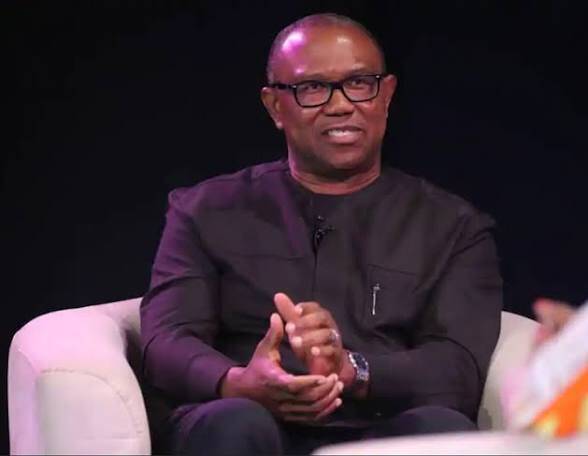
Presidential candidate of the Nigeria Democratic Congress (NDC), Peter Obi, has issued a firm demand to all tiers of government, calling for an immediate end to the pursuit of costly and unrealistic "white-elephant" projects while the nation's critical infrastructure continues to crumble. In a statement issued on Saturday, August 1, 2026, Obi threw his weight behind President Bola Tinubu's recent directive to state governors, which cautioned against committing scarce public resources to constructing unnecessary flyovers in areas with little traffic. However, he argued that the same standard must be applied to the Federal Government, which he accused of pursuing several extravagant projects even as major highways across the country deteriorate into death traps.
Obi's intervention comes amid growing public frustration over the state of Nigeria's infrastructure, particularly federal roads that link commercial hubs and food-producing regions. The former Anambra State governor stressed that with the country's current fiscal realities, priority must be given to rehabilitating and completing existing infrastructure before embarking on new projects that may end up abandoned or left unfinished. He insisted that scarce public resources must be channelled toward projects with immediate benefits for the greatest number of Nigerians, rather than prestige ventures that serve political egos rather than the people.
In his statement, Obi acknowledged President Tinubu's recent caution to governors against building flyovers in low-traffic areas while neglecting more urgent developmental priorities. He described the President's remarks as a validation of a position he has long advocated, despite facing years of criticism and name-calling for his insistence on responsible governance. "It is therefore noteworthy that President Bola Tinubu has now cautioned state governors against committing scarce public resources to constructing unnecessary flyovers in areas with little traffic while neglecting more pressing developmental needs," Obi said. "The President is, in essence, saying what I have always maintained: the government must prioritise projects that directly address the immediate needs of the people. I hope those ministers, officials, and supporters who have consistently attacked this position will now direct the same criticism at him."
However, Obi quickly pivoted to point out what he described as a glaring inconsistency in the administration's approach. While endorsing the President's message to state governments, he argued that the Federal Government must also subject its own development agenda to the same scrutiny. "However, this admonition must also apply to the Federal Government. There are several unrealistic and white-elephant projects being pursued by the current administration, even as much of our critical infrastructure remains in a state of disrepair," Obi declared. "Given our present fiscal realities, priority should be given to rehabilitating and completing existing infrastructure rather than embarking on expensive new projects with limited immediate impact."
The NDC presidential candidate painted a grim picture of the state of Nigeria's road network, describing many highways as "death traps" that have become a daily hazard for commuters and a major constraint on economic activity. He singled out federal roads connecting commercial centres and food-producing communities, warning that their neglect is neither economically prudent nor people-centred. "Across Nigeria, many of our major highways linking commercial centres and food-producing communities have deteriorated into death traps. Neglecting these critical roads while pursuing prestige projects is neither economically prudent nor people-centred," Obi said. He argued that the continued decay of these vital arteries undermines trade, inflates the cost of goods, and endangers the lives of millions of Nigerians who depend on them for their livelihoods.
Drawing from his experience as governor of Anambra State, Obi maintained that his administration had successfully demonstrated the viability of a different approach. He said he prioritised completing viable projects initiated by his predecessors before embarking on new ones, a philosophy he described as a reflection of the true meaning of governance as a continuum. "This philosophy guided my administration as Governor of Anambra State. I prioritised completing viable projects initiated by my predecessors before embarking on new ones," he recalled. "Government is a continuum, and development should never be measured by who starts a project, but by whether it is completed and serves the people."
Obi's call for a shift in infrastructure policy comes at a time when Nigeria's fiscal space is under severe strain, with the government grappling with mounting debt, declining revenues, and a cost-of-living crisis that has pushed millions of citizens into poverty. The former governor argued that responsible leadership in such circumstances demands tough choices—repairing what is broken, completing what has already been started, and investing limited public resources where they will have the greatest impact on the greatest number of people. "Leadership is about making the right choices: fixing what is broken, completing what has already been started, and investing limited public resources where they will have the greatest impact on the greatest number of people," he said.
Obi's statement has reignited a long-standing debate about Nigeria's infrastructure priorities, with many Nigerians expressing frustration over the tendency of successive administrations to favour high-profile, ribbon-cutting projects over the unglamorous but essential work of maintaining and rehabilitating existing assets. Critics have pointed to numerous examples of abandoned or poorly executed projects across the country, from federal roads that have become impassable to hospitals and schools that lack basic facilities. Obi's insistence on a more disciplined approach to public spending resonates with a public that has grown weary of grand promises that rarely translate into tangible improvements in their daily lives.
The timing of Obi's intervention is also significant, coming just days after President Tinubu's widely reported caution to state governors. By linking his own long-held position to the President's recent remarks, Obi has sought to position himself as a consistent voice of fiscal responsibility while challenging the Federal Government to match its words with action. His warning that the same standard must apply to all levels of government is a pointed reminder that the pursuit of "white-elephant" projects is not limited to state houses, but is a systemic problem that pervades the entire governance architecture.
As Nigeria approaches the 2027 general elections, Obi's emphasis on infrastructure rehabilitation and fiscal discipline is likely to feature prominently in his campaign messaging. His call for governments at all levels to prioritise the needs of the people over political vanity projects taps into a deep well of public discontent with the status quo. Whether his advocacy will translate into a shift in policy remains to be seen, but his statement has succeeded in putting the spotlight on a critical issue that affects every Nigerian: the quality of the roads they travel, the schools their children attend, and the hospitals they depend on for their health. For Obi, the message is clear: Nigeria cannot afford to continue wasting its resources on prestige projects while its foundations crumble. The time to fix what is broken is now.
📩 Stone Reporters News | 🌍 stonereportersnews.com
✉️ info@stonereportersnews.com | 📘 Facebook: Stone Reporters News | 🐦 X (Twitter): @StoneReportNew | 📸 Instagram: @stonereportersnews
Add comment
Comments