

Reported by: Oahimire Omone Precious | Edited by: Oravbiere Osayomore Promise.
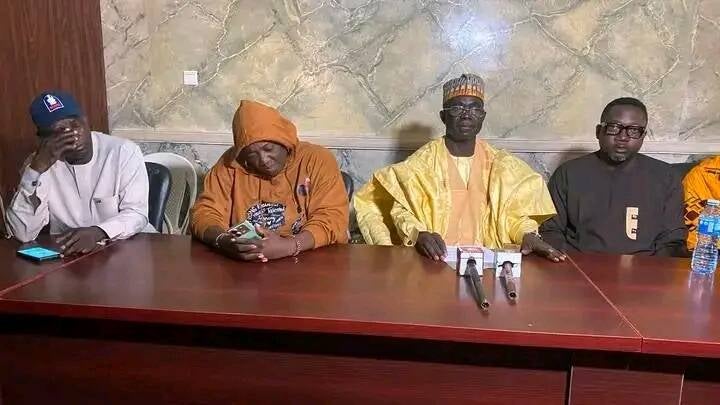
Stakeholders of the Nigeria Democratic Congress in Southern Kaduna have rejected what they described as the alleged imposition of Mohammed Sani Abbas as the party's governorship candidate for the 2027 elections, demanding that the national leadership immediately conduct a fresh primary to allow party members to democratically elect their flag bearer. The call was contained in a statement issued on Saturday, August 1, 2026, and signed by the Chairman of Southern Kaduna NDC Stakeholders, James Sule, who urged the party's national leadership to urgently resolve the governorship ticket dispute to prevent it from affecting the party's electoral prospects in the 2027 general election.
According to the statement, the name of the Kaduna State chairman of the party, Evangelist Mordecai Sunday Ibrahim, was earlier affirmed and submitted to the Independent National Electoral Commission after the NDC failed to conduct its scheduled governorship primary on May 29. The stakeholders explained that Ibrahim's affirmation was intended as an interim arrangement to pave the way for the peaceful emergence of either a consensus candidate or a duly nominated governorship candidate through a direct primary. However, they expressed concern over what they described as the emergence of Mohammed Sani Abbas as the party's governorship candidate without a valid nomination through either a consensus arrangement or a direct primary. Describing the development as an undemocratic attempt to impose a candidate, the stakeholders argued that the move failed to reflect the wishes of party members and ignored what they described as the party's growing visibility and electoral strength in Southern Kaduna.
The stakeholders called on the party's leadership to facilitate the emergence of a consensus candidate or urgently organise a substitution primary in line with the provisions of Section 36 of the Electoral Act 2026, to be monitored by the Independent National Electoral Commission. They also called on Evangelist Mordecai Sunday Ibrahim to resign as what they described as the party's surrogate governorship candidate to pave the way for a substitution primary involving the four aspirants seeking the NDC governorship ticket. The stakeholders stressed that they were not insisting that the governorship candidate must come from Southern Kaduna, but maintained that due process should be followed by allowing members across the 23 local government areas of Kaduna State to exercise their constitutional right to elect the party's flag bearer through a direct primary. The statement added that Southern Kaduna stakeholders would support whoever emerges through a transparent and democratic process.
The crisis within the Kaduna State chapter of the NDC has been brewing for months, with the party's state leadership earlier rejecting the alleged imposition of Abbas by the national leadership. In a statement issued on July 24, the Kaduna State NDC Publicity Secretary, Isaac Tanko Marafa Tsoriang, had pointed out that what happened in Abuja on May 21 was a case of pure imposition and not reconciliation, consensus, or a direct primary election, describing it as grossly undemocratic, dictatorial, and a violation of the clear provisions of Section 87 (1–3) of the Electoral Act 2026. The party's state chapter had called on the national leadership to allow for the democratic emergence of its gubernatorial candidate as provided by the Electoral Act 2026, stressing that the law clearly grants NDC members in Kaduna State the power to elect the party's governorship candidate.
The dispute has been further complicated by the emergence of a rival candidate, Senator Danjuma La'ah, who was adopted by an Expanded State Working Committee meeting held in Kaduna on July 11. Addressing journalists after that meeting, Kaduna State chairman of the NDC, Mordecai Ibrahim, said the decision to adopt La'ah came as a surprise because it was initiated by party stakeholders from the Northern Senatorial Zone. He explained that the party had earlier attempted to arrive at a consensus among four governorship aspirants—Yusuf Zari Madaki, Mohammed Sani Abbas, Ibrahim Husseini Abdukarim, and Senator Danjuma La'ah—but the process did not succeed. According to him, while consultations were ongoing, La'ah appeared before the State Working Committee with a nomination form issued by the party's national secretariat and evidence of payment for his expression of interest and nomination forms. The expanded meeting, comprising members of the State Working Committee, State Executive Committee, zonal officers, and local government chairmen, unanimously endorsed the former senator's candidature.
However, the Southern Kaduna stakeholders have now rejected both the imposition of Abbas and the adoption of La'ah, insisting that the only legitimate path is a transparent primary conducted in accordance with the Electoral Act. The stakeholders warned that any attempt to upload a gubernatorial candidate for Kaduna State who did not emerge from a validly conducted consensus or direct primary election monitored by INEC would deny the state the legal right to field a candidate who would be acceptable to both the electoral commission and the majority of NDC members in Kaduna State. They have urged the national leadership to take advantage of the clear provisions of Section 36 of the Electoral Act 2026 to write to INEC to come and monitor a primary election or consensus to produce a validly nominated and widely accepted gubernatorial candidate.
The deepening crisis within the Kaduna NDC comes at a critical time as the party seeks to position itself as a formidable opposition force ahead of the 2027 general elections. The party's presidential candidate, Peter Obi, and its national leadership face the challenge of resolving the internal dispute to present a united front against the ruling All Progressives Congress. For the people of Kaduna State, the crisis has raised questions about the party's commitment to internal democracy and its ability to provide a credible alternative to the incumbent government. As the stakeholders have made clear, they will not accept any candidate imposed on them, and they are prepared to resist any undemocratic move until a validly nominated candidate emerges through a transparent and inclusive process.
📩 Stone Reporters News | 🌍 stonereportersnews.com
✉️ info@stonereportersnews.com | 📘 Facebook: Stone Reporters News | 🐦 X (Twitter): @StoneReportNew | 📸 Instagram: @stonereportersnews
Add comment
Comments