

Reported by: Oahimire Omone Precious | Edited by: Oravbiere Osayomore Promise.
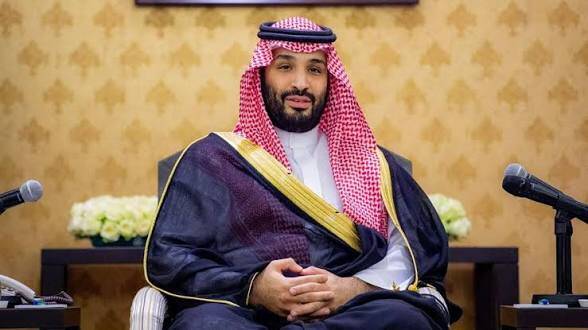
Saudi Crown Prince Mohammed bin Salman, the kingdom's de facto leader, directly intervened in the escalating U.S.-Iran conflict on Saturday, August 1, 2026, by voicing serious concerns to President Donald Trump about the potential consequences of large-scale American military strikes against Iran. The phone call, which came as President Trump was weighing a "massive attack" on Iranian targets in response to Tehran's missile strike on a U.S. base in Jordan and its continued disruption of shipping through the Strait of Hormuz, revealed a significant rift in the U.S.-Saudi alliance, with Riyadh clearly worried that it would bear the brunt of Tehran's retaliation.
According to two U.S. officials and a third source familiar with the discussion, the crown prince did not merely express unease but actively "urged Trump to de-escalate and refrain from launching the strikes". One U.S. official told Axios that "the Saudis expressed concern and asked for clarity about the plan of action", an indication that the kingdom was seeking reassurance from Washington that it had a clear strategy for what would happen next. The Saudi leadership is particularly fearful that any U.S. attack on Iran's energy infrastructure or large-scale strikes on bridges and power plants could trigger a devastating response from Tehran.
The crown prince's anxiety was rooted in a chilling reality: Iran has repeatedly threatened to retaliate by launching attacks against energy and infrastructure facilities in Israel and the Gulf countries. Nournews, a media outlet affiliated with Iran's top security body, warned that U.S. attacks on Iranian energy infrastructure would prompt Iranian strikes on oilfields in Saudi Arabia and the United Arab Emirates, as well as the gasfields of Qatar and Israel. Saudi Arabia, which has been the primary target of Iranian proxies for years, was clearly alarmed by the prospect of becoming a frontline state in an all-out war. Earlier this week, the kingdom had already joined the U.S. in striking multiple logistics and weapons sites used by Iranian-backed militias in Iraq, but its senior leaders have since been urging both Washington and Tehran to return to the negotiating table to find an endgame to the five-month-old conflict.
The intervention by the Saudi crown prince appears to have had a decisive impact. Shortly after the phone call, Trump announced on his Truth Social platform that he had "agreed to cancel attack on Iran". The cancellation, he said, was "subject to being able to rapidly make a deal". The President's statement revealed that Middle East allies had reached the "parameters" of a deal that would include "the Immediate, Complete, and Total OPENING OF THE HORMUZ STRAIT, and an end to Iran's nuclear threat". Despite the climbdown, Trump also declared that "the USA is locked and loaded" to strike Iran with "military terror, strength, and power not seen since World War II", leaving open the possibility of future military action if diplomacy fails.
The development came amid a backdrop of heightened regional tensions. Kuwait reported being hit by Iranian drones on Saturday, and two ships were attacked off Oman in the Strait of Hormuz. Iran's Foreign Minister Abbas Araghchi warned the United States against taking any "adventurous" actions, saying those responsible would bear the consequences. Araghchi also warned that any hostile U.S. or Israeli action, as well as any regional support for it, would draw a "firm, proportionate response" from Iran's armed forces.
Saudi Arabia's decision to publicly voice concern over U.S. military strategy marks a significant moment in the often fraught U.S.-Saudi relationship. While the kingdom has long sought American security guarantees against Iran, it has consistently resisted being drawn into a full-scale regional war. The crown prince's direct appeal to the president underscores Riyadh's fear that the ongoing conflict could spiral out of control, with devastating consequences for the entire Gulf region. As the U.S. and Iran continue to negotiate over the reopening of the Strait of Hormuz and a potential end to the war, Saudi Arabia's voice will remain a critical factor in shaping the outcome. For now, the immediate threat of new strikes has receded, but the underlying tensions that brought the region to the brink of war remain unresolved.
📩 Stone Reporters News | 🌍 stonereportersnews.com
✉️ info@stonereportersnews.com | 📘 Facebook: Stone Reporters News | 🐦 X (Twitter): @StoneReportNew | 📸 Instagram: @stonereportersnews
Add comment
Comments