

Reported by: Oahimire Omone Precious | Edited by: Oravbiere Osayomore Promise.
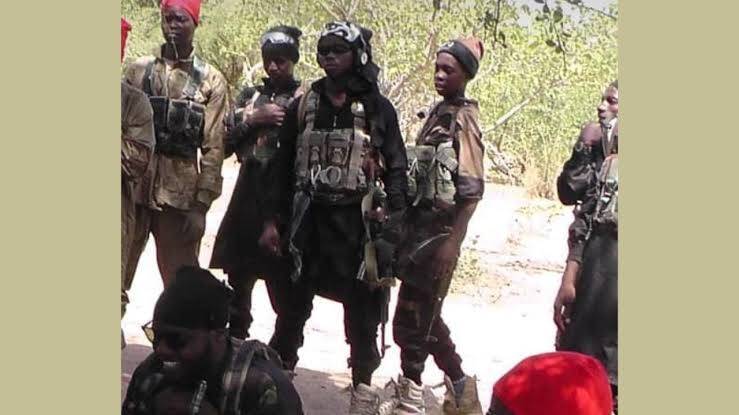
Fresh internal distrust has reportedly engulfed the leadership of the Islamic State West Africa Province (ISWAP) in the Lake Chad Basin, following the arrest and detention of four senior members of the group's Shura Council by its overall leader, Ba Shuwa. The arrests, which have triggered anxiety and uncertainty within the terrorist organisation's ranks, were ordered after the group's internal intelligence unit, the Amniyya, concluded a prolonged surveillance operation on the four figures. They were accused of repeatedly listening to "subversive" audio messages believed to have originated from Nigerian military psychological operations, a development that signals growing paranoia and fragmentation within one of the region's most lethal terrorist networks.
The detained individuals include Mallam Burin, a widely respected Qaid (field commander) with considerable influence on the ground; Babakura Wanjam, a prominent ISWAP cleric responsible for providing ideological guidance to the group's fighters; Abu Huraira, a senior Shura Council member; and Mallam Ari Kara, also a senior member of the council. The arrests are particularly significant because those detained are not low-level operatives but trusted members of the group's senior decision-making body, the Shura Council, which plays a critical role in shaping ISWAP's military, ideological, and administrative strategies. The detention of such high-ranking figures has exposed deep fractures within the group's leadership and raised questions about the loyalty of its most senior members.
The arrests were reportedly based on intelligence gathered by the Amniyya, ISWAP's internal security apparatus, which had been monitoring the four individuals for an extended period. The unit concluded that the suspects had been listening to audio messages believed to have been disseminated by Nigerian military psychological operations, a tactic designed to sow discord and mistrust within terrorist ranks. The decision to arrest and detain the four figures represents one of the clearest signs yet of growing suspicion and internal fractures within ISWAP's leadership structure, as the group's commander-in-chief moves to purge those perceived as disloyal or susceptible to external influence.
The development has triggered significant anxiety and uncertainty within ISWAP's ranks, particularly because those detained are trusted members of the senior decision-making body. The arrests have raised fears among other commanders and fighters that they too could be targeted, potentially leading to a breakdown in trust and cohesion within the group. The move also highlights the effectiveness of sustained military pressure and psychological operations in destabilising terrorist organisations, as the group is now turning on its own members in a bid to root out perceived threats to its internal security.
Security agencies are closely monitoring the situation, considering this apparent leadership crisis an opportunity to further weaken ISWAP through intelligence exploitation and psychological operations. Analysts have noted that if the divisions widen, they could have several significant consequences for the terrorist group, including reducing morale among fighters, disrupting command and control structures, encouraging defections, and accelerating fragmentation within the organisation. The arrests come at a time when ISWAP has already been facing sustained military pressure from Nigerian troops and regional forces, which have intensified operations against the group's hideouts and supply routes across the North-East.
The internal rift within ISWAP is not an isolated incident but part of a broader pattern of factionalism and distrust that has plagued the group in recent years. In June 2026, two senior ISWAP commanders surrendered to Nigerian troops, citing disillusionment with the group's leadership and the deteriorating security situation. The surrendered commanders, Ismail Mohammed and Abu Umar, provided valuable intelligence on the group's command structure and operations, further weakening ISWAP's operational capabilities. The recent arrests of the four Shura Council members suggest that the group's leadership is increasingly paranoid about infiltration and defection, which could further undermine its ability to sustain its campaign of violence.
The Nigerian military has welcomed the development, viewing it as a validation of its strategy of combining kinetic operations with psychological warfare. By exploiting the divisions within ISWAP, security forces hope to accelerate the group's decline and encourage more fighters to abandon the terrorist cause. However, analysts have cautioned that while the arrests represent an opportunity, the group remains a potent threat, and the situation could also lead to a more ruthless and unpredictable leadership that may resort to even more extreme tactics to maintain control.
As the situation continues to unfold, the international community and regional security organisations are closely watching the developments in the Lake Chad Basin, where the insurgency has caused widespread displacement, humanitarian suffering, and economic disruption. The arrests of the four Shura Council members serve as a stark reminder that even the most entrenched terrorist organisations are not immune to the corrosive effects of suspicion, distrust, and internal power struggles. For the people of the North-East, the hope is that these divisions will eventually lead to the group's collapse and the restoration of peace and security to the region.
📩 Stone Reporters News | 🌍 stonereportersnews.com
✉️ info@stonereportersnews.com | 📘 Facebook: Stone Reporters News | 🐦 X (Twitter): @StoneReportNew | 📸 Instagram: @stonereportersnews
Add comment
Comments