

Reported by: Ijeoma G | Edited by: Oravbiere Osayomore Promise.
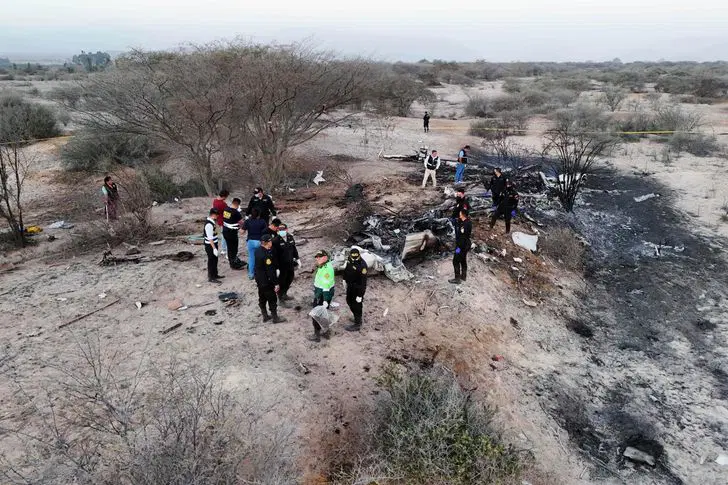
A small tourist aircraft crashed into a farmland area in southern Peru on Saturday, August 1, 2026, killing all 13 people on board and casting a pall of grief over one of South America's most iconic archaeological destinations. The Cessna Caravan C-208, operated by the local Peruvian airline Aerodiana, went down approximately six kilometres from the city of Nazca in the Ica region shortly after 1:00 p.m. local time, according to Peru's Ministry of Transport and Communications. The aircraft had departed from the Captain Renán Elías Olivera Airport in Pisco around 12:10 p.m. on a sightseeing tour over the famed Nazca Lines, a UNESCO World Heritage site renowned for its massive ancient geoglyphs visible only from the air.
All 11 passengers and two crew members perished in the crash, with police confirming that there were no survivors. "Given the severity of the accident, there are no survivors. We have recovered four bodies so far," Police Major Jorge Andrade told reporters at the scene. The aircraft burst into flames upon impact, making rescue efforts impossible, according to Peruvian broadcaster RPP. Firefighters and municipal police officers were dispatched to extinguish the blaze and recover the remains.
The victims included seven Italian citizens, two Spaniards, and two Germans, according to Peru's state-run Andina news agency. The two crew members were identified as pilot Américo Salazar and copilot Irenka Guanilo del Carpio. The Italian victims ranged in age from 18 to 54, while the two Spanish victims were both 52 years old, and the two German victims were 77 and 78 years old. The aircraft had taken off from Pisco and was heading southeast toward the Nazca Lines when the tragedy occurred.
The cause of the crash remains unknown, though the flight's final moments have been pieced together by investigators. At approximately 1:00 p.m. local time, the crew reported an emergency situation to the control tower at Nazca airport, after which all radio contact was lost. The plane went down in the Socos area, roughly 19 kilometres from the Nazca Lines site. Flights over the Nazca Lines had been suspended on Friday, July 31, due to strong winds exceeding 40 kilometres per hour, which kicked up dust and reduced visibility, forcing some aircraft to divert to other airports. However, tours resumed on Saturday before the accident.
Peruvian President Keiko Fujimori expressed regret over the crash and indicated that a "temporary suspension" of the airport was being considered, pending reports from the relevant ministries. Peru's Ministry of Transport and Communications confirmed that an investigation has been launched to determine the exact cause of the accident. The Nazca municipal government issued a statement expressing "deep sorrow" for the accident and extending "heartfelt condolences to the families of the deceased".
Aerodiana, the airline operating the flight, issued a statement expressing condolences to the families of the victims and said it would "assess its flight schedule in accordance with the directives of the relevant authorities". The airline's fleet consists of Cessna Grand Caravans, which can seat up to 14 passengers, and sightseeing flights over the Nazca Lines appear to be its primary business.
The Nazca Lines, enormous drawings and geometric figures etched into the desert hundreds of years ago by pre-Inca inhabitants, are one of Peru's main tourist attractions, drawing approximately 100,000 visitors annually. The images, which include animals and geometric shapes, can only be fully appreciated from the air or from viewing towers, making small aircraft tours a popular and essential part of the visitor experience. Sightseeing flights typically take about an hour and a half.
Saturday's crash is not the first tragedy to strike the Nazca Lines tourist flights. In 2022, another small tourist plane crashed during a flight over the site, killing seven people on board. In 2010, a tourist plane went down over the site, killing six people. The latest accident, however, is the deadliest in recent memory, claiming the lives of 13 individuals from four different nations and raising fresh questions about the safety of the sightseeing flights that have long been a mainstay of Peru's tourism industry.
As investigators work to determine what caused the Cessna Caravan to plunge into the field near Nazca, the families of the victims are left to mourn loved ones who had journeyed to one of the world's most remarkable archaeological sites, only to lose their lives in a tragedy that has once again cast a shadow over the ancient desert drawings that have fascinated humanity for generations. The Peruvian government has promised a thorough investigation, and the nation mourns the loss of lives from Italy, Spain, Germany, and its own soil.
📩 Stone Reporters News | 🌍 stonereportersnews.com
✉️ info@stonereportersnews.com | 📘 Facebook: Stone Reporters News | 🐦 X (Twitter): @StoneReportNew | 📸 Instagram: @stonereportersnews
Add comment
Comments