

Reported by: Ijeoma G | Edited by: Oravbiere Osayomore Promise.
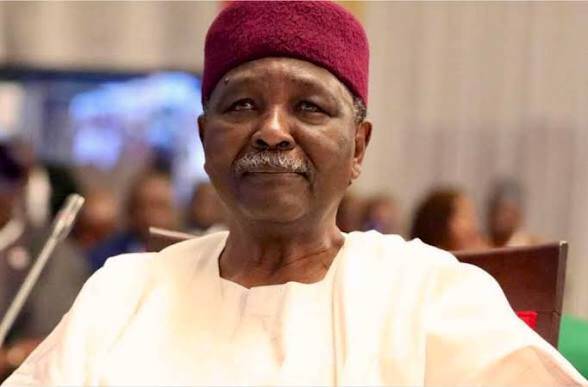
Former Military Head of State, General Yakubu Gowon (retd.), has addressed one of the most enduring controversies of the Nigerian Civil War, insisting that Igbos who had verifiable deposits in Nigerian banks before the conflict received their money in full, together with accrued interest, after the war ended. Gowon made the clarification in his newly released memoir, My Life of Duty and Allegiance, where he also defended the late Chief Obafemi Awolowo against decades of criticism over the post-war policy that limited payments to former Biafran adults to £20, irrespective of the amount of Biafran currency they possessed.
The Nigerian Civil War, which lasted from 1967 to 1970, remains one of the most defining and painful episodes in the nation's history. Following the conflict, Gowon proclaimed a policy of "No Victor, No Vanquished" and launched programmes of reconciliation, reconstruction, and rehabilitation. However, the decision to pay £20 to many returning Biafrans became one of the most controversial aspects of the post-war settlement, with successive generations accusing Awolowo, who served as Federal Commissioner for Finance during the war, of orchestrating the policy.
In his memoir, Gowon rejected that long-standing narrative, maintaining that Awolowo had been unfairly blamed for a policy that was collectively approved by the Federal Executive Council after extensive deliberations and expert economic advice. He explained that his administration ordered a nationwide currency change after the war because of the large-scale looting of Central Bank branches in Benin and Enugu during the conflict, a development that left huge quantities of Nigerian currency outside government control. The Federal Government was also confronted with the challenge of dealing with the Biafran currency, which, he noted, had no legal status as Nigerian legal tender and could not be exchanged internationally.
"That left the Federal Executive Council with the question of what to do to alleviate the suffering of returnees. Council diligently evaluated all suggestions that were proposed," Gowon wrote. He explained that the Central Bank constituted a panel to examine the implications of converting the Biafran pound into Nigerian currency but concluded that the exercise would be extremely difficult because the Biafran currency had never been recognised as legal tender in Nigeria.
"Due to the large number of Biafran pounds in circulation, the Federal Government decided it could not afford to exchange them all at par with the Nigerian currency without risking economic collapse," Gowon stated. According to him, economic advisers recommended limiting the payout to approximately £20 for each Biafran adult, irrespective of the amount of Biafran currency being returned. "We accepted the proposition and adopted it as policy, particularly because we were unable to determine the micro and macro parameters for printing the Biafran notes," he said.
However, Gowon drew a clear distinction between Biafran currency and funds deposited in recognised Nigerian banks before the war. "However, all who fled Nigeria but had proof of having money in Nigerian banks received full value for their money plus the interest that it earned in the Nigerian currency. It would have been unwise to take a different course of action," he wrote. The former head of state maintained that businessmen and other depositors with valid records were not restricted to the £20 payment.
Gowon lamented that despite the passage of time, "pseudo-historians continue to blame the Commissioner for Finance, Chief Awolowo for the after effect of the Federal Government's post-war currency control policy". He insisted: "This is far from the truth. The final decision was not Chief Awolowo's, even though he was the Finance Commissioner. It was done in the overall national interest". He argued that the administration could not disregard the advice of its economic advisers without collapsing the economy.
Gowon also disclosed that to support the economic regeneration of the former Eastern Region, facilitate reconciliation, and expedite the region's recovery, the Federal Executive Council allocated a substantial proportion of the national budget for the rehabilitation of the East Central State and other war-affected areas. He recalled that further measures were implemented to ensure comprehensive recovery efforts.
The former head of state's clarification comes as the debate over post-war compensation and the treatment of Igbos continues to resonate in Nigeria's political discourse. The Ohanaeze Ndigbo, the apex Igbo socio-cultural organisation, has previously demanded an apology and compensation for Igbo suffering during the civil war, citing the indiscriminate bombardments and shellings of Igbo territory during the conflict. Gowon's memoir, which seeks to correct what he described as lingering misconceptions, is likely to reignite discussions about the civil war's legacy and the federal government's post-war policies.
📩 Stone Reporters News | 🌍 stonereportersnews.com
✉️ info@stonereportersnews.com | 📘 Facebook: Stone Reporters News | 🐦 X (Twitter): @StoneReportNew | 📸 Instagram: @stonereportersnews
Add comment
Comments