

Reported by: Oahimire Omone Precious | Edited by: Oravbiere Osayomore Promise.
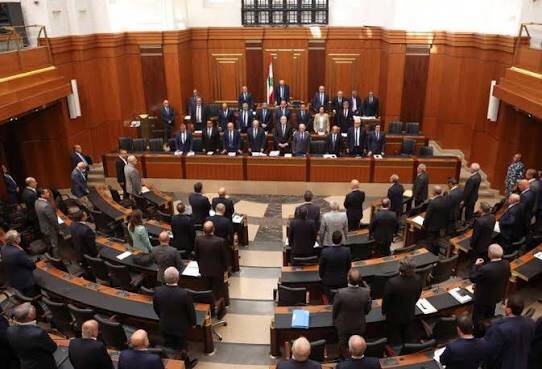
Lebanon's parliament has abolished the death penalty in a historic vote that makes the tiny Mediterranean nation the first country in the Arab world to formally end capital punishment, a decision that rights groups have hailed as a major milestone for human rights in a region where executions remain prevalent. The vote, held on Tuesday, August 11, 2026, saw a majority of Lebanon's 128-member parliament approve a draft law replacing the death penalty with life imprisonment with aggravated hard labour, with the notable exception of the parliamentary bloc of Hezbollah. The law, which has been more than two decades in the making, transforms what was a precarious unofficial hiatus in executions into lasting legal protection that upholds the right to life.
The tiny Mediterranean country has maintained an unofficial moratorium on executions since January 2004, when Lebanon carried out its last execution. Despite dozens of death sentences being issued in the intervening years, all were suspended or commuted. As of the end of January 2026, 85 people remained on death row, according to the Directorate of Prisons at the Ministry of Justice. The new law will automatically commute those sentences to life imprisonment.
Justice Minister Adel Nassar, who was present in parliament for the vote, called it a “historic step” for the country. The legislation now awaits the president's final signature before being published in the Official Gazette and entering into force. Once enacted, Lebanon will become the 114th country to have abolished the death penalty for all crimes.
Rights groups that have long campaigned for the formalisation of the moratorium or the complete abolition of the death penalty celebrated the vote. Ramzi Kaiss, Lebanon Researcher at Human Rights Watch, said Lebanon is “marking a final break from a cruel sentence that should never be imposed.” “Capital punishment is unique in its cruelty and finality and is plagued with arbitrariness, prejudice, and error,” he added. Heba Morayef, Amnesty International's Director for the Middle East and North Africa, described the decision as “a major milestone and a victory for human rights in the country”. “After more than two decades without executions, today's step transforms a precarious hiatus in executions into lasting legal protection upholding the right to life and bringing Lebanon in line with the global trend towards abolition,” she said.
The passage of the law follows sustained advocacy by Lebanese and international civil society organisations, including the Lebanese Association for Civil Rights, the National Campaign for the Abolition of the Death Penalty in Lebanon, and the Association Justice and Mercy. The legislative journey began on October 7, 2025, when seven members of parliament submitted the draft law to the Parliamentary Human Rights Committee. After the cabinet issued a favourable advisory on November 20, 2025, the draft was approved by the Parliamentary Human Rights Committee on February 23, 2026, and subsequently adopted by the Parliamentary Justice Committee and the Joint Committee on June 2 and July 9, 2026, respectively, before Tuesday's final approval by the full session of parliament.
The vote did not come without opposition. The parliamentary bloc of Hezbollah voted against the law, though the group did not immediately issue a public comment on the landmark decision. Lebanon's diverse religious institutions, where the death penalty is considered legal in some of their respective court systems, also remained silent on the vote.
The abolition of the death penalty comes as Lebanon's parliament is simultaneously debating a controversial general amnesty law, the largest since the end of its 15-year civil war in 1990. That proposed legislation could reduce sentences or even release convicted militants and drug dealers, with some exceptions. Family members of Lebanese soldiers and servicemen killed or attacked by Islamist militant groups have repeatedly protested against the amnesty law, with some saying they had hoped to see the perpetrators who killed their family members executed rather than receive reduced prison sentences.
It remains unclear how the new punishment of aggravated hard labour will be enforced, as some legislators have said the terms of the new punishment are not yet clear. Lebanon does have hard labour written into law and court decisions, but even those have been rarely enforced in recent years due to the cash-strapped nation's lack of resources and capacity within its overcrowded prisons.
Amnesty International has called on Lebanese authorities to ensure that all existing death sentences are commuted and to ratify the Second Optional Protocol to the International Covenant on Civil and Political Rights, which aims at the abolition of the death penalty. “To turn this law from paper to practice, Lebanese authorities must now ensure that all death sentences are commuted and ratify the key international treaty on abolition, while advancing broader reforms to strengthen a justice system based on dignity, fairness and respect for human rights,” Morayef said.
Lebanon's move stands in stark contrast to the broader regional trend. While executions remain prevalent across much of the Middle East, Lebanon has now joined a small but growing number of nations in the region that have formally ended capital punishment. The decision positions Lebanon as a regional leader in human rights at a time when the country is grappling with profound economic and political crises. Globally, 145 countries are abolitionist in law or practice, while 54 countries continue to retain the death penalty. Lebanon's historic vote is expected to be ratified by the president and published in the Official Gazette, after which it will enter into force, making the country the 114th nation to abolish the death penalty for all crimes.
📩 Stone Reporters News | 🌍 stonereportersnews.com
✉️ info@stonereportersnews.com | 📘 Facebook: Stone Reporters News | 🐦 X (Twitter): @StoneReportNew | 📸 Instagram: @stonereportersnews
Add comment
Comments