

Reported by: Ijeoma G | Edited by: Oravbiere Osayomore Promise.
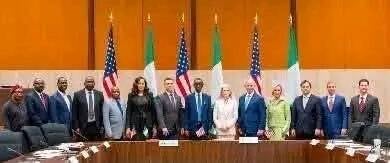
A high-powered Nigerian delegation, led by National Security Adviser Nuhu Ribadu and comprising six ministers and the Chief of Defence Staff, arrived in Washington, D.C., on Wednesday, August 12, 2026, for a fresh round of talks with the United States government aimed at deepening security cooperation and addressing the diplomatic fallout from Nigeria's controversial redesignation as a "Country of Particular Concern" by the Trump administration. The meeting of the US-Nigeria Joint Working Group, which commenced on Wednesday, is the second session since the forum was established earlier this year, and it comes at a critical juncture as both nations seek to balance strategic security interests against Washington's stated concerns over religious freedom and human rights in Nigeria.
The Nigerian delegation, led by Ribadu, includes Minister of Foreign Affairs Bianca Odumegwu-Ojukwu, Minister of Defence Christopher Musa, Minister of Finance Taiwo Oyedele, Minister of Interior Olubunmi Tunji-Ojo, Attorney-General of the Federation Lateef Fagbemi, and Minister of State for Foreign Affairs Sola Enikanolaiye. Chief of Defence Staff General Olufemi Oluyede and Nigeria's Permanent Representative to the United Nations, Jimoh Ibrahim, also form part of the delegation. The composition of the team underscores the breadth of issues on the table, spanning diplomacy, security, finance, and legal affairs, and signals that the engagements go beyond counterterrorism alone to touch on the wider relationship between Abuja and Washington.
The US team is headed by Under-Secretary of State Allison Hooker, who previously led the American delegation during the inaugural meeting of the Joint Working Group in Abuja in January 2026. The working group was established following President Donald Trump's decision to redesignate Nigeria as a "Country of Particular Concern" (CPC), a classification that signals serious US concerns about the treatment of religious freedom in a given country. The designation, which carries potential diplomatic and economic consequences, has been a source of tension between the two nations, even as they continue to cooperate on security matters. The Joint Working Group serves as the primary forum through which both governments are managing the diplomatic and security dimensions of that decision.
Discussions during the Washington meeting are centred on counterterrorism cooperation, the progress made so far, and the next steps both countries intend to take to strengthen collaboration in confronting terrorism and other security challenges. According to the agenda for the meeting, the talks include a review of counterterrorism efforts, progress made in bilateral cooperation, and the next steps required to strengthen collaboration between both countries. A bilateral defence meeting between Nigeria and the US is also scheduled to take place on Thursday, August 13, further underscoring efforts by both countries to deepen their security partnership at a military level, with senior defence officials from both sides participating.
The redesignation of Nigeria as a "Country of Particular Concern" has been a source of diplomatic friction between the two nations, even as they continue to cooperate on security matters. The designation, which was announced in 2025, was based on allegations of religious persecution, particularly against Christian communities in northern and central Nigeria. The Nigerian government has consistently rejected the designation, arguing that the country's security challenges affect all religious groups and are driven by terrorism, banditry and communal violence rather than religious persecution. The Joint Working Group was established as a mechanism to address the concerns underlying the CPC designation while maintaining the broader strategic partnership between the two countries.
The Washington meeting is also taking place against the backdrop of a deteriorating security situation in Nigeria's North-West and North-East, where banditry, terrorism and kidnapping have continued to claim lives and displace communities. The US has been a key partner in Nigeria's counterterrorism efforts, providing intelligence, training and equipment to Nigerian security forces. However, the CPC designation has raised questions about the future of that cooperation and the extent to which Washington is willing to continue its security assistance to a country it has designated as a concern for religious freedom.
The Nigerian delegation's visit to Washington is the latest in a series of high-level engagements between the two countries. In May 2026, Ribadu led a delegation to meet with US Vice President J.D. Vance, Acting National Security Adviser and Secretary of State Marco Rubio, and Under-Secretary Hooker, among other senior officials. Those meetings focused on deepening security cooperation and addressing the concerns raised by the CPC designation. The current session of the Joint Working Group is expected to build on those discussions and produce concrete outcomes that could help to resolve the diplomatic tensions while strengthening the security partnership.
Both countries have reiterated their commitment to protecting religious freedom and advancing fundamental rights in Nigeria, including freedom of expression, peaceful assembly and freedom of religion or belief. The working group is expected to produce a joint statement outlining the progress made and the next steps in the bilateral relationship. The outcome of the talks could have significant implications for Nigeria's security architecture, its diplomatic relations with the United States, and the broader fight against terrorism in the Sahel region.
As the talks continue in Washington, the Nigerian delegation faces the delicate task of balancing its security cooperation with the United States against the need to address Washington's concerns over religious freedom. The success of the talks could determine whether the CPC designation remains a source of tension or becomes a catalyst for deeper cooperation on security and human rights. For Nigeria, the stakes could not be higher. The country is grappling with multiple security crises that threaten its stability and development, and the support of its most important security partner is essential to overcoming those challenges. The Washington meeting is a critical test of the strength of the US-Nigeria relationship and the ability of both countries to find common ground on some of the most pressing issues of the day.
📩 Stone Reporters News | 🌍 stonereportersnews.com
✉️ info@stonereportersnews.com | 📘 Facebook: Stone Reporters News | 🐦 X (Twitter): @StoneReportNew | 📸 Instagram: @stonereportersnews
Add comment
Comments