

Reported by: Oahimire Omone Precious | Edited by: Oravbiere Osayomore Promise.
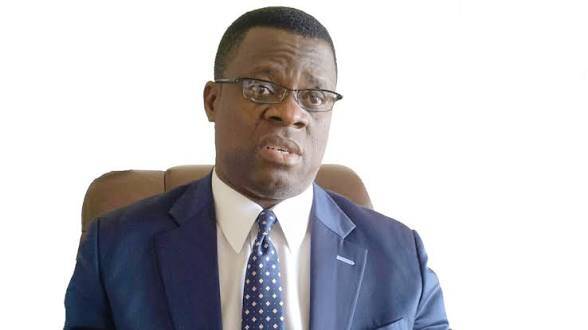
A former Resident Electoral Commissioner of the Independent National Electoral Commission, Mike Igini, has issued a stark warning that Nigeria's democracy is in grave danger, declaring that political parties across the country have been hijacked by wealthy individuals and elite groups, leaving ordinary citizens with no meaningful participation in the political process. Speaking at the 2026 Goodluck Jonathan Foundation Democracy Dialogue in Bauchi State on Tuesday, August 11, 2026, Igini delivered a blistering critique of the state of Nigeria's democratic institutions, arguing that the country's political parties have ceased to function as platforms for aggregating societal interests and have instead become vehicles used by elites to capture power and access state resources.
Igini, who served as Resident Electoral Commissioner in Akwa Ibom State and presided over elections in seven states during his tenure at INEC, did not mince words in his assessment. "We have identified the insubordination of internal democracy and fundamentally we have also identified the issue of party financing which has been hijacked by the elites," he said. "Political parties are owned by individuals and elite groups in our country and that is the total hijack you can find today." The former electoral commissioner warned that unless there is a fundamental paradigm shift in the way political parties are organised and financed, democracy in Nigeria would have no future. "If democracy must have a hopeful future in our country and the continent, there must be a total paradigm shift, with respect to political parties, there should be a rebuilding of political parties in the continent," he declared.
Igini's remarks come at a time of heightened political tension ahead of the 2027 general elections, with opposition parties and civil society groups increasingly vocal about governance failures and the erosion of democratic institutions. The former INEC official argued that the growing influence of wealthy individuals and political elites had eroded the ability of ordinary Nigerians to meaningfully participate in the political process. He stressed that political parties must be rebuilt as democratic institutions capable of producing leaders who respect democratic values and principles. "To rebuild a political party as an institution, you require people who have virtues of democracy because institutions don't come from heaven," Igini said, questioning who would be trusted to build these political parties given the current state of the country's moral fabric.
The former electoral commissioner also criticised what he described as a reversal of societal values, where dishonesty and wrongdoing were increasingly being rewarded. "In our country today and across Africa, the value pyramid today is up-side-down, in Nigeria; dishonesty is now on top and those who do the wrong things are now the ones being celebrated in our country," he lamented. Igini questioned whether individuals benefiting from the existing political system could be trusted to reform it. "Are they the people who will rebuild the system that has hijacked these political parties?" he asked.
Igini's warning extended beyond political parties to the broader democratic framework. He described elections in Nigeria and across Africa as "mere staged events," arguing that periodic polls alone cannot sustain democracy on the continent. "The essence of democracy was to promote participation and accountability in the process of human development," he said, stressing that the conduct of periodic elections through political parties and oversight by the judiciary was not sufficient to consolidate democracy. Igini pointed out that Nigeria and other African countries had continued to hold elections without meeting the expectations of citizens. "Citizens need service delivery, accountability, and transparency. These have been lacking," he said.
The former REC also took aim at the judiciary, accusing it of failing to adequately defend democracy and the rule of law. "If democracy will die in Nigeria, it will die because of we lawyers and our colleagues on the bench," he said, adding that the remains of democracy would be placed at the doorstep of the judiciary. Igini stressed the need to strengthen the independence of election management bodies across Africa, particularly INEC in Nigeria. According to him, political office holders derive their arrogance from their ability to control election management bodies, arguing that reducing such political influence would help restore credibility to the electoral process.
Igini argued that elections in Africa and Nigeria had increasingly become orchestrated rituals in which local and international observers were invited to witness what he described as staged events. He noted that the situation had undermined the ability of democracy to deliver meaningful benefits to ordinary citizens, emphasising that democracy had worked more for the elites than for the people. "Democracy has no turn over for the poor ordinary Nigerian and most people in Africa. Democracy has worked more for the elites of our country," Igini declared.
The former INEC official called for a fundamental shift in the way political parties are organised and financed, arguing that stronger internal democracy and broader participation were necessary to restore public confidence in Nigeria's democratic system. He maintained that credible elections could not be guaranteed unless electoral laws, regulations and guidelines were strictly enforced and election management bodies were allowed to operate independently. While recounting his experience presiding over elections, Igini recalled instances where politicians attempted to manipulate electoral outcomes through academics and other officials, underscoring the systemic challenges facing Nigeria's electoral process.
Igini's warning has resonated with many Nigerians who have long expressed frustration with a political system that appears to serve the interests of a privileged few. His call for a total paradigm shift in the way political parties are organised and financed has struck a chord with civil society groups and opposition parties who have been advocating for electoral reforms. However, the former electoral commissioner's critique also raises uncomfortable questions about the willingness of the political elite to cede control over the parties they have come to own. As the 2027 elections approach, Igini's warning that democracy would have no future if political parties remain the way they are serves as a sobering reminder of the challenges facing Nigeria's democratic project. Whether his call for a rebuilding of political parties will be heeded remains to be seen, but his words have added a powerful voice to the growing chorus demanding systemic reform.
📩 Stone Reporters News | 🌍 stonereportersnews.com
✉️ info@stonereportersnews.com | 📘 Facebook: Stone Reporters News | 🐦 X (Twitter): @StoneReportNew | 📸 Instagram: @stonereportersnews
Add comment
Comments