

Reported by: Ijeoma G | Edited by: Oravbiere Osayomore Promise.
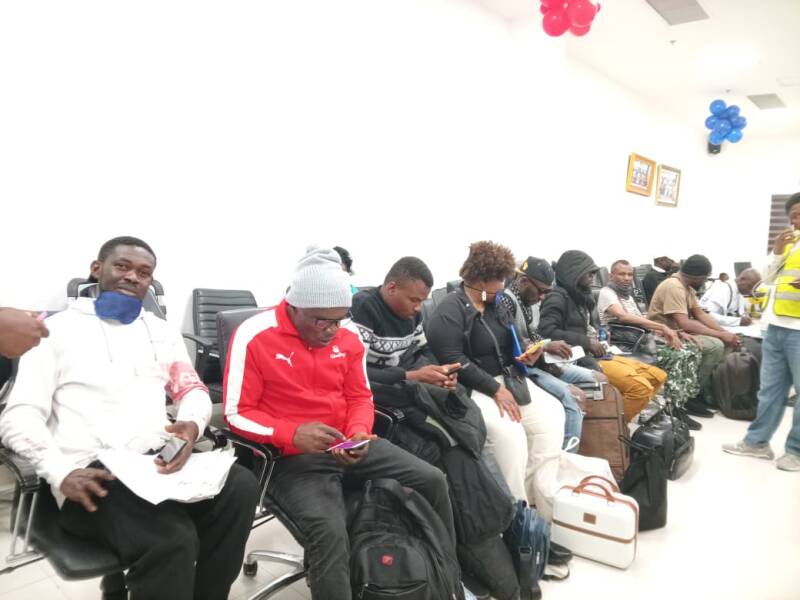
A fresh batch of 83 Nigerians repatriated from South Africa arrived at the Murtala Muhammed International Airport in Lagos on Wednesday evening, August 19, 2026, aboard a South African Airways flight from Johannesburg, marking the latest chapter in the ongoing evacuation of Nigerian nationals fleeing rising Afrophobic attacks and anti-foreigner sentiments in the host country. The returnees, who departed Oliver Tambo International Airport at 3:35 p.m. local time and touched down in Lagos at approximately 8:45 p.m., were received by the Director of the African Affairs Department of the Ministry of Foreign Affairs, Ambassador Haruna Ali-Gombe, on behalf of the Federal Government, before being handed over to relevant government agencies for documentation and profiling ahead of their reunification with their families.
But the story of their return is not one of government action. It is a story of private compassion filling a void that the state has left gaping. The Ministry of Foreign Affairs, in a statement signed by its spokesperson, Kimiebi Imomotimi Ebienfa, disclosed that the evacuation was made possible through the kind intervention and sponsorship of air tickets by public-spirited private individuals, whose generosity the Federal Government acknowledged with "profound gratitude." This development follows the earlier conclusion of the government's voluntary repatriation programme, which saw nearly 1,490 Nigerian citizens repatriated from South Africa amid growing concerns over attacks and discrimination against foreigners. But the fact that private citizens have had to step in to fund the return of their compatriots raises uncomfortable questions about the government's commitment to its so-called Citizen Diplomacy agenda.
The Ministry's statement, issued on Monday, August 17, noted that the returnees were accompanied by two officials of the Consulate-General of Nigeria in Johannesburg, and that the Federal Government remained unwavering in its commitment to safeguard the welfare and dignity of all Nigerians at home and abroad. Under President Bola Ahmed Tinubu's Citizen Diplomacy agenda, the government views Nigerians in the diaspora "not as a burden, but as critical assets for national development." Yet, the reliance on private donors to fund the evacuation of 83 stranded citizens suggests that the government's capacity to protect its own nationals abroad is either insufficient or unwillingly constrained. The Ministry's appeal to the organised private sector, corporate organisations, state governments and other well-meaning Nigerians to emulate these private sponsors is a tacit admission that the state cannot, or will not, bear the full cost of protecting its citizens.
The latest returnees bring renewed attention to the longstanding tensions surrounding the treatment of African migrants in parts of South Africa. Nigerians living and doing business in South Africa have, over the years, faced incidents ranging from xenophobic attacks and intimidation to discrimination and violence. Periodic anti-foreigner campaigns have heightened concerns among African nationals, particularly whenever migrants are blamed for unemployment, crime or pressure on public services. The Federal Government said it would continue engaging the South African authorities to address what it described as the root causes of Afrophobia and prevent violence and discrimination against Nigerians. It further stressed that acts of violence against Nigerian citizens must be condemned and that perpetrators should be held accountable.
But for the 83 Nigerians who arrived in Lagos on Wednesday night, the immediate concern is not diplomatic engagement or root causes. It is survival. They have escaped the threat of violence in South Africa, but they now face the daunting task of rebuilding their lives in a country grappling with its own economic and security challenges. The Ministry of Foreign Affairs expressed special appreciation to the private individuals and philanthropists who stepped forward to assist in this humanitarian effort, describing their action as a sterling example of the "whole of society approach" and public-private collaboration championed by the government. Yet, the very need for such private intervention is a damning indictment of a government that has repeatedly promised to protect its citizens abroad but has failed to provide the resources necessary to do so.
The returnees were received by Ambassador Haruna Ali-Gombe and subsequently handed over to relevant government agencies for documentation and profiling ahead of their reunification with their families. The Ministry reiterated the Federal Government's commitment to the welfare and safe return of Nigerians abroad, while appreciating the Nigerian Mission in South Africa, the private sponsors and other agencies involved in the reception and reintegration process. But as the 83 returnees begin the slow process of rebuilding their lives, the question that lingers is not whether they are grateful to be home, but why it took private citizens to bring them there. The government may call it a "whole of society approach," but for millions of Nigerians watching from afar, it looks like a whole lot of abdication.
📩 Stone Reporters News | 🌍 stonereportersnews.com
✉️ info@stonereportersnews.com | 📘 Facebook: Stone Reporters News | 🐦 X (Twitter): @StoneReportNew | 📸 Instagram: @stonereportersnews
Add comment
Comments