

Reported by: Oahimire Omone Precious | Edited by: Oravbiere Osayomore Promise.
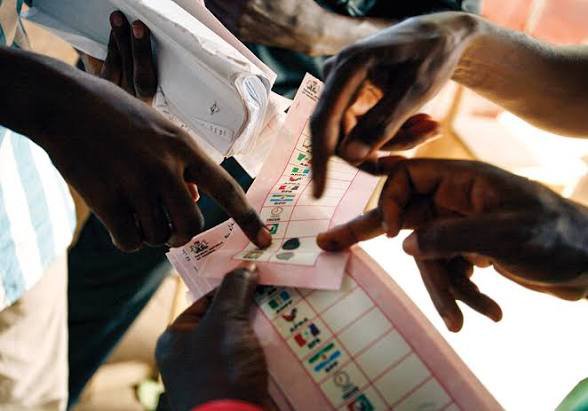
The failure to prosecute perpetrators of vote-buying and other electoral offences is fuelling the persistent malpractice that continues to undermine the credibility of Nigeria's elections, the Peering Advocacy and Advancement Centre in Africa has warned, calling on the National Assembly and security agencies to urgently strengthen the legal and enforcement framework against electoral crimes. Executive Director of PAACA, Ezenwa Nwagwu, made the appeal on Wednesday, August 19, 2026, in Abuja at a press conference where the civil society organisation presented its observations from the just-concluded Osun State governorship election, painting a troubling picture of a poll where money, not policy, appeared to have played a decisive role in shaping voter behaviour.
Nwagwu disclosed that PAACA field observers, in partnership with Legis360, witnessed cases of voter inducement or interference by party agents at about two in every five polling units visited during the Osun election. He described vote-buying as one of the major threats to the integrity of the election, arguing that the practice continues largely because offenders are rarely prosecuted, and the absence of credible and effective sanctions has created an environment of impunity where political actors feel emboldened to flout electoral laws. "The situation demonstrated that Nigeria's challenge is no longer about having laws against electoral offences but ensuring that those who violate the laws face credible and effective sanctions," Nwagwu stated.
The PAACA executive director noted that while the Osun election result could be independently verified and held, a correct count was not the same as a free and fair election. "The harder truth is that a correct count is not the same as a free and fair election. Vote-buying, low turnout, and polling units shut down by violence tell us the real work of reform lies not in the counting, but in the conduct," he said. PAACA also identified low voter turnout as a significant concern, noting that only about 43 per cent of registered voters were accredited for the election. With 2,339,544 registered voters and only 1,010,684 accredited, more than half of registered voters did not participate in the poll, a figure that reflects growing voter apathy and disillusionment with the electoral process.
Nwagwu also raised concerns about access for persons with disabilities, saying provisions required by law were absent at roughly one in four polling units observed, a failure that disenfranchised some of the most vulnerable members of society. On the transparency of the results process, PAACA said the INEC Result Viewing Portal had made independent verification possible but identified areas requiring improvement. The same result sheet was uploaded more than once in six polling units without clear indication of which version was current, while handwriting and clerical errors were common on result sheets. The review also identified discrepancies between accredited-voter figures on some physical result sheets and INEC's official accredited-voter figures, suggesting that the paper and electronic records did not always fully reconcile.
Nwagwu called on INEC to move towards capturing election results electronically at source and to make IReV a machine-readable, time-stamped and version-controlled public dataset, while also urging the commission to enforce compliance with provisions guaranteeing access for voters with disabilities. The organisation commended Osun voters for what it described as a largely peaceful election and INEC personnel for the near-universal availability of essential election materials. However, it maintained that the lessons from the Osun election should go beyond verifying whether votes were accurately counted and must address the conditions under which citizens cast their ballots, particularly the use of money to influence voters.
PAACA further commended President Bola Tinubu for directing the Economic and Financial Crimes Commission to lift the freeze imposed on the Osun state government's statutory allocation account over vote-buying allegations, noting that the move had boosted the president's democratic credentials and helped to ease tension in the state. However, the organisation stressed that such interventions, while welcome, were no substitute for systemic reform and the consistent prosecution of electoral offenders. Nwagwu urged political parties to adopt and enforce internal rules against voter inducement, noting that political actors must take responsibility for protecting the integrity of elections.
The press conference came amid a flurry of allegations regarding campaign spending in the Osun election. Afrobeats superstar Davido had earlier claimed that the All Progressives Congress spent N110 billion on vote-buying, while former Ekiti State Governor Ayodele Fayose countered that the Accord Party spent no less than N40 billion to secure victory. The duelling claims, whether accurate or exaggerated, underscored the perception that money, rather than the will of the people, had become the decisive factor in determining electoral outcomes. For PAACA, the solution is not merely to count votes more accurately but to ensure that the process by which those votes are cast is free from financial coercion and intimidation.
As Nigeria prepares for the 2027 general elections, PAACA's warning carries added weight. The organisation's call for the prosecution of vote-buyers is not a new demand, but it has taken on renewed urgency in the wake of an election where observers documented inducement at nearly half the polling units they visited. The National Assembly and security agencies now face a choice: either they will act to strengthen the legal and enforcement framework against electoral crimes, or they will allow the culture of impunity to continue, ensuring that the 2027 elections are decided not by the will of the people, but by the depth of the pockets of those who seek to buy their votes.
📩 Stone Reporters News | 🌍 stonereportersnews.com
✉️ info@stonereportersnews.com | 📘 Facebook: Stone Reporters News | 🐦 X (Twitter): @StoneReportNew | 📸 Instagram: @stonereportersnews
Add comment
Comments