

Reported by: Ijeoma G | Edited by: Oravbiere Osayomore Promise.
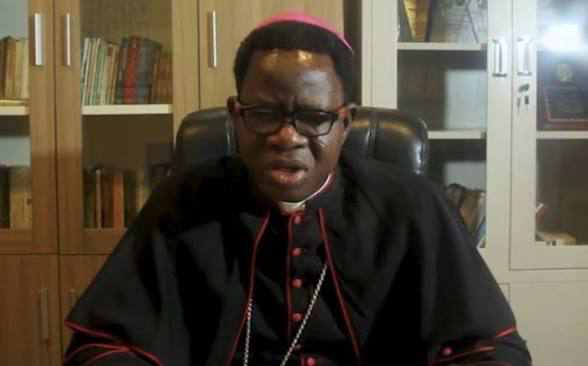
The Catholic Bishop of Kontagora Diocese and Chairman of the Christian Association of Nigeria in Niger State, Most Reverend Dr. Bulus Dauwa Yohanna, has issued a passionate appeal to warring tribes in the Borgu and Agwara Local Government Areas to immediately sheath their swords and end the cycle of violence that has claimed at least 30 lives and displaced hundreds of residents. In a statement titled "Message of Peace and Unity" made available to journalists on Tuesday, August 18, 2026, Bishop Yohanna condemned the clashes among the Kambari, Fulani and Bargawa communities, describing the actions of the combatants as "ungodly and worrisome". The violence, reportedly triggered by a land dispute, has escalated into a full-blown communal crisis, raising fears of further bloodshed in the Borgu Emirate.
The CAN chairman, in his appeal, reminded the warring communities that they had coexisted peacefully for decades before the recent escalation. He placed the blame squarely on what he described as "bad eggs" and "infiltrators" from other countries who, according to him, have exploited existing fault lines to sow discord among the tribes. "As a major stakeholder and one who would choose peace and togetherness over crisis, I strongly appeal to all the tribes which include Kambari, Fulani, and Bargawa to remain calm and stop the fighting and killing," Bishop Yohanna declared. He urged the residents not to allow these infiltrators to destroy the peaceful coexistence that had defined their communities for generations.
While the Bishop's intervention is a welcome move from a respected religious leader, the question that lingers is whether such appeals can truly stem the tide of violence that has become distressingly routine in this part of Nigeria. The death toll of 30, as reported by The Sun Newspaper on Wednesday, August 19, 2026, is a grim reminder that the conflict has already passed the point where mere words can heal wounds. The destruction of property and the displacement of an unspecified number of residents suggest that the violence has taken on a life of its own, fuelled by deep-seated grievances and the availability of weapons. Bishop Yohanna's reliance on the "foreign infiltrator" narrative, while plausible, risks oversimplifying a complex crisis rooted in competition for land and resources, and the failure of governance structures to provide justice and security.
Bishop Yohanna's call for cooperation with security agencies to weed out "bad elements" and informants is a practical step, but it also raises uncomfortable questions about the capacity and willingness of those agencies to act decisively. The Niger State Government and security forces have been notably silent on the specifics of their response, and the Bishop's commendation of President Bola Tinubu and Governor Umaru Bago for "beefing up security" appears to be a diplomatic gesture rather than a reflection of tangible results on the ground. If the government's presence were effective, the violence would not have escalated to this point.
The CAN chairman's appeal to the Emir of Borgu, Alhaji Muhammed Haliru Dantoro, to set up peace and conflict resolution committees is a constructive suggestion, but it underscores the absence of functional traditional and governmental mechanisms to manage conflicts before they spiral out of control. The fact that a religious leader is forced to step into this breach speaks volumes about the failure of the state to provide a basic framework for peace. Bishop Yohanna's warning that "nobody should take the law into his hands" is a crucial reminder of the rule of law, but it rings hollow when the law itself is unable to protect citizens or deliver justice.
As the violence continues to claim lives and displace families, the people of Borgu and Agwara are left to wonder whether this latest appeal will be any different from the countless others that have preceded it. The CAN chairman's message of peace is a necessary and noble effort, but it is not a substitute for the concrete actions that the government and security agencies must take to restore lasting peace. The Bishop has done his part; now, it is up to the authorities to prove that they are serious about ending the bloodshed. Until then, the cycle of violence, vengeance, and suffering is likely to persist, regardless of how many religious leaders step forward to plead for peace.
📩 Stone Reporters News | 🌍 stonereportersnews.com
✉️ info@stonereportersnews.com | 📘 Facebook: Stone Reporters News | 🐦 X (Twitter): @StoneReportNew | 📸 Instagram: @stonereportersnews
Add comment
Comments