

Reported by: Oahimire Omone Precious | Edited by: Oravbiere Osayomore Promise.
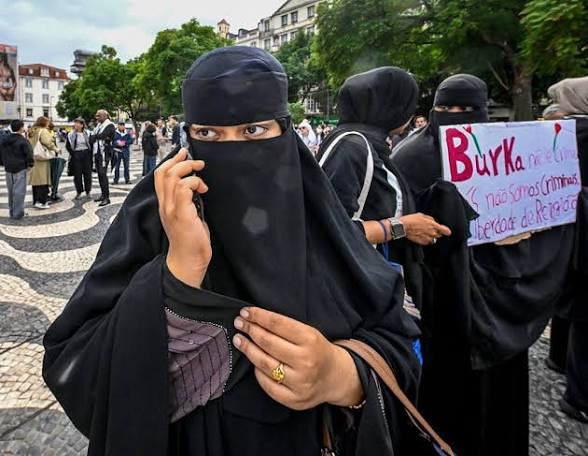
Portuguese President António José Seguro has enacted a sweeping new law banning the wearing of full-face coverings in public spaces, a move that has ignited fierce debate across the country and drawn sharp criticism from human rights groups who argue the measure disproportionately targets Muslim women who wear the burqa or niqab. Seguro signed the legislation on Tuesday, August 18, 2026, completing a legislative process that began with a proposal from the far-right Chega party and culminated in a parliamentary vote on July 17, 2026. The final version of the text, described by local media as the "burqa law," prohibits garments designed to conceal the face or prevent identification in public spaces, with violators facing fines ranging from €150 to €3,000. In a statement accompanying the signing, Seguro declared that "the face must be considered a central element of human identity and communication," while acknowledging that the issue was one of "great social and cultural sensitivity".
The law, which passed with the support of the governing right-wing coalition and far-right parties, while left-wing parties voted against it, does not explicitly mention Islam or any specific religious garment. Instead, it establishes a general prohibition on clothing that conceals the face or prevents identification, and additionally criminalises any coercion forcing a person to cover their face for reasons connected to gender, religion, age or origin. Exemptions are provided for health, professional, artistic and weather-related needs, as well as within places of worship, diplomatic missions and on aircraft. The legislation originated with Chega, a right-wing populist party led by André Ventura, which first secured parliamentary approval for a version of the proposal in October 2025. Earlier drafts of the bill referred more directly to burqas and veils associated with Islam, but those direct references were removed during the legislative process and the measure was recast as a general rule concerning the concealment of faces in public spaces.
The parliamentary vote laid bare the deep divisions within Portuguese society over the issue. The centre-left Socialist Party, green-left Livre and the Portuguese Communist Party opposed the proposal, warning that it could fuel Islamophobia and create a "moral panic over a supposed Islamic invasion". The Socialist Party denounced what it called the "Islamophobic purpose that was evident in the explanatory memorandum of the bill, the context of radicalism in which we live and the risks this creates for the communities directly targeted". The Portuguese Communist Party went further, arguing that the proposal had "nothing to do with women's rights, nor with security issues", but was "solely about fuelling hate speech and violence against those who are different, fuelling racist and xenophobic discourse". The bill also received negative opinions from the Portuguese Bar Association, the High Council of the Public Prosecutor's Office and the Portuguese Association of Women Lawyers, alongside concerns over its potential unconstitutionality.
Amnesty International has been among the most vocal critics of the legislation, arguing that it threatens several fundamental human rights. Following parliament's approval of the law on July 17, Amnesty International Portugal said the measure was discriminatory and would disproportionately affect Muslim women who choose to cover their faces. The organisation argued that the ban threatens freedom of religion and freedom of expression and could contribute to greater exclusion from public life. Amnesty also raised concerns about privacy and peaceful assembly, noting that the legislation restricts concealing the face during demonstrations, and called on Seguro not to sign the legislation and urged that it undergo constitutional review. Rights campaigners have long pointed out that such bans effectively erode women's rights by telling them what to wear, a concern that Seguro acknowledged but ultimately set aside.
Supporters of the measure have presented it in terms of public safety, social integration and gender equality. The far-right Chega party, which championed the bill, argued that normalising the use of full-face coverings amounts to accepting "a medieval regression in the 21st century". Chega MP Manuela Canadas, who defended the initiative, described the veil as "a tool for erasing personality, designed to obliterate a woman's civil existence", adding that these garments represent "submission and subjugation". Canadas insisted that the ban on the burqa and niqab in public spaces "is not an act of discrimination, but a measure of strict public order and national security". The centre-right Social Democratic Party backed the proposal, while left-wing parties remained steadfast in their opposition.
With the signing of the law, Portugal joins a growing list of European countries that have introduced restrictions on full-face coverings in public places, including France, Belgium, Austria, Denmark, the Netherlands and Switzerland. The measure is expected to attract continued debate over the balance between public identification and security requirements on one hand, and religious freedom, personal choice and individual rights on the other. Local authorities will now be responsible for enforcing the restrictions while taking into account the exemptions provided under the legislation. As Portugal navigates this new legal terrain, the world is watching to see whether this ban will achieve its stated goals of security and integration, or whether it will instead deepen the marginalisation of a community that has long called Europe home. One thing is certain: the debate over who gets to decide what women wear is far from over.
📩 Stone Reporters News | 🌍 stonereportersnews.com
✉️ info@stonereportersnews.com | 📘 Facebook: Stone Reporters News | 🐦 X (Twitter): @StoneReportNew | 📸 Instagram: @stonereportersnews
Add comment
Comments