

Reported by: Oahimire Omone Precious | Edited by: Oravbiere Osayomore Promise.
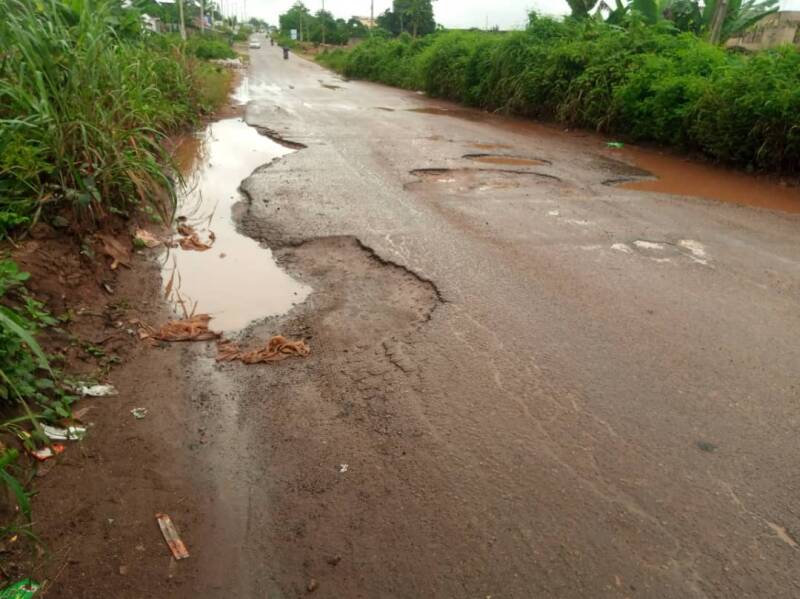
A civic technology organisation, Tracka, has raised an urgent alarm over the deplorable condition of the Ilesha–Ijebu-Jesha Road in Osun State, a critical artery connecting Osun and Ekiti states that has once again deteriorated into a death trap for commuters despite rehabilitation work carried out as recently as 2024. In a post on its official X handle on Saturday, August 22, 2026, Tracka lamented that large potholes, failed sections and poor drainage have made the road increasingly difficult and unsafe for motorists, transforming what should be a vital economic corridor into a nightmare for travellers. The situation, according to the organisation, is even more concerning because the road now serves as an alternative route for motorists avoiding the severely deteriorated Erinmo–Ijesha–Ado Ekiti road, meaning its continued decay could further disrupt movement, trade and economic activities between the two states.
Tracka's intervention comes amid growing public frustration over the state of federal roads in the South-West, where successive administrations have struggled to maintain critical infrastructure despite repeated promises of rehabilitation. The Ilesha–Ijebu-Jesha Road, which links Osun State to Ekiti State, is a major route for commercial activities, agricultural produce and commuter traffic. Its deterioration has forced motorists to seek alternative routes, placing additional strain on other roads that are themselves in a state of disrepair. The organisation's call for the Federal Ministry of Works, the Minister of Works, Senator David Umahi, and other relevant agencies to urgently assess the road and provide a durable rehabilitation solution, rather than another temporary intervention, reflects the growing impatience of citizens with the cycle of palliative repairs that fail to deliver lasting value.
The Minister of Works, Senator David Umahi, has previously acknowledged the dire state of roads in the South-West, particularly the Ibadan-Ife-Ilesha corridor, which he described as critical infrastructure that urgently requires attention. Speaking in Abuja, Umahi vowed to persistently press President Bola Tinubu until the federal government provides the necessary funds to reconstruct the road, noting that only N70 billion had been allocated to the project between 2003 and 2025, an amount he described as grossly inadequate. He also revealed that the First Lady, Senator Oluremi Tinubu, had personally called him to urge that the road be inspected due to the suffering of Nigerians using that corridor. "The road is in a very bad state," Umahi said. "We've had to seek palliative measures just to keep it motorable". He further explained that the ministry has aggregated the Ibadan-Ilesha Road with other major corridors such as the Ilesha-Akure-Benin Road (already awarded for N751 billion) and the Ore-Benin Road, presenting the combined stretch to the Federal Executive Council for funding intervention. "What we're doing for now is applying available funds for palliative works, while seeking permanent financing for full-scale reconstruction," Umahi stated.
Tracka's post specifically targeted the Ilesha–Ijebu-Ijesha Road, which is a different route from the Ibadan-Ife-Ilesha Expressway that has been the subject of the minister's recent interventions. The organisation's decision to highlight this road underscores the widespread nature of the infrastructure crisis in the region, where multiple federal roads have been allowed to decay to dangerous levels. The Ilesha–Ijebu-Ijesha Road's deterioration comes despite rehabilitation work carried out in 2024, raising questions about the quality of the repairs and the effectiveness of government oversight. The organisation's plea for a "durable rehabilitation solution, rather than another temporary intervention" reflects a growing recognition that palliative measures are not sufficient to address the structural deficiencies of the road network.
The renewed deterioration of the Ilesha–Ijebu-Jesha Road is part of a broader pattern of infrastructure decay that has plagued Nigeria's federal road network for decades. Despite the allocation of substantial funds for road construction and rehabilitation, many projects have been abandoned or poorly executed, leaving motorists to contend with potholes, collapsed bridges and flooded sections. The situation in Osun and Ekiti states is particularly acute, with the Erinmo–Ijesha–Ado Ekiti road already in a state of severe disrepair, forcing motorists to rely on the Ilesha–Ijebu-Jesha Road as an alternative. The increased traffic on this alternative route has accelerated its deterioration, creating a vicious cycle of decay that undermines economic activity and endangers lives.
The Minister of Works has previously taken a firm stance on quality control, suspending reconstruction work on the Ibadan-Ife-Ilesa Road in June 2026 over quality concerns and directing the contractor to review pavement mixture specifications. During an inspection tour, Umahi expressed dissatisfaction with the quality of the job, criticised the Osun State Controller of Works for certifying substandard work, and reminded the contractor that the agreement involved milling all failed and cracked sections and applying a binder. He also directed the immediate removal of heavy trucks parked on newly constructed concrete sections, warning that such developments could compromise the integrity of the road. However, these interventions have focused on the Ibadan-Ife-Ilesha corridor, leaving other critical roads like the Ilesha–Ijebu-Jesha route to continue deteriorating.
Tracka's call for urgent action has been echoed by other voices in the region. In May 2024, the Nigerian Union of Journalists, B Zone, appealed to President Bola Tinubu to reconstruct and rehabilitate the Ilesa-Ibadan and Akure-Ado-Ekiti roads. The NUJ described the roads as death traps for commuters, highlighting the dangers posed by their deplorable condition. In August 2024, a first-class traditional ruler from Ekiti State also called the federal government's attention to the deplorable state of roads from Ilesha in Osun down to Ado and Akure to the Ekiti state capital, describing them as posing hardship to travellers and commuters. The persistence of these appeals underscores the failure of successive governments to address the infrastructure deficit in the South-West.
The economic implications of the road's deterioration are significant. The Ilesha–Ijebu-Jesha Road is a major conduit for agricultural produce from Ekiti State to markets in Osun and Lagos, and its decay has increased transportation costs, reduced market access for farmers and contributed to food price inflation. The road also serves as a vital link for commuters travelling between the two states for work, education and healthcare, and its poor condition has increased travel times, vehicle maintenance costs and the risk of accidents. The continued neglect of this road is not just an inconvenience; it is an economic sabotage that undermines the livelihoods of millions of Nigerians.
Tracka's appeal to the Minister of Works and other agencies to "urgently assess the road and provide a durable rehabilitation solution" is a direct challenge to the government's commitment to infrastructure development. The organisation's demand that "road rehabilitation should deliver lasting value" and that "public infrastructure must work for the people who depend on it" reflects a growing sentiment among citizens that the government must move beyond palliative measures and invest in permanent solutions. The inclusion of hashtags such as "#Askquestions" and "#publicfundsmustworkforthegoodofthepeople" signals a determination to hold the government accountable for its spending and to ensure that public funds are used effectively.
As the federal government continues to grapple with the challenge of infrastructure decay, the Ilesha–Ijebu-Jesha Road stands as a stark reminder of the gap between rhetoric and reality. The Minister of Works has vowed not to let President Tinubu rest until the necessary funds are provided to fix the roads, but the people of Osun and Ekiti states are growing weary of promises that fail to materialise. Tracka's intervention has placed the spotlight on a road that has been neglected for too long, and it is now up to the government to respond with action, not words. The question is whether the authorities will seize this opportunity to demonstrate their commitment to infrastructure development or whether the Ilesha–Ijebu-Jesha Road will join the long list of Nigerian roads that have become symbols of government failure.
📩 Stone Reporters News | 🌍 stonereportersnews.com
✉️ info@stonereportersnews.com | 📘 Facebook: Stone Reporters News | 🐦 X (Twitter): @StoneReportNew | 📸 Instagram: @stonereportersnews
Add comment
Comments