

Reported by: Oahimire Omone Precious | Edited by: Oravbiere Osayomore Promise.
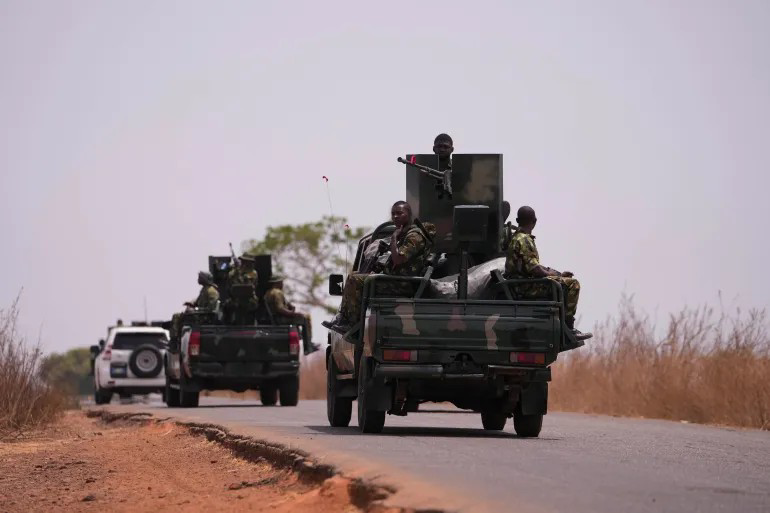
The Nigerian Army has launched a major rescue operation in the Dekara District of Borgu Local Government Area, Niger State, following a devastating series of coordinated attacks by suspected terrorists on Friday, August 21, 2026, that left at least 40 people dead and more than 100 others abducted. An operational report made available to the News Agency of Nigeria (NAN) on Sunday, August 23, confirmed that troops had been deployed to the area, which lies along the Nigeria-Benin Republic border on the fringes of the Kainji Lake National Park, a difficult-to-reach terrain that has become a mobility corridor for terrorist groups operating within the forest. The attack, which targeted worshippers at the Kpenya Central Mosque during Juma'at prayers before spreading to neighbouring communities including Gidan-Zana, Sabon Gida and Masaka, has thrust the fragile security situation in the North-Central region back into the national spotlight.
According to the military report, the Army had initially directed the deployment of troops to Dekara to establish a blocking position ahead of a planned clearance operation in the park, with newly inducted personnel being prepared for a sweep aimed at denying terrorists freedom of movement in the forest. However, while the troops were moving towards the community on Friday, the terrorists launched a devastating assault on the village, killing several residents and abducting many others before the soldiers eventually arrived and took up positions later that day. The report stated that the terrorists subsequently attacked the deployed troops but were repelled by the soldiers, with no casualties recorded on the military side, while one AK-47 rifle and other items were recovered from the assailants. The Army acknowledged that it was yet to ascertain the exact number of persons abducted or killed during the attack, as some residents had fled into neighbouring Benin Republic before the troops arrived, and efforts were ongoing to establish the whereabouts of the missing persons and determine the full extent of the attack.
The scale of the tragedy has drawn widespread condemnation and urgent calls for action from state authorities. The Niger State Government, through its Commissioner for Information and Orientation, Obed Nana, has instructed security agencies to intensify efforts to rescue the abducted worshippers and restore normalcy in the affected areas. Governor Mohammed Umaru Bago has directed relevant authorities to work closely with security agencies to secure the victims' release, while a joint security operation has been deployed to assess the situation, track the attackers, and facilitate the rescue of the abducted worshippers. The government, however, declined to share operational details, stating such information could compromise ongoing security efforts, while urging residents to remain calm and avoid spreading unverified casualty figures that could escalate tensions or hinder rescue operations.
The attack on Dekara and surrounding communities is the latest in a series of violent incidents that have plagued the Borgu-Kainji corridor, an area identified as a potential hub for extremist activity. Police spokesman Wasiu Abiodun confirmed to the BBC that more than 40 people were killed in the attacks on Dekara, Gidan Zana, Sabon Gida and Masaka villages, with authorities suspecting the attackers were bandits - criminal gangs involved in kidnapping and looting for ransom. Local sources and residents have estimated that between 60 and 80 people were abducted during the coordinated assault, including the Village Head of Ka'ada, the 90-year-old father of the District Head of Dekara, and the chief imam of the central mosque. A viral video that surfaced on social media on Saturday showed men, women and children from the affected communities being held captive by bandits, with captives seen lying on the ground in the rain and gunshots ringing out in the background, a deeply disturbing scene that has sparked outrage and renewed calls for urgent government action.
The Borgu area has witnessed escalating violence in recent months, with armed groups exploiting the remote forests and weak security presence to carry out raids and kidnappings. In January, at least 35 people were killed and many others abducted in Kasuwan Daji, also in Borgu LGA, in an attack locals attributed to the Sadiku-led Boko Haram faction. In February, attacks on Feyi, Tungan Makeri, and Nkpaso communities over three consecutive days resulted in about 26 deaths and the burning of homes. Earlier this month, police said 145 people had been rescued after being abducted from four villages in Borgu - Konkoso, Kasuwan-Daji, Tungan-Makeri and Shafachi - as part of a major security operation that rescued 308 people nationwide. Last week alone, more than 20 people were killed in the local government area, according to local officials.
The recurring violence has severely disrupted farming activities and displaced thousands of residents, with many communities now deserted and families forced to flee their ancestral homes. The attackers, who were reportedly wearing military-style clothing, have in recent months entered communities and imposed religious restrictions, raising fears that some of the gunmen may be trying to recruit young people. The security situation has remained particularly serious in Borgu, with local officials warning that the frequency and boldness of the attacks suggest a sophisticated and well-organised network. Despite repeated military and police operations, large parts of Niger State remain difficult for security forces to access, allowing armed groups to operate from forested areas and carry out attacks on isolated communities.
As the Army intensifies its rescue operation, the people of Dekara and surrounding communities are left to grapple with the aftermath of an attack that has once again exposed the fragility of Nigeria's security architecture. The military has assured that updates on the rescue operation and other developments would be communicated as they emerge, while the government has called on residents to remain vigilant and provide credible intelligence to security agencies. The question on everyone's lips, however, is how many more communities must be attacked before the government takes decisive action to end the cycle of violence that has turned the Borgu-Kainji corridor into a theatre of terror. For now, the search for the abducted villagers continues, and the hope of their families rests on the success of the military operation.
📩 Stone Reporters News | 🌍 stonereportersnews.com
✉️ info@stonereportersnews.com | 📘 Facebook: Stone Reporters News | 🐦 X (Twitter): @StoneReportNew | 📸 Instagram: @stonereportersnews
Add comment
Comments