

Reported by: Oahimire Omone Precious | Edited by: Oravbiere Osayomore Promise.
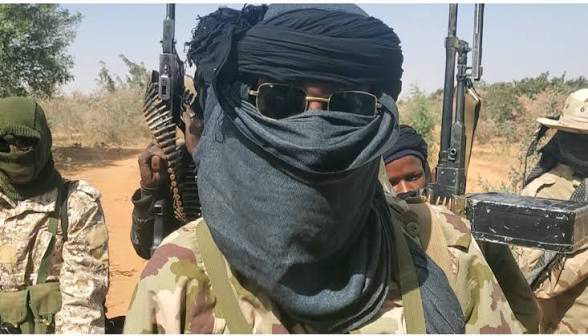
Between July 2025 and June 2026, Nigeria recorded 7,825 kidnapping victims across 1,713 incidents, with at least 1,142 people killed and kidnappers collecting N7.8 billion in ransom, according to a new report by SBM Intelligence. The figures, released on Thursday, August 27, 2026, represent a 66 per cent increase in victims compared to the previous year, and ransom payments have more than tripled. The report, titled "The Capture of the Kidnap Economy," paints a grim picture of a country where kidnapping has evolved from scattered criminal activity into a full-blown industry that is now funding terrorist groups and destabilising communities.
SBM Intelligence, a Lagos-based security consultancy, compiled its findings from media reports, interviews, and publicly available data. The researchers acknowledged that the figures are likely conservative, as many ransom payments are never disclosed and many victims are too traumatised to speak publicly about their ordeals. The report found that kidnappers demanded a total of N22.856 billion ($16.75 million) during the period, but received N7.779 billion ($5.7 million), giving them a collection rate of 34 per cent. That represents a dramatic jump from the previous cycle, when the collection rate stood at just 5.35 per cent.
The geographic breakdown in the report reveals a stark north-south divide. The North accounted for 93.7 per cent of all abductions—7,334 of the 7,825 victims—while the South recorded just 491 victims, or 6.3 per cent. Zamfara State led the nation with 236 kidnapping incidents and 1,921 victims, nearly a quarter of the national total. Katsina followed with 187 incidents but fewer victims at 559, a disparity the report attributes to the effectiveness of state-backed vigilante groups. Sokoto recorded 179 incidents with 1,157 abducted, driven by what the report described as "the influx of a mixed multitude of actors—bandits, very small kidnap gangs and, very importantly, the Islamist group Lakurawa." Kaduna ranked fourth with 134 incidents and 814 victims.
The most striking finding in the report is the dominance of a single group in the ransom economy. The Jama'atu Ahlis Sunna Lidda'awati Wal-Jihad (JAS) faction of Boko Haram collected 90 per cent of all recorded ransom payments, largely from just two mass abductions. The N5 billion ransom for 416 captives taken from Ngoshe in Borno State and the N2 billion paid for 315 pupils and staff abducted from St Mary's School in Papiri, Niger State, accounted for N7 billion of the total N7.8 billion ransom bill. The report noted that the amount demanded by kidnappers actually fell from N48 billion to N22.9 billion, yet the amount paid more than tripled, a sign that victims' families are increasingly willing to pay whatever it takes to secure the release of their loved ones.
Schools remain a prime target. The Papiri attack, which took place in November 2025, revived a tactic that had first gained international attention with the Chibok schoolgirls abduction in 2014. "School abductions have resurged, with the Papiri attack reviving a tactic whose costs ripple through education, farming and public trust," the report stated. The researchers warned that payment is no guarantee of survival, noting that in at least six cases, victims were killed after ransom was paid. They also found that ransom-bearers are increasingly being abducted themselves, and that in 14 incidents, kidnappers demanded goods such as motorcycles, phones, food, and fuel instead of cash, showing an economy adapting to the thin cash resources of its victims.
The report has drawn attention to the failure of the Nigerian government to curb the growing kidnap-for-ransom industry. President Bola Tinubu, who came to power three years ago with a pledge to tackle insecurity, has faced mounting criticism as the crisis has worsened. The recent abduction of as many as 600 worshippers in Niger State has further highlighted the government's inability to protect its citizens. SBM Intelligence warned that without a coordinated strategy that targets both the profitability of the crime and its roots, Nigeria risks entrenching kidnapping not merely as a criminal industry but as a funding mechanism for the very groups that threaten its stability.
The Nigerian presidency and military did not immediately respond to requests for comment on the report's findings. However, the report's release comes amid growing public anger over the government's handling of the security crisis. With the 2027 elections approaching, insecurity is likely to be a central issue, and the government will face increasing pressure to show results. For the families of the 7,825 victims, the numbers are not just statistics—they represent loved ones who have been taken, killed, or left traumatised by a crisis that shows no sign of abating.
📩 Stone Reporters News | 🌍 stonereportersnews.com
✉️ info@stonereportersnews.com | 📘 Facebook: Stone Reporters News | 🐦 X (Twitter): @StoneReportNew | 📸 Instagram: @stonereportersnews
Add comment
Comments