

Reported by: Ijeoma G | Edited by: Gabriel Osa
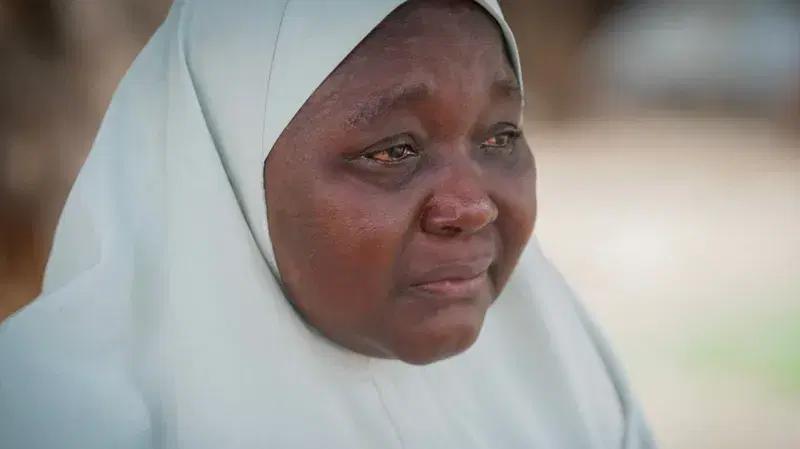
For Fatima, a 55-year-old woman displaced from her community in Zamfara State, north-western Nigeria, the question of how to survive a bandit attack has become brutally simple: running can mean being shot, while staying can mean abduction. Her account, given to the BBC, offers a stark picture of communities where armed groups can surround villages at night, kill residents, seize livestock and property, and drive survivors from their homes.
Fatima said the attackers came at about 2am and divided themselves into three groups. One positioned itself at the entrance to the village, another moved into the community, while a third blocked the rear, leaving residents with few routes of escape. She said those who hid inside rooms risked being burned alive, while those who emerged and tried to flee could be shot. The attackers, she said, fired indiscriminately and showed little regard for who was caught in their path.
Fatima said about 70 people, including children, were killed in Bia Buki village in June. Among the dead, she said, were her husband and six of her seven siblings. Children attempting to escape through the surrounding bush were also injured, including some who fell into holes while fleeing.
Her account reflects a wider pattern of insecurity across north-western Nigeria, where armed groups commonly use motorcycles to move rapidly between settlements and attack before security forces can respond. The groups, widely described as bandits, are involved in kidnapping for ransom, robbery, cattle theft, attacks on farmers and the imposition of levies on communities. In some areas, residents have been forced to negotiate access to farmland with armed groups.
Fatima fled into a forest with other villagers after the attack, describing the forest as a sanctuary for families trying to escape the gunmen. She recalled people carrying their own children and, when necessary, taking responsibility for neighbours' children when parents became separated during the flight.
The survivors eventually travelled to Gusau, the Zamfara State capital, where Fatima now lives in a camp with her seven children, whose ages range from nine to 30. Her description of life there reflects the difficult conditions facing many displaced families. Shelter is inadequate, food supplies are limited and assistance is irregular. People who once considered themselves financially secure have been pushed into dependence on humanitarian support.
Fatima said some displaced children have been sent to collect and sell firewood to help their families obtain food. She alleged that 22 children involved in such activities were later abducted by bandits. The claim illustrates how displacement does not necessarily remove families from danger; in some cases, it exposes them to new risks while separating them from the livelihoods and social networks that previously offered some protection.
The scale of displacement across the region is substantial. International humanitarian assessments have placed the number of people displaced across north-western Nigeria at around 800,000, with violence among the main causes. Figures from the International Organization for Migration also show the continuing impact of attacks in Zamfara. In June, an armed attack in communities in Gummi Local Government Area displaced thousands of people, including more than 5,000 children, according to an IOM rapid assessment.
When residents abandon their villages, farms are left uncultivated or harvested under threat. Livestock and property can be lost, while displaced families depend increasingly on aid. Returning without adequate security can expose them to further attacks, yet remaining in camps or informal settlements often means poverty, overcrowding and uncertain access to food, education and healthcare.
Security forces and government-backed vigilante groups have been deployed in parts of Zamfara to confront the armed groups. One vigilante member interviewed in the BBC report said his group had fought bandits in numerous gun battles and continued to respond when communities requested assistance. Such security structures have become an important part of the response in areas where conventional forces cannot maintain a permanent presence.
Fatima said military patrols and vigilante activity had made the security situation around the camp somewhat better. Yet the improvement has not removed the fear of returning home. She said residents had been told that bandits had established a camp close to her community and that one of their leaders had become a de facto authority, with residents reportedly turning to him to resolve disputes.
Such accounts underline the extent to which insecurity can erode state authority. Where armed groups control movement, demand payments, threaten farmers and mediate disputes, their influence can extend beyond individual attacks. Communities can become trapped, with residents forced to calculate whether the risks of staying are greater than the risks of fleeing.
Zamfara's crisis is part of a broader kidnapping and armed-violence problem affecting Nigeria's north-west. Although the region's insecurity is often discussed alongside militant Islamist violence elsewhere in the country, the armed groups responsible for many north-western attacks are predominantly criminal gangs motivated by ransom, extortion and control of territory and economic activity.
For Fatima, however, those distinctions offer little comfort. Her immediate concern is whether her family can live without the threat of another attack. She wants to return to the community she left, but says there is little incentive to go back while farms remain inaccessible, food is scarce and armed groups continue to threaten residents.
Her story also illustrates a challenge for Nigeria's authorities and humanitarian agencies: protecting people who have been displaced is only one part of the problem. Sustainable recovery requires security that allows communities to return, farm, rebuild homes and restore economies without being subjected to renewed intimidation or abduction.
Until that happens, thousands of families across north-western Nigeria remain caught between two forms of insecurity — the danger of returning home and the hardship of remaining displaced. Fatima's account is a reminder that behind displacement statistics are families who have lost relatives, homes, livelihoods and the confidence that their communities can protect them.
📩 Stone Reporters News | 🌍 stonereportersnews.com
✉️ info@stonereportersnews.com | 📘 Facebook: Stone Reporters News | 🐦 X (Twitter): @StoneReportNew | 📸 Instagram: @stonereportersnews
Add comment
Comments